
Utilisation of Yogyakarta's Special Autonomy Funds Successfully Empowers Communities
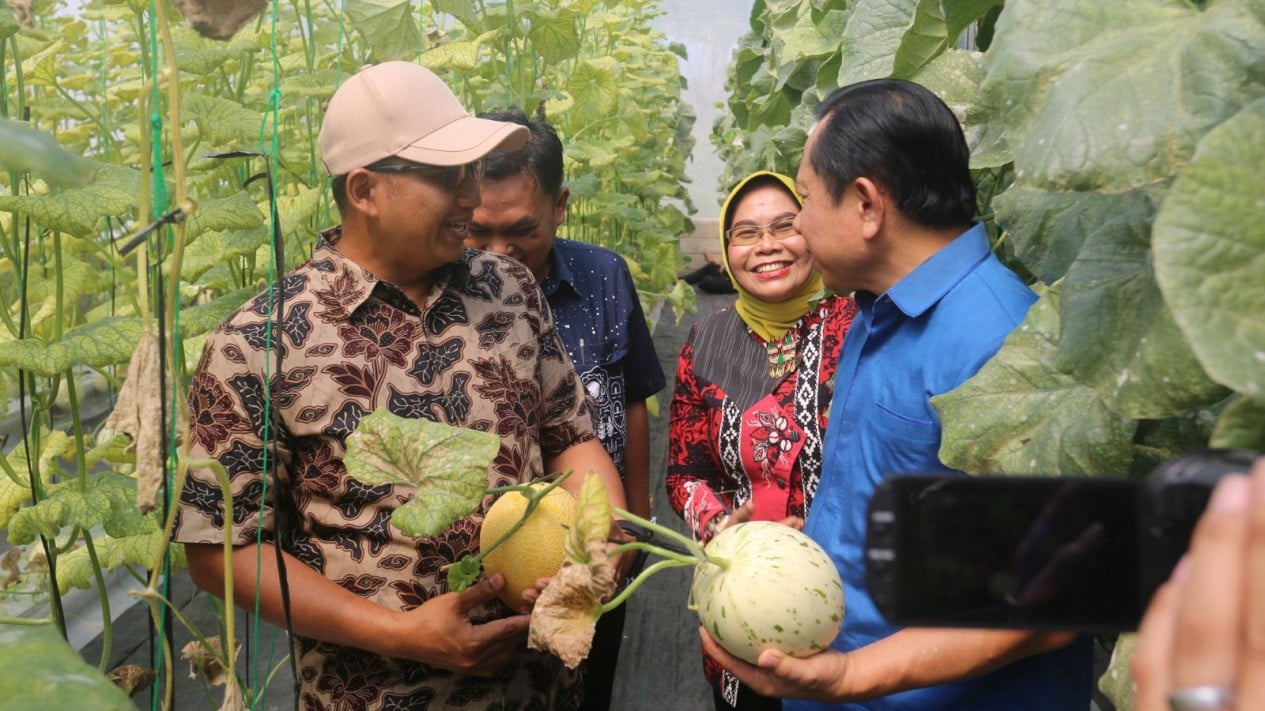
The Ministry of Home Affairs (Kemendagri) has assessed that the utilisation of Yogyakarta’s special autonomy funds has successfully empowered communities in Yogyakarta.
To date, efforts to utilise the special autonomy funds have driven increases in community income, poverty alleviation and the reduction of open unemployment.
“We monitored directly the locations and beneficiaries of the DIY special autonomy fund assistance. So far, the results have been extraordinary because it has helped empower the community’s economy,” said Sumule Tumbo, Director of Regional Arrangement, Special Autonomy and the Regional Autonomy Advisory Council, in Jakarta on Saturday, 25 July 2026.
The ministry’s assessment was based on the results of monitoring and evaluation (monev) carried out from 7 to 10 July 2026 in a number of areas across the Special Region of Yogyakarta (DIY).
The monitoring was conducted at Karang Kopek Trimurti, which has developed into a community empowerment-based livestock area.
The team then continued to the lethek noodle production centre, which now comes in instant noodle form to reach a wider market, and to the Baros canoe tourist site as an example of sustainable, environment-based tourism development.
In addition, the Kemendagri team also witnessed first-hand economic and food self-sufficiency in Sumberharjo and Taman Martani, the revival of tourism in Sambirejo, and held a dialogue with residents at the Taman Martani Cultural Hall.
According to Sumule Tumbo, the DIY Special Autonomy Fund is part of transfers to the regions allocated to support the special affairs of DIY as stipulated in Law Number 13 of 2012.
Under that law, the Special Region of Yogyakarta holds five authorities in special affairs, covering the procedures for filling positions, the status, duties and powers of the Governor and Deputy Governor, the institutional arrangements of the DIY regional government, culture, land affairs and spatial planning.
“We hope that community empowerment assistance will continue to be provided in a sustained and well-targeted manner so that more people can be served, thereby accelerating the improvement of community welfare in DIY,” he said.
Agus Purwaka, the head of Trimurti in Kapanewon Srandakan, Bantul Regency, DIY, explained that his area received special autonomy fund assistance of Rp 1 billion.
Part of it was used to develop lethek noodle production, including the preparation of a production house, equipment and marketing.
“Initially, these lethek noodles were produced and marketed in a traditional way. We then improved the production quality and packaging so that they could be marketed more premium and more hygienically, allowing them to enter hotels, airports, offices and so on.”