
UTBK 2026 Marred by Cheating, DPR Speaker Urges Evaluation of Monitoring System
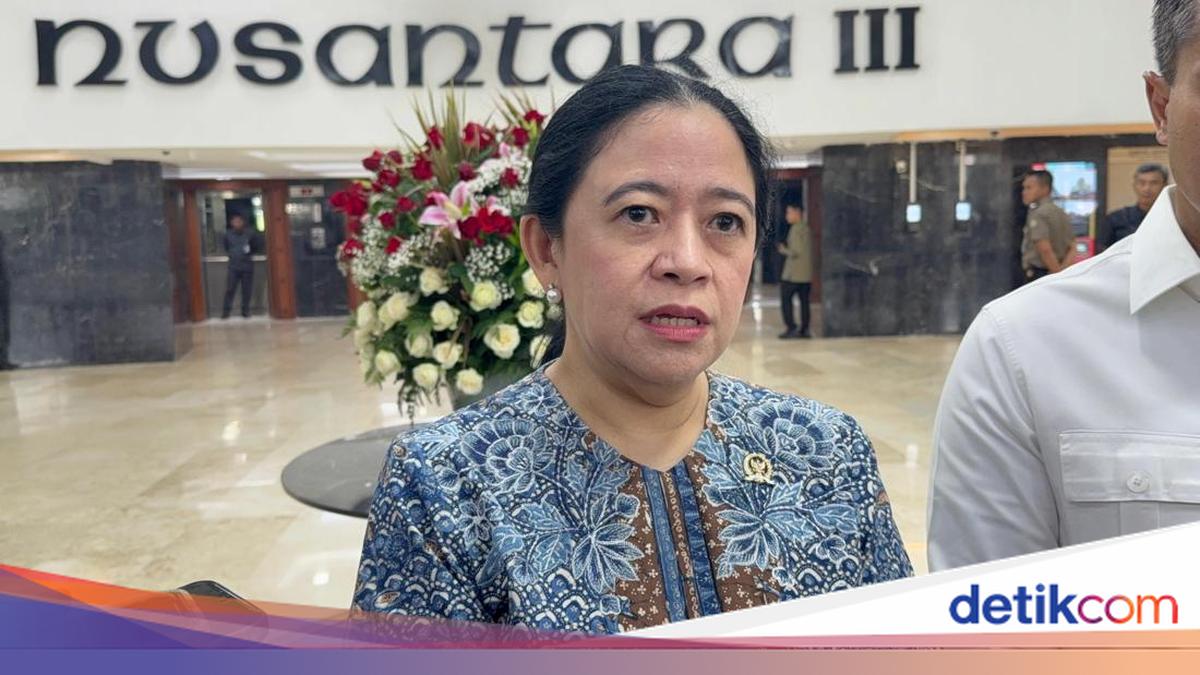
DPR RI Speaker, Puan Maharani, has spotlighted the persistent cheating in the Computer-Based Written Exam for the National Selection Based on Tests (UTBK-SNBT) 2026 for entry into state universities. She is urging the adaptation of monitoring measures as material for evaluation.
“Various findings of cheating that continue to occur in UTBK 2026 pose a challenge to the integrity of national education competitions,” said Puan in a written statement on Thursday (23/4/2026).
The UTBK 2026 began on Tuesday (21/4). Various forms of cheating have marred the implementation of the selection for entry into state universities in various regions.
The committee has detected cheating ranging from the rampant use of proxy test-takers with fake ID cards and forged diplomas, the use of earpieces for communication, to feigning lateness to catch the committee off guard.
For the proxy-taking modus operandi, the committee even found anomalous data from 2,640 participants engaging in cheating. The committee also suspects the existence of proxy syndicates now facing criminal sanctions.
According to Puan, the findings of various cheating incidents in the UTBK implementation are not merely individual violations that arise each admissions season.
“The recurring patterns with increasingly complex techniques indicate that the pressures of today’s education competition have evolved in ways that demand more serious attention,” she stated.
Puan highlighted the background of the still-prevalent cheating. She assessed that this is related to how the younger generation views success, competition, and the meaning of honesty in obtaining opportunities.
“When the selection space for education begins to be infiltrated by systematically prepared manipulative strategies, the issue that arises is not just a violation of exam rules, but a challenge to the ethical foundations of the education system itself,” explained Puan.
This year, UTBK is participated in by 871,496 candidates competing for around 260,000 seats in various state universities (PTN) for academic and vocational programmes, as well as diploma and undergraduate levels. The first UTBK session runs from 21 April to 2 May 2026.
Puan stated that the national selection for PTN entry is fundamentally built to uphold one important principle: that access to universities must be determined by academic capacity and fair effort.
“Therefore, every form of cheating that attempts to breach the system with the aid of technology, fake identities, or substitute parties essentially undermines the collective trust in the meritocracy mechanism that has long been the basis for new student admissions,” she elaborated.
According to Puan, if these practices are allowed to develop, participants who undergo the process honestly will face doubts about the fairness of the system they should trust.
“And given the increasingly evolving cheating modi operandi, an adaptation of the system and monitoring technology is needed. Especially amid today’s advancements, many means enable cheating to be carried out,” said Puan.
“The implementing committee and relevant ministries must also ensure that every loophole found becomes material for systematic corrections in the design of future selections,” added the former Coordinating Minister for Human Development and Culture.
Furthermore, Puan assessed that the success of the national selection system is not sufficiently measured by the number of violations successfully caught, but by the state’s ability to ensure that the space for cheating narrows from year to year.
“The state needs to demonstrate that educational integrity is maintained through ongoing system updates that follow the development of modi operandi, not merely through responses after violations occur. In other words, there must be mitigation,” stated Puan.
On the other hand, Puan views the phenomenon of cheating in state university entrance exams, which occurs every year, as indicative that the challenges of national education are no longer just about learning quality or access.
“But also about the increasing social pressures on end results,” added the first woman to serve as DPR RI Speaker.
Several parties view that the extremely high competition for state university entry can drive participants to see success as something that must be achieved by any means.
“This is where it is important for the state to recognise that cheating is not merely a technical issue of exam monitoring, but also related to how the education ecosystem shapes perceptions of the value of effort, failure, and competition,” explained Puan.
Puan also invited the public to view this issue from a broader perspective: that higher education is not just an academic goal, but part of shaping the character of the young generation as the nation’s successors.
“When the university entry process is already coloured by manipulation, the challenge at hand is not just who passes the selection, but what values are being formed before students enter higher education,” she said.
Therefore, Puan emphasised the importance of the state ensuring that educational competition still provides space for achievement and academic ability without losing the basic values that form the foundation of public trust in the future of national education.
“If integrity fails to be maintained from the start, the education system will face a greater burden in subsequent stages,” said Puan.
According to Puan, the findings of cheating in UTBK 2026 can serve as material for a national evaluation involving secondary education, higher education, and the character-building ecosystem more comprehensively.
“Academic honesty cannot be built only when participants are in the exam room, but must grow as an educational culture reinforced long before,” concluded the granddaughter of Bung Karno.