
USU Professor: 15 Years After Constitutional Court Ruling, Special Wiretapping Law Still Has Not Been Enacted
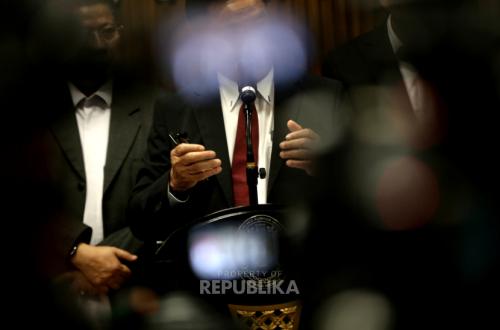
MEDAN – The illegal interception scandal involving the National Police’s Lawful Interception Management System (LIMS) has exposed a long-recognised legal loophole. Prof. Dr OK Saidin, a professor at the Faculty of Law at the University of North Sumatra, said a dedicated law on wiretapping has still not been enacted, even though the Constitutional Court highlighted the need for one in 2011.
Saidin recalled that, in Decision No. 5/PUU-VIII/2010, the Constitutional Court annulled Article 31(4) of the Electronic Information and Transactions Law (UU ITE), which had stipulated that interception procedures would be regulated by government regulation. The Court held that restrictions on privacy rights could only be imposed by law.
“Fifteen years have passed, and the law has still not been enacted,” Saidin wrote.
He noted that the new Criminal Procedure Code (KUHAP) defers the matter to a separate law under Article 136(2). In April 2026, the House of Representatives’ Legislation Body was still assigning the preparation of its academic draft.
As a result, Saidin said, the power that reaches most deeply into citizens’ private lives is governed primarily by internal rules set by the institution holding the relevant equipment. He cited investigators’ accounts that provisioning, or interception, by the Head of the Monitoring Division (Kabagmon)—a structural position under the National Police’s Criminal Investigation Department (Bareskrim)—requires approval from just one person: the Head of the Information and Communications Technology Division, which was led by Inspector General Slamet Uliandi before the scandal came to light.
“So there is no judge involved, and no external oversight,” he said in Medan on Friday (6 November 2026).
Saidin also highlighted Article 258 of the new Criminal Code, under which investigators have brought allegations. The article carries a maximum ten-year prison sentence for unlawful interception, but exempts those acting under legislation or an official order. In his view, the line between duty and crime depends on rules defining when interception is lawful.
“Our criminal law has already provided a punishment for breaching a boundary that has not yet been fully built,” he said.
As previously reported, telephone numbers belonging to President Prabowo Subianto, senior officials, party figures, journalists, activists and businesspeople were allegedly inserted into the LIMS system between 2025 and 2026. Four senior National Police officers have been named as suspects. Saidin stressed that they are entitled to the presumption of innocence until a court rules otherwise.
Source: jawawa.id (https://jawawa.id/newsitem/usu-professor-15-years-after-constitutional-court-ruling-special-wiretapping-law-still-has-not-been-enacted-1793962277)
Originally published by Republika (https://news.republika.co.id/berita/to2rnt490/guru-besar-usu-setelah-15-tahun-keputusan-mk-uukhusus-penyadapan-belum-juga-dibuat), translated from Indonesian