
USU Plants 10,000 Trees to Protect the Environment
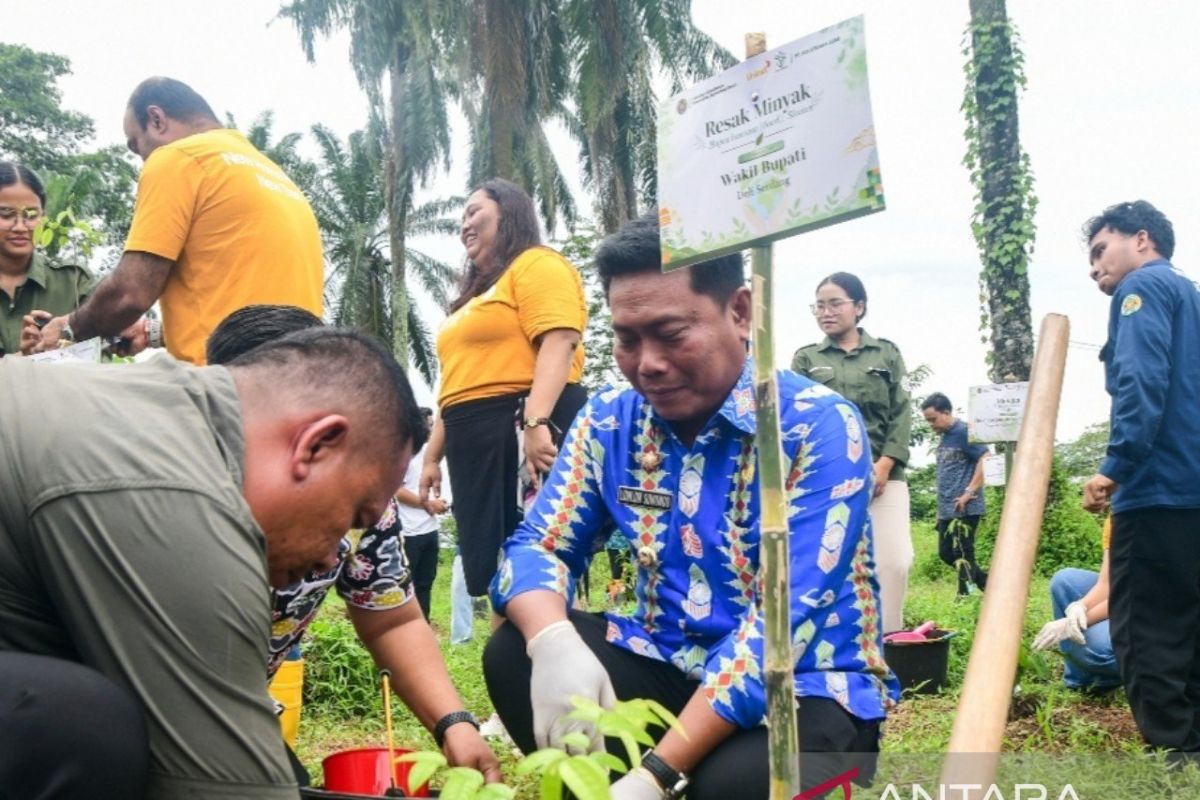
Deli Serdang (ANTARA) – The Faculty of Forestry at the University of North Sumatra (USU) has planted 10,000 multipurpose tree species (MPTS) across approximately five hectares in the Kwala Bekala area of Pancur Batu, Deli Serdang, to help protect the environment.
Arida Susilowati, dean of USU’s Faculty of Forestry, said in Deli Serdang on Friday that the tree-planting initiative was also part of events marking the faculty’s 12th anniversary and the 27th anniversary of USU’s Forestry Study Programme.
Arida stressed the importance of collaboration among universities, government, businesses and the public in addressing environmental challenges.
Scientific knowledge, policy, innovation and public participation are needed to ensure conservation efforts have a broader impact.
“We hope this activity can strengthen young people’s awareness of the need to protect the environment,” she said.
Deli Serdang Deputy Regent Lom Lom Suwondo, speaking at the same event, said the trees must be cared for over the long term if they are to bring tangible environmental benefits.
He said tree planting was a practical step towards protecting air quality, water supplies and ecological balance. However, these benefits can only be fully realised if the trees are looked after until they grow well.
“We hope the trees planted today will grow well and provide benefits over the long term. That is why care and cooperation are needed to maintain them, so that the community and future generations can enjoy their benefits,” he said.
He said environmental conservation must be part of regional development. Government, universities, businesses and the public should each contribute according to their capacity to ensure greening efforts have a sustainable impact.
“We want Deli Serdang to develop into an advanced region while keeping its environment protected. Development must go hand in hand with efforts to safeguard nature, so that the progress we achieve today does not diminish the quality of life of future generations,” he said.