
USU Lecturer Studies Bosi-Bosi Leaves for Potential Breast Cancer Benefits
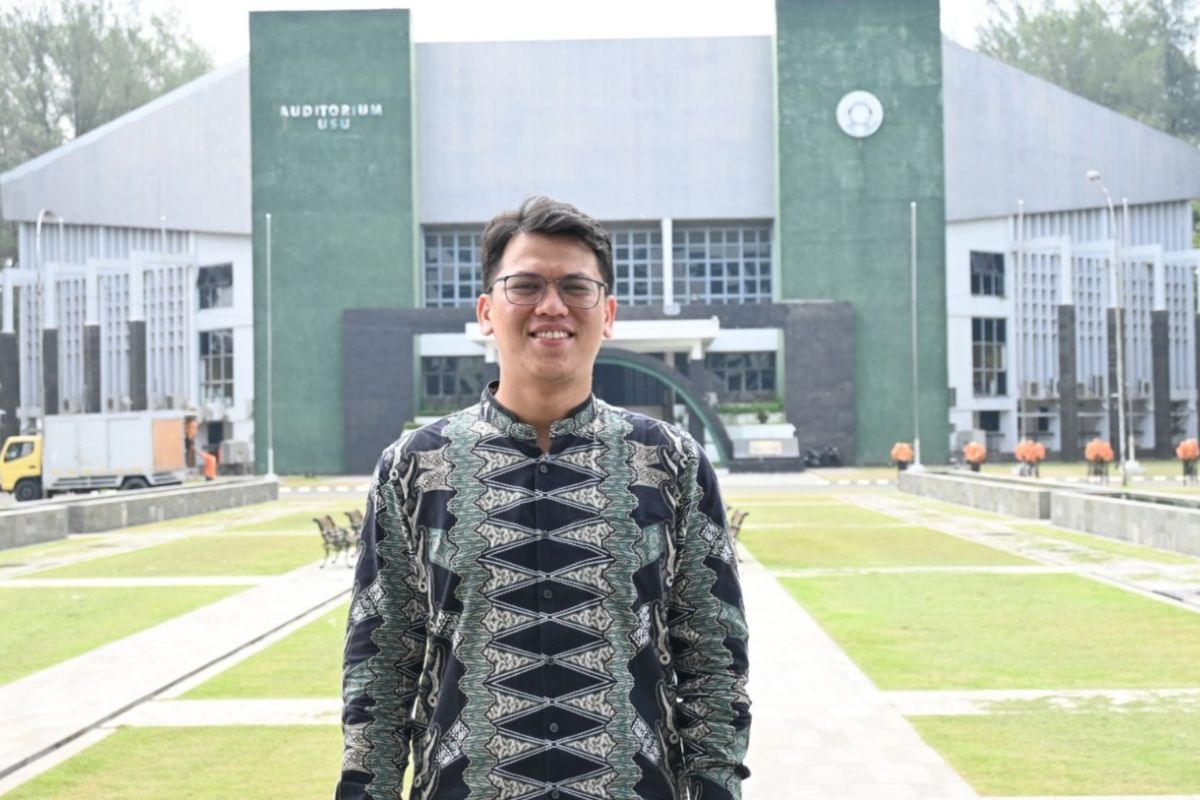
Medan (ANTARA) – Muhammad Fauzan Lubis, a lecturer at the Faculty of Pharmacy at the University of North Sumatra (USU), and his team have researched bosi-bosi, a plant whose extract may have potential against breast cancer.
Bosi-bosi (Timonius flavescens), a member of the Rubiaceae family, grows in the hills of North Tapanuli. Traditionally, its leaves are boiled and the liquid drunk to relieve pain and help address a condition locally known as “sakit gula”, or diabetes mellitus.
“Based on a review of the literature, the researchers who have explored this plant have mostly come from North Sumatra. I happen to focus on pharmaceutical biology and medicinal plants at the faculty, so I was keen to explore this distinctive local plant. That led us to investigate what other benefits it might have, including its potential in relation to cancer,” Fauzan said in Medan on Monday.
The research brings traditional knowledge about bosi-bosi together with laboratory technology to identify, optimise and test the potential of compounds in the plant. This stage determines how effectively the desired compounds can be separated from the plant material. The method used can also affect the characteristics of the extract and its potential applications.
People generally know bosi-bosi through the simple method of boiling its leaves in water. The USU research team took a different approach, using a scientifically designed extraction method that considers both the effectiveness of the process and environmental principles.
One approach used was Natural Deep Eutectic Solvent (NADES), a solvent system developed by combining specific components. The NADES was made by combining choline chloride, which acts as a hydrogen-bond acceptor, with D-glucose, a hydrogen-bond donor, and then dissolving them in water.
This approach aligns with the principles of green chemistry, which promotes the development of chemical processes with consideration for their environmental impact.
To identify the optimal solvent composition, the team applied the statistical Central Composite Design (CCD) method based on Response Surface Methodology (RSM). The extraction process was also combined with Ultrasound-Assisted Extraction (UAE).
“We did not use the boiling method practised by the community. We used a scientific approach to optimise the potential of bosi-bosi leaves. With the right NADES solvent formulation, polyphenols and flavonoids in the leaves can be extracted much more effectively,” he said.
The extraction formulation was then characterised using Fourier Transform Infrared Spectroscopy (FTIR) and a Transmission Electron Microscope (TEM).
The tests indicated hydrogen-bond interactions between choline chloride and glucose, as well as spherical structures reported to have formed in the extract system.
After obtaining the optimised extract, the team went on to identify its bioactive compounds. The analysis was conducted using Liquid Chromatography-High Resolution Mass Spectrometry (LC-HRMS), with support from the National Research and Innovation Agency (BRIN).
The team identified 13 principal bioactive compounds through this analysis. The extract also showed high antioxidant activity. At a concentration of 500 μg/mL, it inhibited 89.32 per cent of DPPH free radicals.
The findings provide an initial indication of the biological potential of bosi-bosi leaf extract. However, the research also examined its effects on breast cancer cells.
The team tested the cells’ response to the extract through in vitro cytotoxicity tests using the MTT assay on three breast cancer cell lines.
To understand the cellular response in greater depth, the study also included flow cytometry and immunocytochemical staining. The tests indicated two main mechanisms associated with inhibiting cancer-cell growth and causing cell death: cell-cycle arrest and the induction of apoptosis.
The first mechanism involves G0-G1 cell-cycle arrest, in which the cell cycle is held at the G0-G1 phase. Under normal conditions, cells pass through specific stages before dividing. In cancer cells, this process can proceed uncontrollably.
The research found a reduction in the expression of cyclin D1, a protein involved in regulating the cell cycle and cell division. This decrease indicates the extract may have the potential to inhibit the division of the cancer cells tested.
The second mechanism is the induction of apoptosis, a process of programmed cell death. In the tests, the extract increased cell death through both early and late apoptosis.
This response was mediated by increased expression of the p53 protein, which is known to play an important role in controlling the cell cycle and the cellular response to damage.
“A reduction in cyclin D1 expression slows the division of tumour cells, while increased p53 prompts cancer cells to die in a programmed way. This combination makes bosi-bosi leaf extract a strong candidate for development as a complementary anticancer therapy,” he said.
Source: jawawa.id (https://jawawa.id/newsitem/usu-lecturer-studies-bosi-bosi-leaves-for-potential-breast-cancer-benefits-1793008411)
Originally published by Antara (Indonesian) (https://www.antaranews.com/berita/5812139/dosen-usu-teliti-manfaat-daun-bosi-bosi-untuk-antikanker-payudara), translated from Indonesian