
USTR Approves 18 Indonesian Exclusion Requests Despite Ongoing 10% Additional Tariff
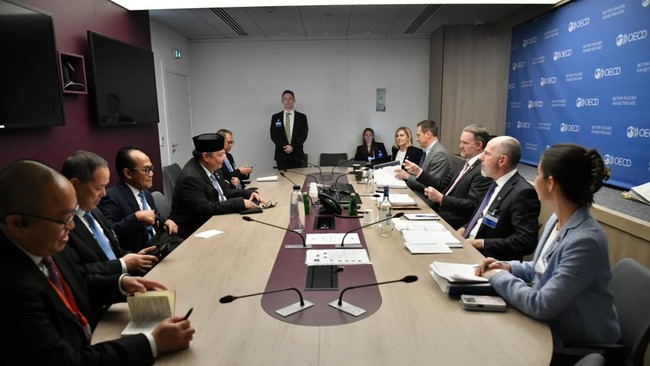
Coordinating Minister for Economic Affairs Airlangga Hartarto met with United States Trade Representative (USTR) head Ambassador Jamieson Greer on the sidelines of the OECD 2026 Ministerial Council Meeting in Paris. During the meeting, the USTR positively acknowledged the Indonesian government’s progressive commitment to labour law enforcement, specifically concerning the resolution of forced labour issues and the ban on importing products indicative of forced labour. This positive response places Indonesia in a priority group of six countries—alongside Canada, Ecuador, the European Union, Mexico, and Pakistan—out of 60 nations eligible for special consideration from the US government. Indonesia was assigned a 10 per cent tariff based on the results of the Section 301 investigation under US trade law, whilst 54 other countries will face a 12.5 per cent tariff. In addition to having agreed an Agreement of Reciprocal Trade (ART), Indonesia, through the Ministry of Trade, issued Trade Minister Regulation No. 9 of 2026, which regulates the prohibition of imports produced by forced labour. ‘As a tangible form of this recognition, the Office of the United States Trade Representative plans to grant 18 product exclusion requests submitted by Indonesia under the Section 301 investigation,’ Airlangga said in an official statement on Friday (5/6/2026). Airlangga stated that this strategic step is certain to provide a significant economic stimulus for the national industrial sector, reduce export cost burdens, and enhance the competitiveness of Indonesia’s leading commodities in the US domestic market. Behind these positive achievements, both countries also openly discussed several concerns regarding future procedural steps to maintain strong cooperation momentum. The US government raised concerns about the implementation timeline for the Section 301 tariff exclusions, which are expected to be realised only after 24 July 2026, following the completion of the Global Tariff implementation. This scheduling aims to avoid overlapping with the currently applicable temporary 10 per cent tariff period, as well as to anticipate ongoing internal legal processes in the US to prevent legal uncertainty for businesses. Furthermore, several unresolved issues were jointly addressed. The US expressed concerns regarding the restructuring of import trade governance through the import licensing system in Indonesia, which affects the flow of US agricultural products such as apples, grapes, beef, pork, maize, and soybean meal. The US expects synchronisation measures so that domestic policies do not hinder Indonesia’s accession process towards OECD membership. At the same time, Indonesia is advocating for market access for copper cathode exports produced by Freeport-McMoRan in Indonesia to be excluded from Section 232 tariffs, a negotiation effort requiring in-depth discussion to align domestic production incentive policies for both countries. In response to these strategic notes, Airlangga will coordinate with relevant sectoral ministries and agencies to expedite procedural certainty on the ground. Both countries also agreed to strengthen close bilateral collaboration and formulate a coordinated action plan to resolve technical trade barriers, accelerate communication on the WTO Agreement on Fisheries Subsidies while considering national interests, and ensure a smooth tariff policy transition for shared economic prosperity.