
USS Abraham Lincoln Under Strain After 260 Days, CENTCOM Commander Visits, Iran Yet to Fall
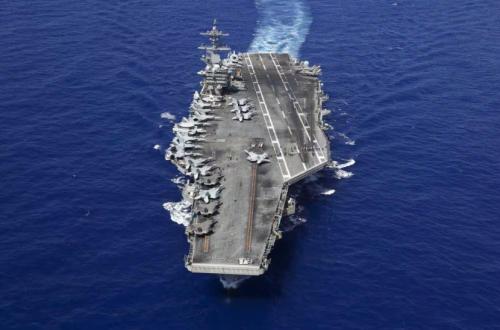
Nearly nine months into deployment, more than 200 days without a port call, and thousands of fighter jet flights are beginning to take a toll on the crew of the USS Abraham Lincoln. The American aircraft carrier has become one of the clearest illustrations of the protracted war against Iran, which has yet to find a resolution.
Commander of US Central Command (CENTCOM) Admiral Brad Cooper personally visited the carrier in the Arabian Sea as part of a trip to the Middle East that concluded on Saturday (15/8/2026). The visit came amid growing scrutiny of the mental health, living conditions, and resilience of around 5,000 sailors and Marines aboard the USS Abraham Lincoln.
Cooper defended the crew’s condition and praised their resilience. He said the USS Abraham Lincoln had the lowest reported number of mental health-related cases among the 11 active aircraft carriers in the US Navy, while acknowledging that long deployments at sea are demanding work, as reported by several American media outlets on Saturday (17/8/2026).
On shore, however, family members of some crew members told far more worrying stories. Military media Navy Times and Stars and Stripes reported declining morale and alleged attempts by several sailors to jump from the ship during the repeatedly extended deployment.
The US Navy denied any increase in suicidal ideation or suicide attempts aboard the ship. The Navy did not release detailed data, citing operational security and patient confidentiality.
One incident has been confirmed: a sailor fell overboard in early August and was quickly recovered. The crew member received treatment from the USS Abraham Lincoln’s medical department before being transferred from the ship for further care, but Navy officials did not state whether the incident was a suicide attempt.
For this reason, the term ‘burnout’ for the entire crew should be used with caution. What can be confirmed from official statements and family reports is the presence of psychological stress, fatigue from the extended deployment, morale issues, and concerns about living conditions aboard the ship.
More than 240 Days Without Setting Foot in Port
The USS Abraham Lincoln departed its homeport in San Diego on 21 November 2025 for a deployment initially headed to the Pacific region. The ship was then diverted to the Middle East and arrived in January 2026, several weeks before the US and Israel began strikes against Iran on 28 February.
The carrier was originally scheduled to return to the United States in May 2026. The war changed those plans, and its deployment ultimately exceeded 260 days, with more than 240 days spent continuously at sea.
In fact, the USS Abraham Lincoln went more than 200 days without a port visit. US Senator Richard Blumenthal called the situation a modern record for consecutive days at sea.
US warship deployments typically last between six and nine months and can be extended during conflict. The issue with the USS Abraham Lincoln is not only the length of the deployment but also the intensity of combat operations its crew has had to carry out during that period.
CENTCOM said the USS Abraham Lincoln carrier strike group has conducted more than 10,000 aircraft flights during the deployment. The ship has also expended approximately 1.5 million pounds of ordnance, or about 680 tonnes.
The figure of 10,000 does not mean all flights were strikes against Iran. The term used by CENTCOM is aircraft flights, which encompasses various flights for combat operations, patrols, surveillance, support, training, and other aviation functions.