
Used Electric Vehicle Battery Waste Poses Environmental Risks; How Jakarta Is Preparing
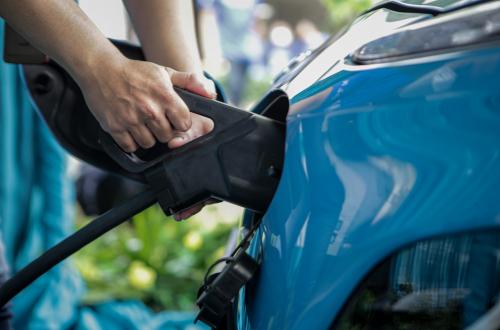
JAKARTA — One issue that has received insufficient attention amid the rapid growth of electric vehicles is battery waste. The Jakarta Provincial Government is therefore preparing a policy framework to anticipate pollution risks from electric vehicle battery waste, protect residents and the environment, and encourage the reuse of valuable materials contained in the batteries.
The policy is being developed through a study on electric vehicle battery waste management, in collaboration with the University of Indonesia’s Institute for Applied Science. Jakarta Environmental Agency head Dudi Gardesi said the growth of electric vehicles needed to be accompanied by a safe and sustainable waste-management system.
“Through a study conducted with the University of Indonesia’s Institute for Applied Science, the Jakarta Provincial Government is seeking to strengthen its planning for battery-waste management so that it does not harm the environment or the public,” Dudi said on Friday (30 October 2026).
Dedy Setiono, head of the hazardous and toxic waste management division at the Jakarta Environmental Agency, said Jakarta was one of Indonesia’s main centres for electric vehicle use. In 2023, the city had 55,240 battery electric vehicles, or around 68 per cent of the national total.
“The more electric vehicles are used, the greater the potential volume of used batteries that needs to be managed,” Dedy said.
He said the study was needed to develop appropriate policies and strategies to prevent pollution. Proper management could also create opportunities to recover materials from used batteries and support the availability of battery raw materials. However, he added, such opportunities must be pursued in accordance with hazardous and toxic waste management regulations.
Amelia Rachmatunisa, coordinator of the cross-border waste movement and conventions working group at the Ministry of Environment, said valuable materials in battery waste could be reused. “We are encouraging the waste generated to become a new resource. For that reason, landfilling should be avoided as far as possible, with reuse and processing prioritised,” Amelia said. She added that, beyond recovering materials, used electric vehicle batteries could also be put to other uses.
Slamet, acting head of the Centre for Electricity, New and Renewable Energy, and Energy Conservation Surveys and Testing at the Ministry of Energy and Mineral Resources, said the batteries could have a second life, for example as energy storage or as a power source for low-speed vehicles such as forklifts. He said a collection system for used batteries would also need to be established to ensure they were managed properly.
Putri Ghassani Ramadhina, a circular economy expert at the Ministry of National Development Planning (PPN)/Bappenas’ Directorate of Environment, stressed the importance of interconnected collection points. One option, she said, would be to use networks of repair shops that already work with manufacturers, under local government oversight. This would make it possible to track used batteries from repair shops through to subsequent handling.
Source: jawawa.id (https://jawawa.id/newsitem/used-electric-vehicle-battery-waste-poses-environmental-risks-how-jakarta-is-preparing-1793346684)
Originally published by Republika (https://daerah.republika.co.id/berita/tnpkua282/limbah-baterai-bekas-kendaraan-listrik-berisiko-rusak-lingkungan-begini-antisipasi-pemprov-dki), translated from Indonesian