
Use of ITE Law in Babeh Aldo Case Deemed Procedurally Flawed
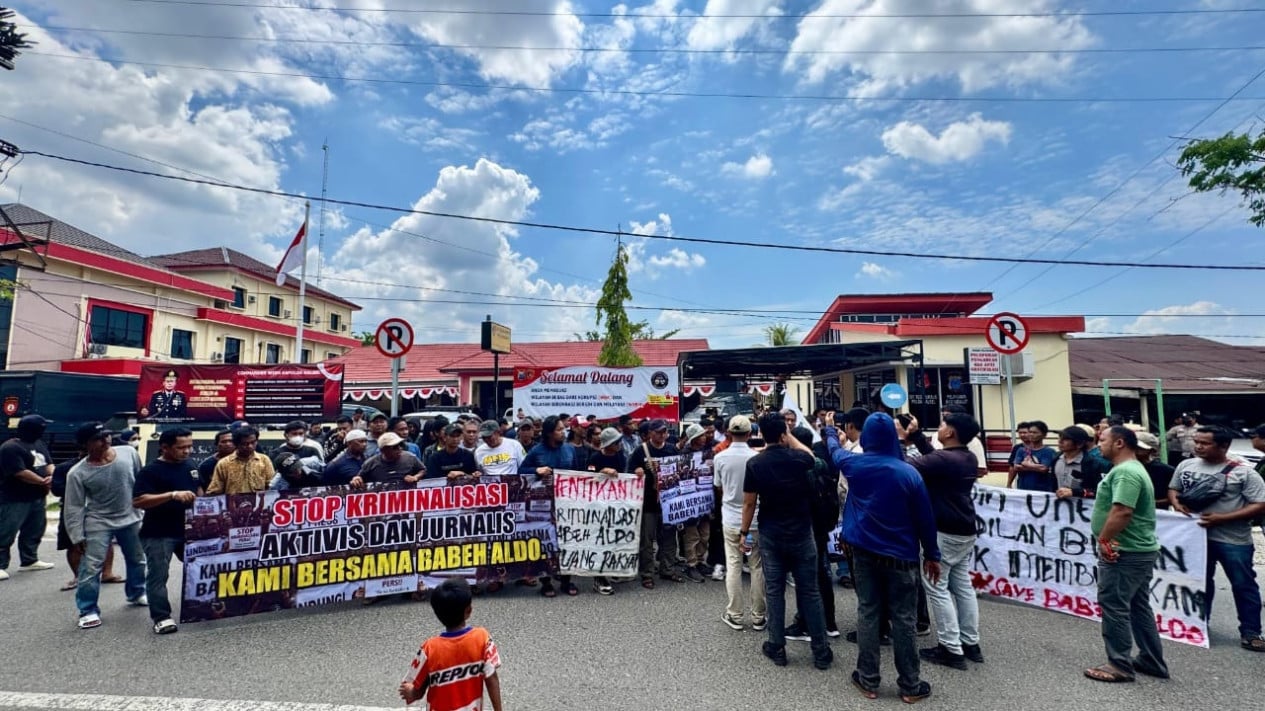
Jakarta, VIVA – Henri Subiakto, an expert in information and electronic transactions law at Airlangga University, has judged the use of severe articles of the ITE Law as a means to detain Babeh Aldo, prior to any court process, to be procedurally defective and flawed from the aspect of evidence.
According to Henri, the use of the ITE Law articles is susceptible to being described as an attempt to ‘silence’, because Babeh Aldo’s activities cannot be separated from his record of actively criticising many matters in South Kalimantan.
“It is procedurally defective because Babeh Aldo, who is from Surabaya, was deliberately present in South Kalimantan essentially working in his capacity as a journalist assigned to carry out an investigation by his media outlet. For cases involving the media and journalists, the police should first follow the procedure based on the Press Law, not immediately proceed with a criminal process using the ITE Law. This is based on Constitutional Court Ruling No 145/PUU-XXIII/2025,” Henri explained in a statement received on Wednesday, 29 July 2026.
“They should first have requested clarification from the media outlet that assigned him and sought the consideration of the Press Council. Because the person concerned (Babeh Aldo), when facing the police or investigators, had shown his press identity card and also presented an assignment letter from his media office. Even if that media outlet has not yet been verified by the Press Council, the journalist concerned must still be protected, so long as he works in accordance with the Journalistic Code of Ethics and the Press Law,” he continued.
He emphasised that, as long as the content or work in question is a journalistic product, it is the state’s obligation to provide legal protection in accordance with the Press Law.
“That is the implementation of the Press Law as lex specialis,” said Henri.
In his view, the Press Law serves as a state regulation that functions to protect the journalism profession when journalists carry out their work.
For legal disputes related to journalistic works, the priority route is to grant the right of reply and the right of correction to those who object to the media’s content.
This should be preceded by a complaint to the Press Council (so that an ethical or professional resolution can take place), and only then may other legal channels be pursued if there has been a professional violation.
Furthermore, he stated that even if the ITE Law were applied, the interpretation of the norms of the articles applied must also be correct in accordance with their original norms. The ITE Law’s articles must not be applied arbitrarily by the authorities simply because a powerful individual has taken offence.