
US Warship Radar Suddenly Malfunctions, Millions of People Killed
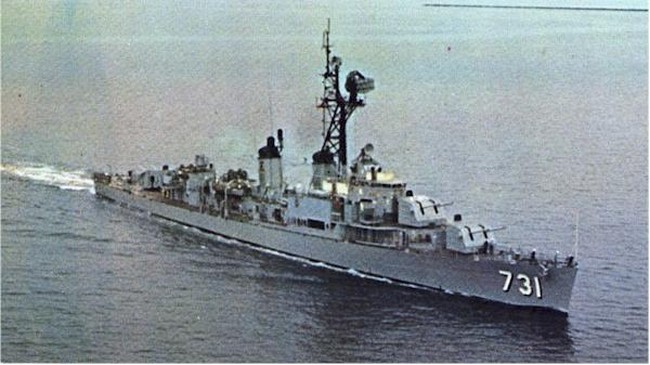
Jakarta, CNBC Indonesia - A radar misreading at sea once triggered a major conflict that claimed millions of lives in Indonesia’s neighbour. This incident occurred in 1964, when the United States Navy destroyer USS Maddox was patrolling in the Gulf of Tonkin, Vietnam.
At that time, Vietnam was divided into communist North Vietnam and pro-Western South Vietnam. The US, fearing the spread of communism in Southeast Asia, conducted secret patrols by positioning warships in the Gulf of Tonkin.
Unfortunately, the patrol did not go smoothly. On 2 August 1964, the USS Maddox patrol was detected by North Vietnamese patrol boats. An exchange of fire occurred, but it did not result in any casualties.
This situation heightened US alertness.
The climax came on the night of 4 August 1964. Amid poor weather and high waves, the warship’s radar and sonar detected unusual signals. On the radar screen, there was a fast-moving white dot indicating the presence of foreign vessels and approaching torpedoes targeting the USS Maddox.
As recounted in the book America, the Vietnam War, and the World (2003), under high pressure and without clear visual confirmation, the Maddox, along with its accompanying ship, immediately manoeuvred aggressively. Shots were fired directly at the target visible only on the radar screen.
They assumed an enemy was in sight, even though there was no response for hours. Ironically, this assumption was interpreted as a sign that the enemy had been defeated.
When the sun rose, reports of the US ship being attacked in Vietnam were swiftly sent to Washington. The administration of President Lyndon B. Johnson (1963-1969) responded quickly. The attack was regarded as unprovoked aggression by North Vietnam in international waters.
Shortly thereafter, the US government submitted the Gulf of Tonkin Resolution to Congress. On 7 August 1964, the resolution was passed, granting broad authority to the president to use military force in Southeast Asia.
From this point, the major escalation began.
The US then deployed its military forces en masse to Vietnam, including large-scale bombing campaigns. The conflict developed into the Vietnam War, one of the longest and most controversial wars in modern history. According to the Britannica website, 2-3 million people died as a result of the US invasion in Vietnam.
However, it was later revealed that the millions of deaths and destruction caused by the war stemmed from an error in the US warship’s radar system. In fact, on the night of 4 August, no enemy attack ever occurred. The signals captured by the radar were suspected to be from the bad weather and sea waves.
“There was no second attack against US Navy ships in the Gulf of Tonkin on early August 1964. Further, the evidence suggests a worrying and deliberate effort by Secretary of Defense McNamara to distort evidence and mislead Congress,” revealed a secret report declassified to the public 40 years later, quoted from the US Naval Institute website.
Due to pressure from a few parties, the narrative of the US being attacked by Vietnam persisted and became the gateway to broader military involvement. The war lasted more than a decade and killed millions of people, including many civilians.
US President Lyndon B. Johnson even acknowledged the mistake.
“Damn it, those stupid sailors were just shooting at flying fish!” Johnson reportedly said.
In the end, after starting the war based on a radar error, the US also had to swallow defeat. On 30 April 1975, North Vietnamese forces successfully captured the capital of South Vietnam, Saigon, marking a communist victory. To avoid appearing defeated, the US built an image of itself as the winner through films like Rambo.