
US Vice President JD Vance Postpones Switzerland Visit for Iran Talks
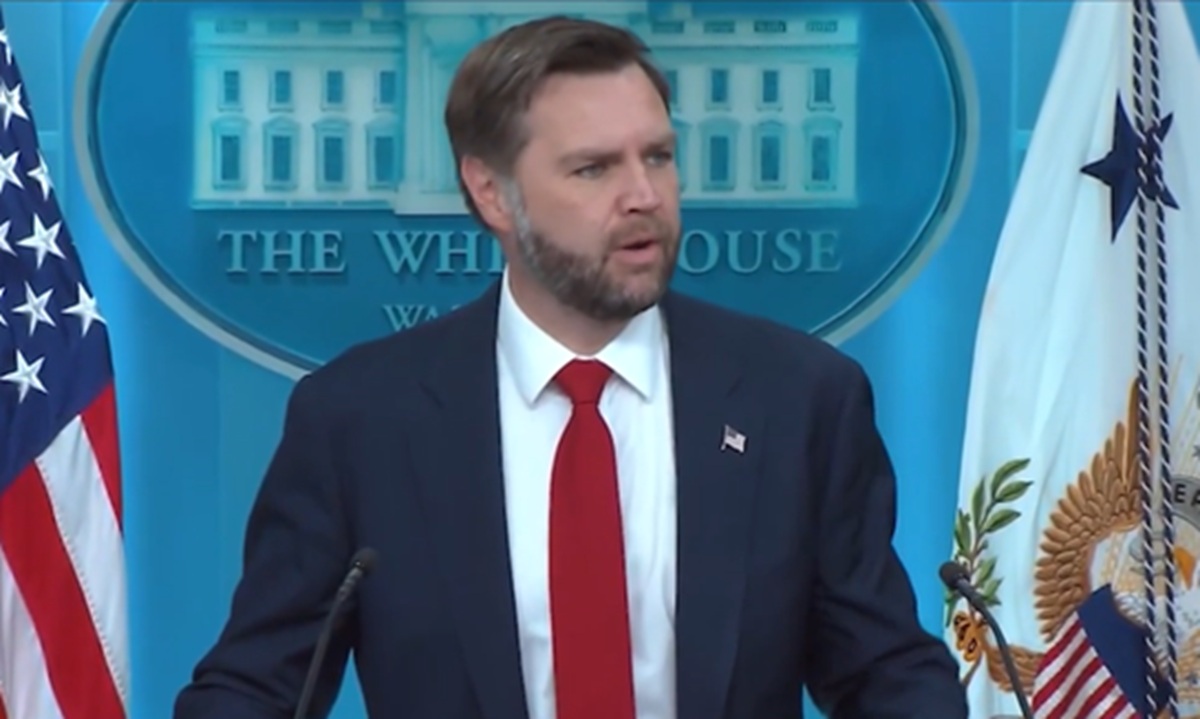
The White House announced that US Vice President JD Vance has postponed his planned trip to Switzerland, which was originally scheduled for Friday to discuss follow-up steps to the Middle East peace agreement. “The logistics for these negotiations are never simple or predictable. As of now, the Vice President is not departing tonight,” a White House spokesperson said. “We hope to begin technical talks as soon as possible.” Similarly, Iranian news agency Tasnim stated that “nothing has been confirmed” regarding the departure of the Iranian delegation to Switzerland.
Previously, Iran’s Supreme Leader Ayatollah Mojtaba Khamenei stated he had approved the agreement signed by US President Donald Trump and Iranian President Masoud Pezeshkian. The deal initiates a 60-day period to discuss broader issues, including Iran’s nuclear programme. “But I gave permission because of the commitments made by officials, including Pezeshkian, to ‘protect the rights of the Iranian nation’,” Khamenei wrote in a written statement. He added that future “face-to-face negotiations” do not mean “accepting the enemy’s point of view.”
On the other side, Iran’s chief negotiator and Speaker of Parliament, Mohammad Bagher Ghalibaf, issued a stern warning via social media platform X. “If there is any violation, breach of agreement, or overstepping by the other party, we have no doubt that a decisive response will be given to the enemy,” Ghalibaf asserted.
As part of the agreement, the US military confirmed it has lifted the naval blockade on Iranian ports, although its warships remain on alert in the region. Activity in the Strait of Hormuz has begun to resume, with several Saudi Arabian oil tankers and a French liquefied natural gas vessel passing through. Under new rules from Iran’s Supreme National Security Council, passing ships must apply to a new government body without charge for the next 60 days.
The deal has sparked both support and opposition on both sides. In the US, Republican Senator Bill Cassidy criticised the policy as “a major foreign policy blunder in decades.” However, President Trump defended his decision in an interview. “The only way I could be tougher is if I went over there for another two or three weeks and kept bombing them. Right? But what do we get out of that? The Strait of Hormuz wouldn’t be open,” Trump said. “We wouldn’t get oil for months. That kind of thing could cause a depression worldwide.”