
US Vice-President Blames Iran War and Israel Ties; Republican Politician Says He Will Not Back JD Vance
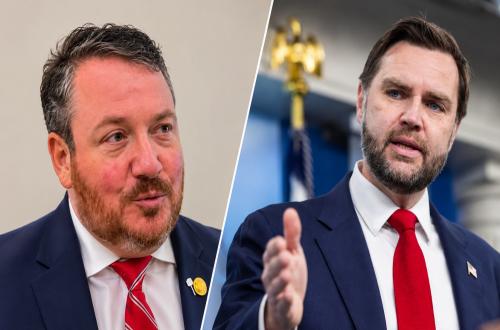
WASHINGTON — US Vice-President JD Vance’s remarks blaming the Iran war and Washington’s relationship with Israel for the Republican Party’s midterm election defeat have prompted open opposition from several conservative figures. Tensions rose further after Republican Congressman Randy Fine said he would not support Vance in the 2028 presidential primaries, while senior Republican strategist Karl Rove questioned the vice-president’s foreign-policy views.
The latest developments reveal divisions among US conservatives over the Iran war and the future of Washington’s strategic relationship with Israel. Some figures believe the war, launched by Donald Trump’s administration in February 2026, has politically harmed the Republican Party. Conservative supporters of Israel, meanwhile, argue that criticism of US-Israeli ties could weaken national security interests.
The controversy began on Wednesday, 4 November 2026, a day after the US midterm elections, in which the Democratic Party secured a major victory.
In a lengthy statement on X, Vance argued that the Republican defeat was not primarily due to low turnout among the party’s supporters, but to a shift in the views of some voters who had backed the Trump-Vance ticket in the 2024 presidential election. “The reason we lost is the war. The president himself said so last night,” Vance wrote.
According to reports by Reuters and the Associated Press on 4 November, Vance was referring to the US-Israeli war against Iran, which has been under way since 28 February 2026. The conflict has disrupted energy trade, pushed up fuel prices and prompted debate over the cost of US military operations in the Middle East.
Vance listed four main concerns he said had been voiced by voters who turned away from the Republican Party: ending the Iran war, tackling the cost of living and inflation, putting America’s interests first, and changing the United States’ relationship with Israel.
The last point became the source of controversy. Vance did not explain in detail what changes he had in mind, but naming Israel as an electoral concern drew a response from conservative groups that have long supported close ties between Washington and Tel Aviv.
Republican Politician Says He Will Not Back Vance in 2028
The sharpest response came from Florida Republican Congressman Randy Fine. In an exclusive interview with The Jerusalem Post published on Monday, 9 November 2026, Fine accused Vance of betraying President Trump and trying to shift responsibility for the Republican defeat onto Israel and the American Jewish community.
“I will not support JD Vance in the 2028 primary,” Fine said.
Fine said the vice-president’s remarks about Israel were misguided and unacceptable. In his view, the party’s defeat should be explained by reviewing the administration’s policies and the Republicans’ political performance, rather than by making US-Israeli relations a target of blame.
He also accused Vance of failing to conduct diplomacy to end the Iran war. Fine linked the continuation of the conflict to negotiations previously led by the vice-president.
“JD Vance is the reason the war in Iran has not ended,” Fine said in the interview.
Fine’s statement is a political accusation. There is no independent evidence establishing Vance as the sole cause of the failure of peace talks. The negotiations have also involved various disputes over US and Iranian demands concerning Iran’s nuclear programme, economic sanctions and restrictions on military operations.
Fine specifically referred to the influence of conservative commentator Tucker Carlson, who has long criticised US military aid to Israel and opposed Washington’s involvement in a prolonged war in the Middle East.
Fine said the spread of conservative views calling for limits on US involvement abroad had deepened divisions within the Republican Party.
Fine’s statement has implications for internal party relations ahead of the 2028 presidential election. Vance has often been mentioned as a potential political successor to Trump, although he has not formally announced a candidacy.
Fine’s refusal shows that some Republicans are openly objecting to the direction of Vance’s foreign policy. However, the position of one member of Congress cannot be taken as representing the official decision of the entire Republican Party.
Karl Rove Says Vance Is Too Isolationist
Criticism of Vance broadened after Karl Rove, a senior Republican political strategist who once served as an adviser to President George W. Bush, gave his assessment on Monday, 9 November 2026.
Speaking at the annual meeting of the Jewish Federations of North America in Washington, Rove criticised Vance’s approach to Israel and Middle East security.
According to Jewish Insider, Rove described Vance as a supporter of a neo-isolationist approach — a tendency to limit US involvement in international security affairs and conflicts.
Rove argued that abandoning Israel would harm US economic and security interests. He also said he opposed the possibility of Vance becoming the Republican presidential nominee in 2028.
Rove questioned the basis of Vance’s analysis, which identified the Iran war and relations with Israel as the main causes of the election defeat.
He cited voter data indicating that around 4 per cent of respondents named foreign policy as the most important issue, while 39 per cent cited the economy and 33 per cent pointed to the state of democracy.
According to Rove, the difference suggests that domestic issues carry greater weight in shaping voters’ choices than the US relationship with Israel.
However, the low proportion of voters who name foreign policy as their principal concern does not automatically mean the Iran war had no effect on the election. The conflict’s impact on petrol prices, inflation and the cost of living may be registered by voters as an economic issue.
That difference in interpretation means Vance’s and Rove’s analyses cannot be straightforwardly compared using a single polling figure.
Source: jawawa.id (https://jawawa.id/newsitem/us-vice-president-blames-iran-war-and-israel-ties-republican-politician-says-he-will-not-back-jd-vance-1794289867)
Originally published by Republika (https://news.republika.co.id/berita/to9t4o451/wapres-as-salahkan-perang-iran-dan-israel-politisi-republiktakakan-dukung-jd-vance), translated from Indonesian