
US Troops Depart, Iran Poised to Strengthen Influence in Iraq and Kurdistan
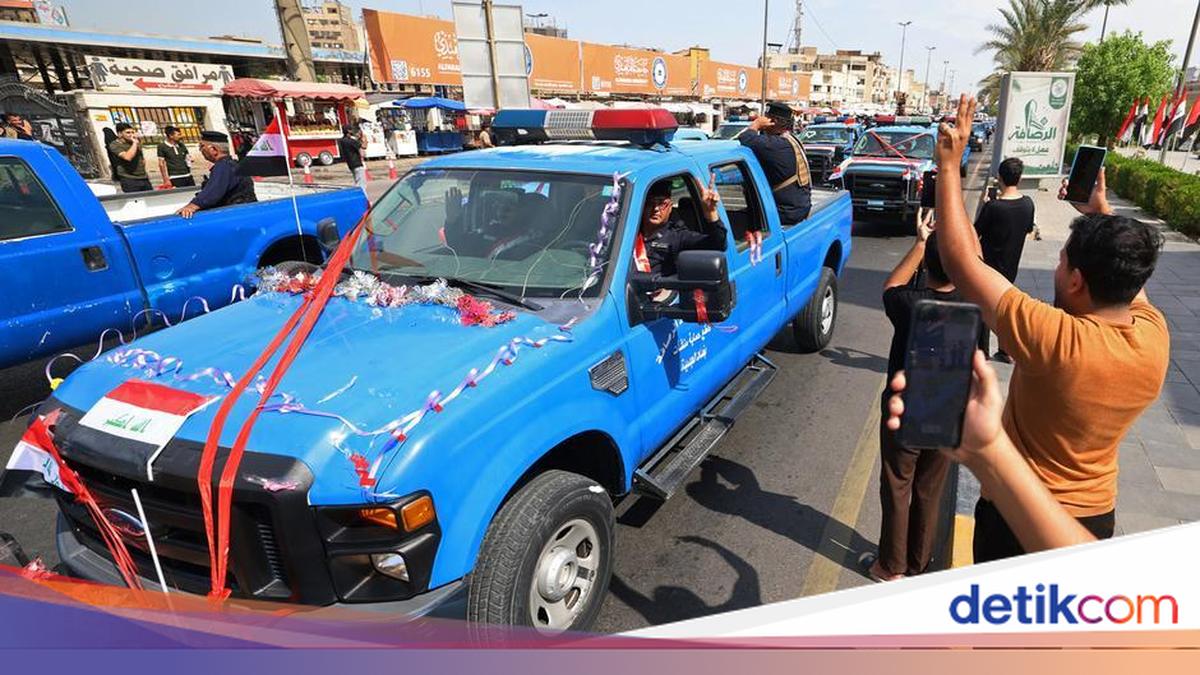
The end of the United States military mission in Iraq has created a security vacuum that poses a risk to the semi-autonomous Kurdish region.
In Baghdad, the withdrawal of US troops has been welcomed by politicians. Iraqi Prime Minister Ali al-Zaidi even officially designated 1 October as ‘Sovereignty and Independence Day.’ Tehran, the Islamic Revolutionary Guard Corps (IRGC), and Iranian-backed Shia militias have also welcomed the move.
However, a different atmosphere is felt in Erbil, the capital of the Kurdistan Region of Iraq (KRI). After two decades of relying on Washington’s protection, the region now faces pressure from various directions. Baghdad is increasingly pushing for the centralisation of power, while military threats from neighbouring countries, particularly Iran, continue to rise.
Iran is narrowing Kurdistan’s room for manoeuvre. The threat to Kurdistan currently does not take the form of a large-scale military invasion, but rather a slow and planned erosion of autonomy, according to Hesam Dastpish, a Middle East analyst based in Brussels.
According to him, Tehran’s strategy towards Erbil tends to be hostile and focuses on efforts to limit the region’s manoeuvrability. The Islamic Republic of Iran ultimately wants to trim the political influence of the KRI until it becomes merely an administrative body.
‘Tehran’s goal is to transform the Kurdistan region into an institution that has absolutely no room for manoeuvre,’ Dastpish told DW, pointing to repeated attacks launched by Iran in the region, which allegedly target camps of Iranian Kurdish opposition groups.
Salahuddin Khadiw, a political analyst based in Mahabad in the Iranian Kurdish region, said that neighbouring countries do not always want to abolish Kurdish autonomy entirely. According to him, Tehran more desires a Kurdistan that is ‘controlled and weak.’ By facing the competing power centres in Erbil and Sulaymaniyah separately, Iran is able to maintain its influence throughout the KRI. At the same time, Tehran seeks to prevent the emergence of a single dominant Kurdish power on its western border.
Political fragmentation is creating a gap for Iran. Beyond external pressure, one of the most vulnerable points in Iraqi Kurdistan comes from within. The legacy of the civil war in the 1990s is still felt in the rivalry between the two main factions, the Kurdistan Democratic Party (KDP) and the Patriotic Union of Kurdistan (PUK).
Hiwa Mahmoud Osman, an analyst of Iraqi and Kurdish affairs in the Middle East, assesses that Tehran relies heavily on this internal friction. ‘Iran has spent decades mastering political influence within Iraq,’ he told DW. ‘The greatest obstacle for the Kurds is the division among themselves. Without a united front, foreign powers certainly have more room to manoeuvre.’
Ardeshir Pashang, a Middle East researcher in Tehran, warned that the failure of Kurdish leaders to resolve their political disputes could deepen the rift and ultimately threaten the existence of the Kurdistan Region as a political entity.
Iranian Kurdish opposition presents a dilemma for Erbil. Another issue facing Erbil is the presence of Iranian Kurdish opposition groups sheltering in the KRI. Groups that have historically clashed with Iranian forces now face significant pressure to disarm and relocate.
Dastpish said their presence provides Iran with a pretext to launch drone and missile attacks across the border. However, he does not expect Erbil to offer ‘total surrender,’ as maintaining a balance with these groups remains important for the KRI’s domestic legitimacy and foreign relations.
Kasra Qaredaghi, a political science researcher based in the US, assesses that the position of these groups is now more vulnerable than before. According to him, Iran was previously able to attack the havens of these groups while US troops were still fully deployed. Those attacks subsequently led to border security agreements between Baghdad and Tehran in 2023. Following the withdrawal of US troops, Erbil’s influence is practically non-existent, giving Tehran greater leverage to force concessions.
Without troops, the US relies on the power of the dollar. Although its troops have been withdrawn, Washington’s influence in Iraq has not completely disappeared. That influence now relies more heavily on global financial networks.
Qaredaghi describes this shift as a ‘reordering of power,’ with the US, Turkey, and Saudi Arabia acting as natural counterweights to Iran’s expanding influence. Osman also highlighted Iraq’s high financial dependence on the US dollar. This economic relationship allows the US Treasury to indirectly influence Baghdad’s domestic affairs, including ensuring the payment of civil servant salaries in the KRI.
Khadiw described Washington’s strategic shift as a transition from an ‘American military balancer’ to a ‘powerful economic observer.’ However, as internal and external pressures increase, analysts say the Kurdish region in Iraq may have no choice but to reunite its internal divisions and present a united front to defend its autonomy and limit Iran’s strategic gains in the region.
Source: jawawa.id (https://jawawa.id/newsitem/us-troops-depart-iran-poised-to-strengthen-influence-in-iraq-and-kurdistan-1791363642)
Originally published by detikcom (https://news.detik.com/dw/d-8696428/pasukan-as-pergi-iran-berpeluang-perkuat-pengaruh-di-irak-dan-kurdistan), translated from Indonesian