
US Trade War 'Rises from the Grave', Trump Hikes This Tariff to 200%
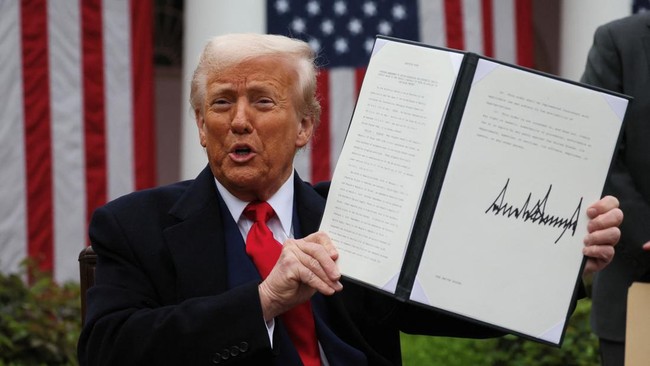
The trade war is now rising from the grave. United States (US) President Donald Trump has been aggressively announcing new tariffs on a number of countries over the past week. On 16 July, he set a 25% tariff on Brazil, whilst over the weekend, he imposed a 50% tariff on Canadian products. The USTR on Tuesday also signalled new tariffs for 60 countries, including Indonesia, citing ‘forced labour practices’. In an update on Wednesday (22/7/2026), it is the turn of generic drugs imported into the US to face tariffs. Initially, these drugs were to receive a zero tariff for two years starting 1 August, before the tariff rose to 100% in August 2028 and then to 200% a year later. ‘This phased schedule is intended to encourage generic drug manufacturers to move production domestically,’ Trump said in a social media post, describing the increase as a ‘penalty’ for companies that do not build plants and facilities in the US during the grace period. ‘Tariffs on patented, branded drugs will remain unchanged,’ Trump stated. On 2 April, Trump imposed 100% tariffs on patented pharmaceutical products and ingredients under Section 232, but exempted generic drugs, biosimilars, and related ingredients. Larger drug manufacturers were given 120 days before the 100% tariff takes effect, whilst smaller manufacturers relying on contract producers have 180 days. More than a dozen major drug manufacturers, including Eli Lilly, Pfizer, and Novo Nordisk, have already reached agreements with Trump to lower prices on new and existing drugs. Trump has used the threat of tariffs and pricing policies to pressure drugmakers not to charge Americans more than patients in other high-income countries. India is believed to be heavily impacted, as its pharmaceutical companies supply nearly 50% of all generic drugs consumed in America. The US accounts for about a third of India’s pharmaceutical exports annually, mostly cheaper versions of popular drugs. Chinese companies also dominate the upstream supply of active pharmaceutical ingredients, such as amoxicillin and heparin.