
US to Open Nuclear Submarine Base Near Indonesia, Deploying 1,000 Troops
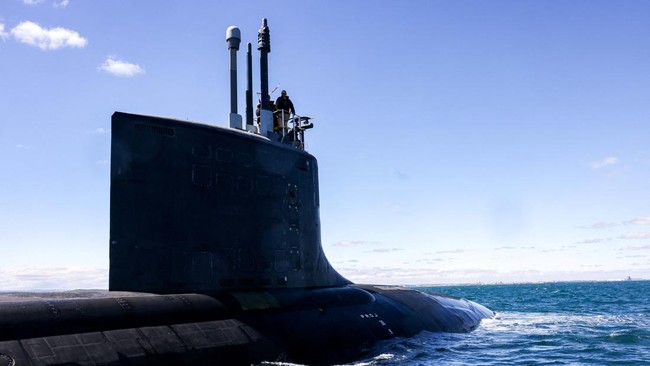
The military presence of the United States in Australia is set to become significantly more massive. Washington is reportedly preparing to open and operate a base for Virginia-class nuclear-powered submarines at the HMAS Stirling base, near Perth, by 2027.
According to ABC, the expansion plans in the country neighbouring Indonesia were discussed directly during a meeting between Australian Defence Minister Richard Marles and US Defence Secretary Pete Hegseth in Washington DC.
Based on the force posture agreement, approximately 1,000 US Navy personnel are scheduled to be stationed at HMAS Stirling starting next year to support these submarine operations, complementing the existing annual rotation of US Marines in Darwin.
Marles revealed that more detailed announcements regarding this expansion of the US military posture will be delivered during the AUSMIN meeting, when he and Foreign Minister Penny Wong meet with their US counterparts in the coming months.
“Since we took office, you can see a straight line of American strength growing in Australia, and we believe this is vital in terms of providing deterrence in the Indo-Pacific, as well as providing stability and peace in the Indo-Pacific. This is very much in line with Australia’s national interests,” he asserted.
In addition to the submarine base, the Pentagon also highlighted plans to accelerate force posture initiatives at bases in northern Australia, which are often considered vulnerable points. Official readings from the meeting also suggested more massive military industry cooperation between the two nations, including the production of guided missiles.
On the other hand, sensitive issues regarding budgets also came under scrutiny. The US continues to exert pressure on its allies to substantially increase military investment. Hegseth specifically emphasised the need for capable allies to contribute to collective defence and invest in their own sovereign security. Responding to this pressure, Marles defended Australia’s position, stating that recent increases in Australian military spending have been well-received.
“We now have defence spending at 2.8% of GDP according to NATO measures, which places us ahead of most NATO countries, with the exception of Nordic, Baltic, Polish, and similar frontline nations. This means our current spending, in relation to defence, is higher than Germany, the UK, France, Spain, and Italy,” he explained.