
US to Make Neighbouring Australia a Base for New Weapons as Trump Bolsters Combat Readiness
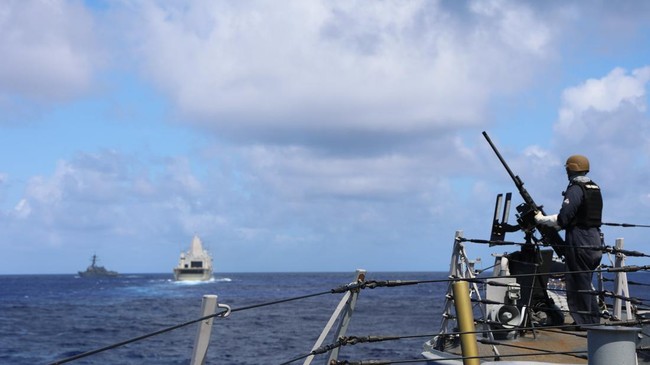
The United States plans to utilise Australia as a new weapons storage base in the Indo-Pacific region. This move comes amid the US-China rivalry and President Donald Trump’s efforts to strengthen Washington’s military readiness in the region near Indonesia.
The plan was revealed in US Navy tender documents, which show an allocation of US$30 million (approximately Rp531 billion) to build logistics warehouses and supporting facilities in the state of Victoria, Australia.
“US Marine Corps activities in Australia support integrated global sustainment by maintaining ready-to-use equipment and supplies for operations and exercises throughout the Indo-Pacific,” said a spokesperson for the US Marine Corps Pacific Forces, as quoted by Arab News on Wednesday (17/6/2026).
This facility will serve as the first permanent storage location for US Marine Corps combat supplies in Australia. Military weaponry and equipment will initially be placed in Melbourne before being moved to a new warehouse at the Bandiana military base in Victoria. Full capacity for the facility is targeted to be reached by 2028.
The development of this armoury is part of the US strategy to expand its logistics and combat support network in the Asia-Pacific. Previously, the US Marine Corps has operated military equipment storage systems in various parts of the world since the Cold War era, including in Norway, alongside fleets of logistics ships stationed at strategic locations.
The tender documents also mention that the US Navy will collaborate with global defence contractors to recruit approximately 110 experts, ranging from engineers and mechanics to safety specialists. They will be tasked with managing stocks of combat equipment, which includes various types of weapons and military supplies.
Although Australia does not permit the presence of permanent foreign military bases on its territory, defence cooperation between Canberra and Washington has continued to increase in recent years. Currently, around 2,000 US Marine personnel undergo rotational six-month training exercises every year in Darwin, Northern Australia.
At the same time, the Pentagon has requested that the US Congress approve a budget of US$500 million (approximately Rp8.15 trillion) to strengthen the deployment of military equipment and fuel reserves in the Indo-Pacific region next year.
Several analysts believe the selection of Australia as a weapons storage location is not without reason. The country’s geographical position is considered relatively safer and outside the range of most Chinese missile systems compared to other US bases in the region.
A recent report from the Lowy Institute even warned that northern Australia could potentially be targeted by Chinese ballistic missiles deployed at Beijing’s military posts in the South China Sea. Therefore, the location in Victoria, situated in southeastern Australia, is considered to offer a higher level of protection.
Sam Roggeveen, Director of the International Security Program at the Lowy Institute, stated that the missile threat is a significant consideration in the placement of this facility. According to him, the armoury would become a clear target for China once operational.
Furthermore, he assessed that the increased US military presence in Australia marks a significant shift in Canberra’s defence policy, which is becoming increasingly aligned with Washington’s strategy in the Indo-Pacific.
Meanwhile, John Blaxland, Professor of International Security at the Australian National University, noted that this move demonstrates the growing importance of Australia’s position in the competition for influence between the US and China.
Source: jawawa.id (https://jawawa.id/newsitem/us-to-make-neighbouring-australia-a-base-for-new-weapons-as-trump-bolsters-combat-readiness-1781653842)
Originally published by CNBC Indonesia (https://www.cnbcindonesia.com/news/20260616232418-4-743191/tetangga-ri-jadi-basis-senjata-baru-as-trump-siapkan-kekuatan-tempur), translated from Indonesian