
US to Bring Geopolitical Crises to G20, with Russia’s Attendance in Focus
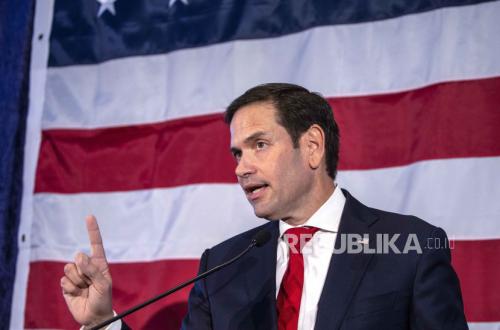
JAKARTA — The United States will bring issues including global geopolitical crises, the security of international trade routes, and energy and food resilience to the G20 foreign ministers’ meeting in Atlanta, Georgia, on 30–31 October 2026. The meeting, chaired by US Secretary of State Marco Rubio, is also drawing attention because Russia is expected to send a delegation amid diplomatic tensions between Washington and Moscow.
In a statement on Monday (26 October 2026), the US Department of State said the meeting would focus on addressing the various geopolitical crises disrupting the international economy. Washington believes global security issues are becoming increasingly difficult to separate from trade stability, energy supplies, food security and the smooth operation of supply chains.
“During the ministerial meeting, the United States will work with G20 partners to address geopolitical crises contributing to global economic shocks, including threats to freedom of navigation, energy and food security, and supply chains,” the US Department of State said in a statement reported by Anadolu Agency.
The US government said the discussions form part of President Donald Trump’s efforts to refocus the G20 on economic growth and economic security. Washington also wants to secure practical cooperation that can reduce the impact of international instability on trade and economic activity.
The Atlanta meeting will be an important step towards the G20 summit scheduled to take place in Miami, Florida, on 14–15 December 2026. The US Department of State stressed that the relationship between international security and economic prosperity would underpin the agenda being prepared for leaders of G20 member states.
The emphasis on geopolitical issues comes as several strategically important regions continue to face security disruptions affecting international trade. Conflict in the Middle East, shipping disruptions in the Red Sea region and security uncertainty around the Strait of Hormuz show how military tensions can develop into economic pressures across borders.
Global Trade Routes Under Pressure
The security of shipping lanes is expected to be a key concern in Atlanta, given the world’s heavy reliance on maritime transport for trade. Threats to several strategic straits affect not only the movement of goods but can also raise freight costs, insurance premiums and energy commodity prices.
The United Nations Conference on Trade and Development (UNCTAD) said on 17 September 2026 that more than 80 per cent of global merchandise trade by volume is carried by sea. Disruptions at strategic maritime chokepoints can quickly affect logistics costs, energy prices, food supplies and the financial conditions of countries dependent on international trade.
UNCTAD reported that the cost of transporting oil on several routes from the Middle East to East Asia had risen sharply because of the security crisis in the Strait of Hormuz. At the end of August, certain freight rates exceeded US$120 per tonne, around three times the level recorded in the same period a year earlier.
Pressure on international trade has also increased because of disruptions near the Bab el-Mandeb Strait, the shipping route linking the Red Sea with the Gulf of Aden. UNCTAD said that rerouting oil shipments from Saudi Arabia to South Korea could extend the journey from about 24 days to 54 days if vessels had to avoid the area.
The route changes increase fuel consumption, the number of vessels required and overall transport costs. The effects can feed through to goods prices and production costs in various countries, particularly economies reliant on imported energy and commodities shipped by sea.
The International Maritime Organization (IMO) has also warned of deteriorating shipping security in the Strait of Hormuz. In a statement on 28 August, IMO Secretary-General Arsenio Dominguez said that as many as 400 vessels carrying around 6,000 crew members were still facing difficulties leaving the Persian Gulf safely after regional conflict escalated in February 2026.
The situation illustrates the scale of the economic risks posed by geopolitical conflict, including for countries not directly involved in the disputes. Threats to energy transport routes are also closely linked to food security, as the trade in fertilisers and agricultural raw materials depends on the smooth flow of international shipping.
The International Monetary Fund (IMF) also warned on 15 October that a prolonged war and further disruptions to energy production or shipping routes posed major risks to the economies of the Middle East and Central Asia. The institution said damage to infrastructure and transport could prolong economic pressures, even though some countries had used alternative routes and supply reserves to mitigate the impact.
Source: jawawa.id (https://jawawa.id/newsitem/us-to-bring-geopolitical-crises-to-g20-with-russias-attendance-in-focus-1793058622)
Originally published by Republika (https://news.republika.co.id/berita/tnjddc451/as-bawa-krisis-geopolitik-ke-g20-kehadiran-rusia-jadi-sorotan), translated from Indonesian