
US Tech Giants Join Forces to Challenge California Child Safety Law
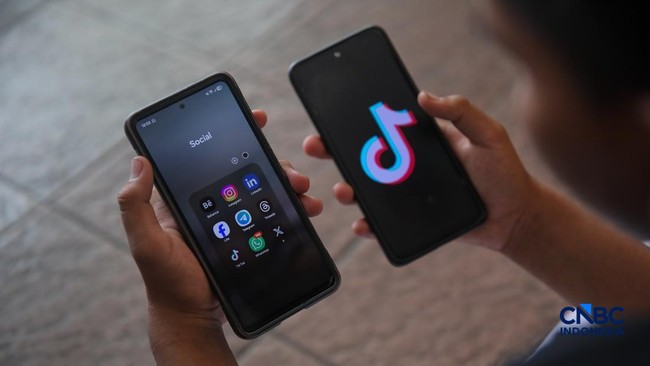
Jakarta — Measures resembling child-protection rules being introduced in various countries, including Indonesia, are facing strong opposition in the United States. Three social media giants — Meta, Google and TikTok — have jointly sued California’s attorney general, challenging a law that restricts addictive features for children under 16.
The law, AB 1709, was signed by Governor Gavin Newsom last September and is due to take effect early next year. It prohibits:
Video autoplay for users under 16;
Personally tailored content recommendations; and
If these features are not switched off, the accounts of underage users must be deleted.
Violations can incur fines of up to US$50,000 (about Rp750 million) for each child affected.
Meta, Google and TikTok argue that the law violates freedom of expression and forces them to fundamentally change how they present content. Meta said the measure would effectively bar it from distributing information to children and require accounts to be deleted unless its systems were completely redesigned.
TikTok added that filtering content according to users’ interests is a legitimate practice, also used by bookshops, television stations and broadcasting services. Google argued that parents, rather than the government, should control how children use the services.
The law reflects steps taken by various countries to protect children from the harmful effects of social media, including Indonesia, which is tightening oversight of content and children’s access to digital platforms.
The government of President Prabowo Subianto has issued Government Regulation No. 17 of 2025 on the Governance of Electronic System Providers for Child Protection (PP TUNAS), which is due to come into force in March 2026. In the United States, however, the technology industry has mounted particularly strong opposition to such measures.
Australia has passed a law banning social media use by children under 16. In France, a similar rule was struck down by the highest court on the grounds that it violated freedom of expression.
Privacy groups have also warned that the law could undermine the data security of all users, not just children. Strict age verification could force platforms to collect more personal information, posing privacy risks and concentrating data in the hands of technology companies.
“Children need space to speak, learn and socialise online without being constantly monitored,” a representative of the Electronic Frontier Foundation said. “This law forces more intensive surveillance; it does not protect them.”
California Attorney General Rob Bonta, meanwhile, said he would defend the law to protect children from addiction and damage to their mental health.
Social media restrictions in Indonesia
PP TUNAS restricts access to mobile applications and social media for children aged 16 or younger. The level of restriction is applied in stages according to the risk level of each application.
“Digital platforms cannot all be treated the same. The government will therefore classify access according to platform risk categories: low, medium and high,” Communications and Digital Affairs Minister Meutya Hafid said.
High-risk platforms, such as those containing pornography or violence, or those vulnerable to bullying, will face strict age restrictions. The regulation sets out the following categories for websites and applications:
Children under 13 may access only platforms deemed fully safe, such as educational websites or children’s platforms.
Those aged 13–15 may access low- to medium-risk platforms.
Those aged 16–17 may access high-risk platforms, but only with parental supervision.
People aged 18 and over may access all platform categories independently.
However, PP TUNAS does not explicitly identify which applications fall into the low-, medium- or high-risk categories. Platforms such as X, Instagram and YouTube must assess their own risk levels and report them to the Ministry of Communications and Digital Affairs.
The criteria for assessing social media platforms for children include:
Contact with unknown people;
Exposure to pornography, violence, content that threatens life or safety, and other content unsuitable for children;
Exploitation of children as consumers;
Threats to the security of children’s personal data;
Addiction;
Harm to children’s psychological health; and
Harm to children’s physical health.
If a product, service or feature is assessed as high-risk in one or more of these areas, it falls into the high-risk category. It may then be accessed only by children aged 16–17 with parental supervision, or independently by those aged 18 and over.
Source: jawawa.id (https://jawawa.id/newsitem/us-tech-giants-join-forces-to-challenge-california-child-safety-law-1793947850)
Originally published by CNBC Indonesia (https://www.cnbcindonesia.com/tech/20261106115652-37-782925/amerika-ikut-aturan-ri-tiktok-google-instagram-bersatu-lawan), translated from Indonesian