
US Tariff Agreement Set to Be Signed by Prabowo, with SMEs and Indonesian Industry Expected to Benefit
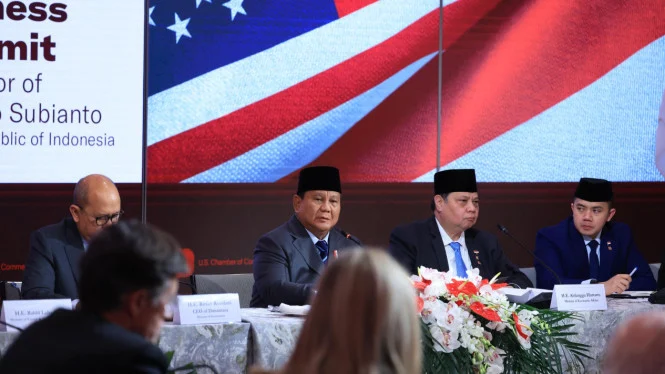
Jakarta — President Prabowo Subianto is undertaking a working visit to the United States, with one key objective being to sign the bilateral trade tariff agreement that has been reached between the two nations. The commitment to cooperation is believed not only to sustain national export performance but also to open opportunities for SME operators and industrial players to expand their markets.
Executive Director of the Segara Institute, Piter Abdullah, expressed confidence that the government is very serious in pursuing the best and most advantageous tariff agreement for Indonesia.
“The President and the government appear committed and are striving to secure the most favourable tariff agreement for Indonesia,” said Piter, as quoted from his statement on Thursday, 19 February 2026.
He explained that a number of Indonesia’s leading sectors need to be prioritised in trade negotiations with the US. Commodities such as crude palm oil (CPO), textiles, footwear, and rubber have long been mainstays of Indonesian exports to the US market and are closely linked to domestic SME supply chains.
Piter expressed the view that the tariff agreement would in fact boost Indonesia’s trade balance. This can be seen from Indonesia’s trade balance, which has managed to maintain a surplus amid the dynamics of the global tariff war. Throughout January to December 2025, Indonesia’s trade balance was recorded at USD 41.05 billion — the 68th consecutive surplus since May 2020.
“It has been proven that we can still maintain a trade balance surplus. I believe the new agreement between Indonesia and America will be more advantageous for Indonesia,” he said.
Meanwhile, UGM economist Eddy Junarsin added that the Indonesia-US trade commitment also has a broader strategic dimension, particularly in maintaining bilateral relations and Indonesia’s position amid global competition.
“Indonesia wishes to remain an independent and neutral nation in the context of global influence competition. The economic constellation cannot be separated from politics, social issues, technology, the environment, and international law,” he said.
According to Eddy, the tariff agreement can at least secure the trade balance and current account in the short term. However, Indonesia still needs to enhance product competitiveness so as not to depend solely on tariff negotiations.
Meanwhile, economist at the Center of Reform on Economics (CORE), Yusuf Rendy Manilet, noted that the government has indeed succeeded in reducing the reciprocal tariff threat from 32 per cent to 19 per cent, making it the lowest in the ASEAN region. Nevertheless, this achievement comes with not insignificant consequences.