
US Strikes on Iran Met with Retaliation, Marking New Escalation in Conflict
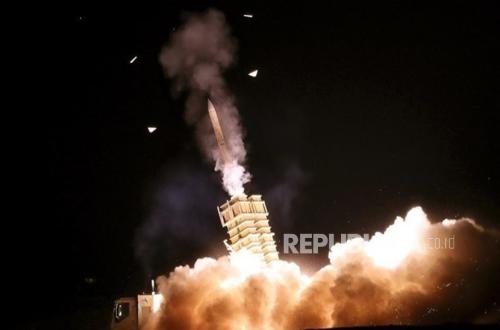
Iran launched missile and drone attacks against several Gulf countries on Sunday (12/7/2026) in retaliation for US military strikes on targets inside Iran. The attacks mark the latest escalation in the conflict between Tehran and Washington, even as efforts to maintain a ceasefire continue.
The United Arab Emirates (UAE), Qatar, Kuwait, Oman, and Bahrain reported incoming missile or drone attacks from Iran. The attacks occurred just hours after US Central Command (CENTCOM) announced it had struck around 140 military targets in Iran, including missile and drone launch sites, naval assets, and ammunition depots. Iranian state media reported that a military officer was killed in the strikes.
This latest escalation follows heightened tensions in the Strait of Hormuz in recent days. On Saturday (11/7/2026), Iran attacked a Cypriot-flagged container ship. Subsequently, the Islamic Revolutionary Guard Corps (IRGC) announced the Strait of Hormuz was closed indefinitely and no vessels would be permitted to transit.
All Gulf Cooperation Council (GCC) member states, with the exception of Saudi Arabia, reported intercepting missiles or drones fired by Iran. In Qatar, the Interior Ministry stated three people, including a child, were injured by falling missile debris. The Qatari government strongly condemned the attack, calling it a dangerous escalation that could derail diplomatic efforts.
The UAE government said its air defence systems were activated to counter the Iranian missiles and drones, adding that the missile threat was outside its territory. In Bahrain, home to the US Navy’s Fifth Fleet headquarters, air raid sirens sounded for the third time on Sunday. The Kuwaiti military also stated it successfully intercepted projectiles entering its territory, whilst Oman’s official news agency reported drones struck several locations in Musandam Province, situated at the entrance to the Strait of Hormuz.
The IRGC claimed to have struck a US radar site in Kuwait and destroyed a command centre and drone hangar at a US military base in Jordan. However, Jordanian authorities stated that while three Iranian missiles did fall within its territory, they caused no casualties.
The escalating conflict has severely impacted shipping traffic in the Strait of Hormuz, a strategic waterway through which approximately 20 percent of global energy exports passed before the war. The closure has driven global oil and gas prices to their highest levels in several years. Tehran had previously agreed to reopen the shipping lane following the signing of a memorandum of understanding with Washington in mid-June, but stipulated that vessels must use routes designated by its government. Ships using alternative routes, particularly those closer to the Omani coast, have reportedly been targeted.
President Donald Trump ordered the strikes on Iran following attacks on shipping in the region. Last week, Trump stated the deal with Iran was over, though he later acknowledged agreeing to Tehran’s request to continue negotiations. Amid the rising tensions, Omani and Iranian officials stated that technical and political talks regarding navigation in the Strait of Hormuz would continue, but Tehran has not committed to reopening the waterway without restrictions.