
US Strikes on Iran Enter Ninth Day as Hormuz Tensions Threaten Global Energy
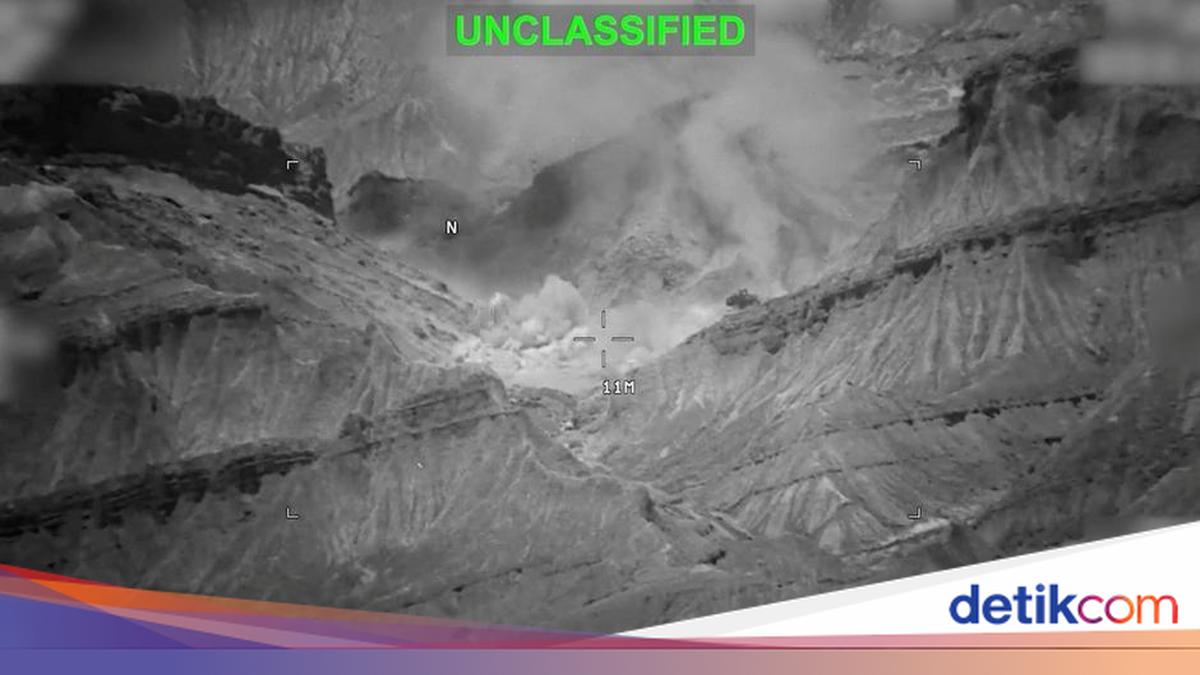
The United States military launched further missile attacks on Iran on Monday (20 July), the ninth consecutive day of strikes, sharply heightening concerns over the safety of shipping in the Strait of Hormuz. Iran claims to have disabled two tankers in the narrow waterway.
The Islamic Revolutionary Guard Corps (IRGC) said it had also fired ballistic missiles at the US air fleet stationed in Aqaba, Jordan. Iran further claimed to have attacked US military assets and equipment at Camp Al-Adiri and Ali Al Salem Air Base in Kuwait, as well as US military targets in Syria.
Air raid warning sirens sounded in Bahrain on Monday morning, according to the Interior Ministry in Manama. The Kuwaiti military said it had successfully intercepted a number of drones suspected of being launched by Iran.
The wave of attacks forms part of the escalating conflict between the US and Iran following the collapse of a ceasefire agreement signed a month ago. The deteriorating situation in the Strait of Hormuz is feared to once again disrupt global energy supplies and trigger a surge in worldwide inflation.
In a statement, the US Central Command (CENTCOM) announced it had begun a “new wave of attacks” aimed at “weakening” Iran’s ability to strike merchant vessels passing through the strategic shipping lane in the Strait of Hormuz. CENTCOM did not specify the targets or the scope of the operation.
The Iranian news agency Tasnim reported that US missiles struck several Iranian cities in the early hours of Monday (20 July).
Explosions were reported in Tabriz, Chabahar, Konarak, Bandar Mahshahr, and Bandar Imam Khomeini.
US Secretary of State Marco Rubio asserted that the United States would continue attacking Iran for as long as it threatened international commercial shipping.
“The Strait of Hormuz is an international shipping lane, but they continue to attack vessels passing through it,” Rubio said.
“As long as Iran insists on controlling that international shipping lane, we will continue to respond. The United States remains open to a diplomatic solution.”
Iran: Blockade of the energy route
The Kuwaiti government said a desalination facility had again been targeted for the second consecutive day. The attack triggered a fire and was condemned as a deliberate strike on vital civilian infrastructure.
Concerns over the smooth distribution of energy through the Strait of Hormuz have mounted since the war between the US and Iran reignited. Both sides have repeatedly accused each other of violating the ceasefire agreement.
The United Kingdom Maritime Trade Operations (UKMTO) said on Sunday evening (19 July) that it had received information about a vessel on fire not far from the coast of Oman. The cause of the blaze has yet to be confirmed.
Shortly afterwards, Iran’s Revolutionary Guards said two oil tankers had exploded and were unable to continue their voyages after attempting to pass through a southern route in the Strait of Hormuz deemed unsafe. Iran accused the US military of pushing the two vessels to use that route.
The Revolutionary Guards’ statement did not name the vessels, their flags, the crews’ nationalities, or any possible casualties.
Iran warned that the Strait of Hormuz would remain dangerous for as long as what it calls “American aggression” in the region continues. According to Tehran, the trade route is no longer safe for shipping — not for “a single drop of oil and gas”.
US: More than a dozen dead, hundreds wounded
LSEG data showed only four vessels transited the Strait of Hormuz on Sunday, down from eight the previous day. At least three product tankers and one Very Large Crude Carrier (VLCC) entered the strait since Friday to load oil.
By Monday morning, global oil prices had climbed around 2 per cent to more than US$90 per barrel.
Meanwhile, the US military announced that one of its personnel had been killed on Saturday (18 July) in northern Iraq. The incident occurred during a controlled detonation of unexploded ordnance from an Iranian attack drone that had previously been shot down.
Previously, the US military had also reported two personnel killed in Jordan and another listed as missing. On Sunday, CENTCOM said it had found “unidentified remains” at the site of Friday’s (17 July) attack. Identification is still ongoing.
With these additional casualties, the number of US military personnel killed since the war began has risen to 17. More than 420 others have been reported wounded.
The conflict, which erupted after the United States and Israel attacked Iran on 28 February — with the aim of crippling Tehran’s nuclear and missile programmes and weakening its allied groups in the region — has killed thousands, mostly in Iran and Lebanon.
Source: jawawa.id (https://jawawa.id/newsitem/us-strikes-on-iran-enter-ninth-day-as-hormuz-tensions-threaten-global-energy-1784541334)
Originally published by detikcom (https://news.detik.com/dw/d-8582098/serangan-as-ke-iran-masuki-hari-ke-9-hormuz-terus-memanas), translated from Indonesian