
US Strikes Iran for Tenth Consecutive Night, Disrupting Shipping Lanes
Iran attacked an oil tanker in the Strait of Hormuz in the early hours of Tuesday (21 July). The strike forced the vessel’s crew to abandon ship.
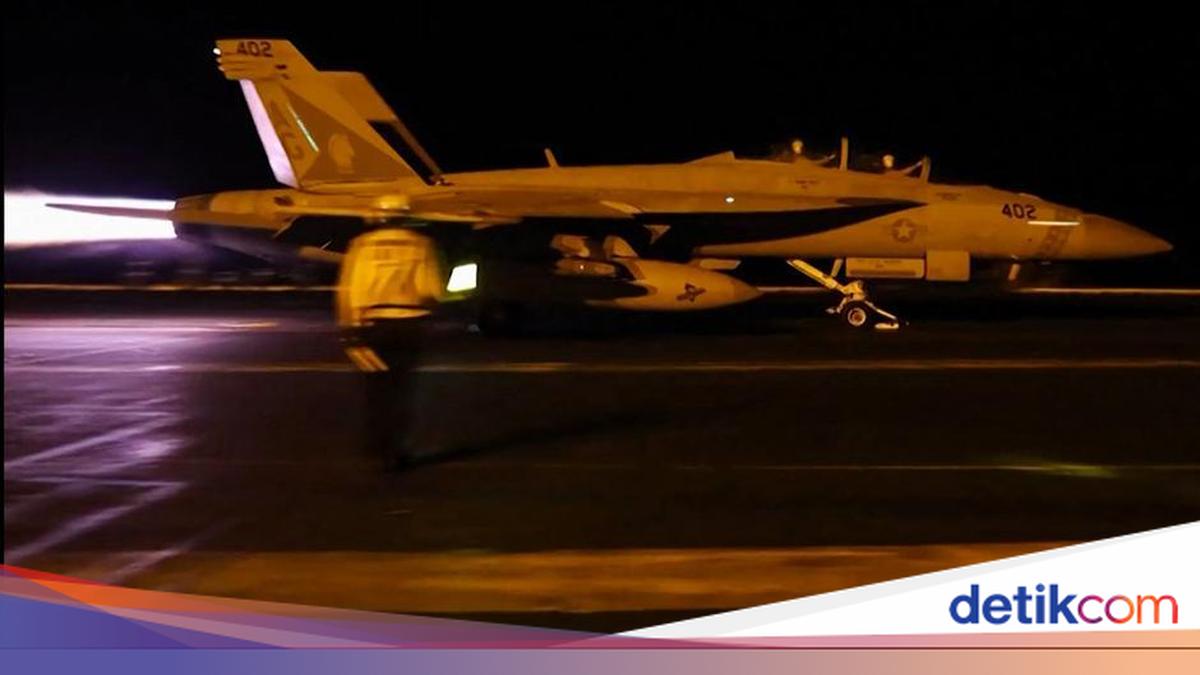
The attack occurred as US military forces launched fresh air strikes against Iran. The latest strikes mark ten consecutive nights of American attacks, amid an escalating conflict between the two nations over control of the strategic shipping route.
However, the series of US strikes has yet to make Iran loosen its grip on the Strait of Hormuz. Before the conflict reignited, roughly one-fifth of the world’s traded crude oil and natural gas passed through the waterway.
Shipping through the Strait of Hormuz has now largely come to a halt.
The interim agreement signed by both countries last month, originally intended to end the conflict, is now effectively defunct. As fighting intensifies, both sides have begun targeting key infrastructure in each other’s countries used by millions of people.
As the conflict edges closer to open war, Iran’s Interior Minister travelled to Pakistan, one of the parties attempting to mediate the conflict. It remains unclear, however, what new agreement could be reached to end the fighting.
At the same time, the US Department of State issued a new warning to its citizens.
“Iran and groups that support it may target additional American interests abroad, including locations linked to the United States and American citizens in various parts of the world,” the State Department wrote in its latest advisory.
US Central Command (CENTCOM) said on Tuesday that its forces had targeted “Iranian military command centres, maritime facilities, missile and drone launch sites, and air defence systems.” The US military also released footage of recent air strikes on several locations in Iran.
“American forces remain vigilant and prepared to hold Iran accountable for its unprovoked attacks against civilian crews attempting to transit the strait freely and openly,” CENTCOM said.
The escalation in recent weeks has driven oil prices higher. Brent crude surpassed 88 US dollars per barrel (around Rp1.58 million), while the average price of regular petrol in the US rose to about 4 US dollars per gallon (around Rp72,000), adding pressure to household spending ahead of the US midterm elections.
Ceasefire hopes pressure oil prices
Oil prices fell slightly on Tuesday (21 July), however, following reports of mediation efforts between the United States and Iran.
Markets are now weighing hopes of de-escalation against a fresh series of strikes between the two sides, as well as threats of a maritime blockade against Saudi Arabia by the Iran-aligned Houthi group.
A senior Iranian official told Reuters that Iran had accepted a mediator’s proposal for a 10-day ceasefire. The proposal is intended to salvage the agreement signed on 17 June and pave the way for a long-term settlement to end the war.
“There is hope for a de-escalation of tensions between the US and Iran,” ING analysts wrote in a research note. According to the analysts, the mediators proposed a 10-day ceasefire that could revive the interim agreement reached in June.
Nevertheless, ING analysts cautioned that such efforts would not be easy. Major differences between Washington and Tehran remain unresolved. US President Donald Trump has also threatened retaliation after a number of American soldiers were killed.
Brent crude fell 78 cents, or 0.9 per cent, to 88.44 US dollars per barrel (around Rp1.58 million). Meanwhile, West Texas Intermediate (WTI) crude dropped 73 cents, or 0.9 per cent, to 82.50 US dollars per barrel (around Rp1.47 million).
On the other hand, threats to global energy supplies have increased. The Houthi group said it would impose a maritime blockade on Saudi Arabia, potentially opening a new front in the conflict and raising the risk of disruption to global energy trade.
“The threat of a Houthi maritime blockade on Saudi Arabia is significant because it increases the risk of disruption to another major oil-exporting nation,” said Tim Waterer, chief market analyst at KCM Trade.
Houthis threaten blockade of Saudi ships at the Red Sea gateway
The Houthi group, an Iran-backed armed movement controlling most of Yemen, announced it would enforce a maritime embargo against Saudi Arabia. The threat came after the Houthis accused Saudi Arabia of imposing a blockade on Yemen and attacking Sanaa International Airport.
Houthi military spokesman Yahya Saree said the maritime ban against Saudi Arabia was effective immediately. Deputy head of the Houthi media office, Nasruddin Amer, said the Bab el-Mandeb Strait would be closed to Saudi vessels in retaliation for what he called an “unjust blockade of the Yemeni people for over 10 years.”
With shipping through the Strait of Hormuz restricted by both Iran and the United States, Saudi Arabia had previously relied on its Red Sea ports to export oil. The Houthi threat to shipping lanes in that region now risks narrowing the alternative routes available for Saudi energy exports.
Bab el-Mandeb is a strategic passage at the southern tip of the Arabian Peninsula and serves as the gateway to the Red Sea. About 12 per cent of global trade normally passes through the strait. A quarter of global container trade also traverses the 32-kilometre-wide passage en route to and from the Suez Canal.
The threat could add further pressure to global energy trade. Previously, the Houthis demonstrated their ability to disrupt shipping in the region by attacking more than 100 vessels over the course of months, as part of their response to the Israel-Hamas war in Gaza.
It remains unclear whether the Houthis will launch attacks of a similar scale against Saudi Arabia. The Saudi military, however, affirmed it would keep the shipping lanes open.
“All Houthi threats to transiting vessels will be dealt with swiftly and firmly,” said Saudi military spokesman Major General Turki al-Malki, describing the threat as a flagrant violation of international law and maritime piracy.
Lebanese president heads to US to push for Israeli troop withdrawal
Amid rising tensions in the Middle East, diplomatic efforts to defuse the conflict have also continued in Lebanon. Lebanese President Joseph Aoun was due to meet US President Donald Trump on Tuesday (21 July) in an effort to push for the withdrawal of Israeli troops from most of southern Lebanon.
The meeting took place as Lebanon and Israel continued rare direct talks mediated by the United States. Lebanon hopes the negotiations will secure an Israeli withdrawal and strengthen the Lebanese military so it can take full control of territory previously serving as the base of the Iran-backed Hezbollah group.
On 26 June, Lebanon and Israel announced a “framework agreement” that includes plans for an Israeli troop withdrawal from southern Lebanon and the disarmament of Hezbollah. The agreement also opened the way towards a peace treaty between the two countries, which have no formal diplomatic ties and have technically been in a state of war for nearly 80 years.
The US Department of State said operations in three villages designated as part of a “pilot zone” have begun. Two of them, Froun and Srifa, are not under Israeli military control and have been occupied by the Lebanese army. Meanwhile, Israeli forces still hold part of Zawtar al-Gharbieh.
The Lebanese military said it was preparing for the Israeli withdrawal from Zawtar al-Gharbieh and would deploy troops to the area. The Israeli military said it would adjust its positions in one of the pilot areas so the Lebanese Armed Forces could carry out their duties.
US Secretary of State Marco Rubio said the United States would continue to support the agreement between Lebanon and Israel and push for its full implementation. He warned that Lebanon would “never be fully at peace” as long as the Hezbollah issue remained unresolved.
“How do you replace Hezbollah? You defeat and replace them with a government strong enough to be the only entity bearing arms in the country,” Rubio said after meeting Aoun.
The effort faces major challenges, however. Some in Lebanon fear a military confrontation with Hezbollah could trigger a civil war. The Lebanese government has also called for investment to rebuild damaged infrastructure and shore up a state and military facing financial constraints.
“It’s not just about the military. It’s about how we can attract more American and international investment into Lebanon,” Rubio said.
Hezbollah rejects the US-mediated direct talks with Israel. The group instead supports negotiations between the United States and Iran, its ally and principal backer, to end the war. Ending the war in Lebanon is one of the conditions for restoring calm in the region.
The Lebanese government, in power since early 2025, is committed to disarming all non-state armed groups, including Hezbollah. However, Lebanon’s leadership has also condemned Israel’s ground invasion and large-scale air strikes on its territory, which killed more than 4,000 people and displaced 1.2 million others.