
US Special Envoy and Trump's Son-in-Law Head to Pakistan for Talks with Iran
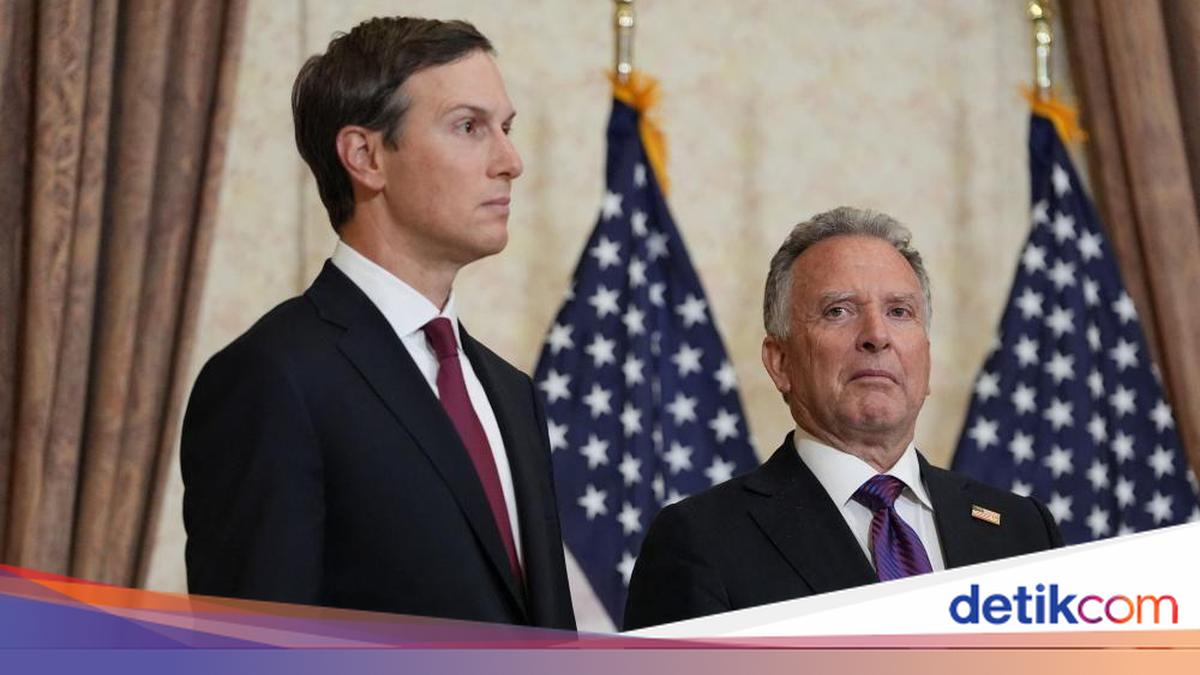
US President Donald Trump’s special envoy, Steve Witkoff, and son-in-law Jared Kushner are reported to be flying to Pakistan to conduct peace negotiations with Iran on Saturday morning, according to the White House.
“The Iranian people want to talk,” said White House spokesperson Karoline Leavitt, adding that US Vice President JD Vance is “on standby” to travel if the negotiations prove successful.
Spokesperson for the Iranian Foreign Ministry, Esmail Baqaei, stated that he and Foreign Minister Abbas Araghchi had arrived in Islamabad on Saturday morning, and Araghchi would meet with “high-level Pakistani officials”.
He added: “There are no planned meetings between Iran and the US. Iran’s views will be conveyed to Pakistan.”
At a press conference on Friday, Hegseth also warned that Washington’s ongoing blockade of the Strait of Hormuz—the main oil shipping route—“is growing larger and global”.
The US and Israel began attacking Iran on 28 February. In response, Tehran subsequently restricted shipping through the Strait of Hormuz.
This conflict has caused oil prices to surge sharply worldwide.
Speaking to reporters on Friday, Leavitt said Trump had decided to send Witkoff and Kushner to Islamabad “to listen to the Iranian side”, adding that the US president “is always willing to give diplomacy a chance”.
Leavitt added that “we have certainly seen progress from the Iranian side in recent days”.
Meanwhile, the Iranian Embassy in Islamabad said Araghchi plans to “review bilateral affairs” and discuss regional developments.
Trump and Hegseth insisted this week that the US does not feel pressured to end the war with Iran. However, news that US-Iran negotiations are continuing this weekend once again shows a gap between the administration’s public statements and the White House’s behind-the-scenes push to find a way to end the war.
This incident indicates that both sides are seeking a way forward, even as mixed messages from Trump and Tehran’s aggressive stance continue.
The question now is how much progress the two countries can achieve in Pakistan.
Tehran will never relinquish control of the Strait of Hormuz, a senior Iranian politician told the BBC.
JD Vance led the US delegation in the first round of negotiations earlier this month, but it has not yet been confirmed whether he will attend this weekend’s talks.
Vance’s absence, if he does not go, might mean that the two countries do not expect a major breakthrough. However, the fact that negotiations are continuing shows that both the US and Iran are still seeking an agreement.
On Wednesday, Iran’s Parliament Speaker Mohammad Bagher Ghalibaf warned that it is “impossible” for the Strait of Hormuz to be opened due to “flagrant violations of the ceasefire” by the US and Israel.
He said those “violations” include the US naval blockade of Iranian ports, which he described as equivalent to holding the global economy hostage, as well as Israel’s “war provocations” “on all fronts”.
Meanwhile, Iranian President Masoud Pezeshkian said Tehran remains open to negotiations with the US, but added that “violations of commitments, blockades, and threats are the main obstacles to genuine negotiations”.
Earlier this week, Trump announced an indefinite extension of the ceasefire with Iran—which was originally set to end on Wednesday—to allow negotiations to continue.