
US–South Korea Joint Military Exercise Cut to Half Its Duration at Washington's Request
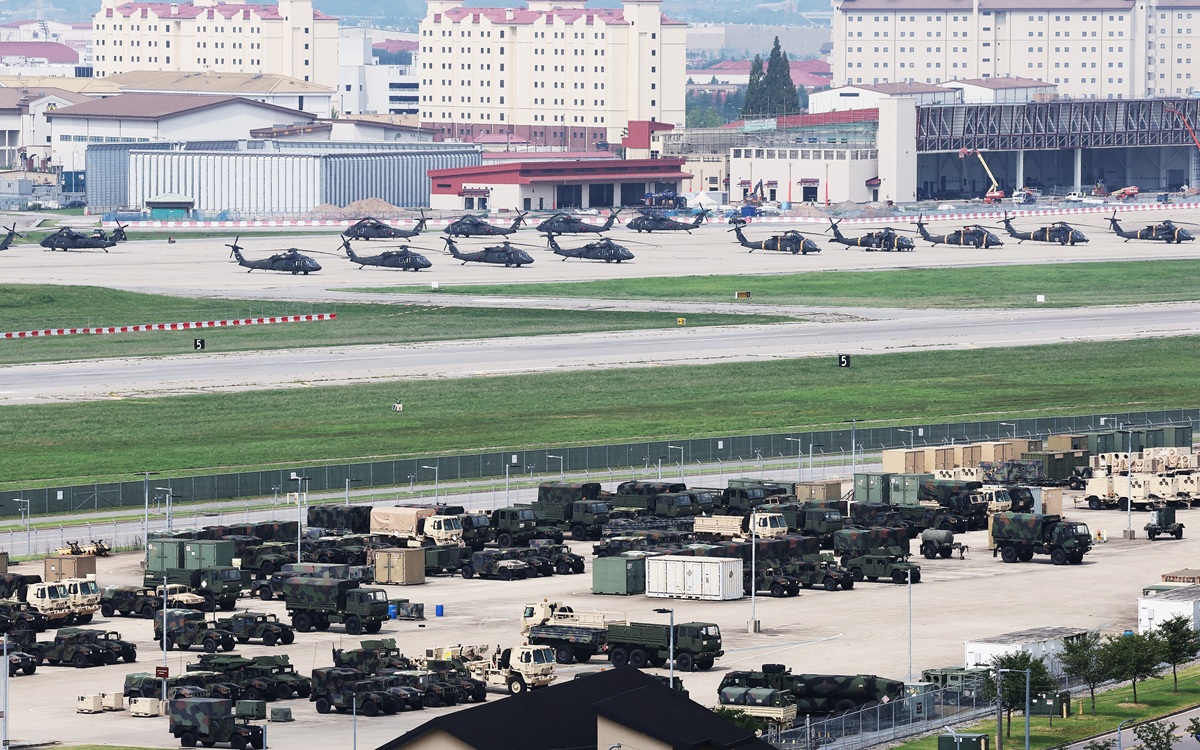
The joint military exercise between the United States and South Korea has been cut to half its duration at Washington’s request. The decision was taken several days after US President Donald Trump called for a reduction in the length of the drill, citing his good relationship with North Korean leader Kim Jong Un.
The annual Ulchi Freedom Shield (UFS) exercise, which began on Monday, was originally scheduled to last ten days. However, the militaries of both countries have confirmed that the exercise will now end earlier, on Friday (21/8).
“Based on direction from the President and the Secretary of War, the Department has substantially reduced the Ulchi Freedom Shield exercise while continuing training that enhances tactical capabilities,” a Pentagon official said.
“Related live training events have been reduced, with certain events cancelled or converted to simulations. These adjustments preserve essential readiness and training objectives,” the official continued. “There will be no reduction in US training objectives.”
South Korea’s military also confirmed that the decision to “partially adjust the period and scale” of the UFS exercise was made “at the request of the US.”
The schedule adjustment follows Trump’s statement that he had asked Defence Secretary Pete Hegseth to reduce the exercise. Trump considered the military drill to be sending a signal that was “completely inappropriate and hostile” to North Korea, and also highlighted the lack of assistance from Seoul regarding the war with Iran.
Although Kim Jong Un has not commented directly, North Korea’s state media, KCNA, described the exercise as the “most direct and open threat” to Pyongyang and regional security.
Responding to the situation, South Korean President Lee Jae Myung stressed that the exercise was purely defensive in nature. According to him, the drill was not intended to “raise tensions on the Korean Peninsula,” but rather served as a “defensive exercise” to maintain peace and protect lives. He added that South Korea would “maintain an unshakeable level of readiness.”
Initially, around 18,000 South Korean troops were scheduled to participate in the exercise, which was designed to anticipate threats from drones, GPS disruption and cyber attacks. Seoul’s military chief of staff stated that both countries would now “discuss and implement various measures to achieve the objectives of the UFS exercise and build a joint defence posture going forward.”