
US Senate Hearing Heats Up as Hegseth and Democrats Clash Over Iran War Strategy
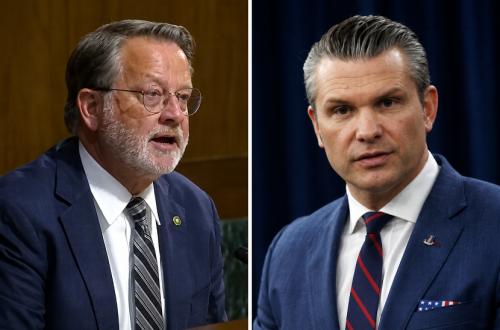
A US military budget hearing turned into a political battleground when Secretary of Defense Pete Hegseth was pressed to explain Washington’s strategy for ending the protracted war with Iran. Rather than easing tensions, Hegseth retaliated against criticism from Democratic Senator Gary Peters by accusing his party of obstructing funding for the troops.
The confrontation took place during a Senate Appropriations Committee hearing on Tuesday (21/7/2026). Hegseth appeared alongside Chairman of the Joint Chiefs of Staff General Dan Caine to defend the Trump administration’s request for additional funding, which was formally submitted to Congress on 24 June 2026.
Senator Peters, a Democrat from Michigan, questioned whether the administration possessed a genuine political and military strategy to bring the war with Iran to a resolution. He argued that the United States’ position was worse than when the conflict began. ‘You have no strategy, you have no long-term plan to actually win this war. Win this war! The men and women in uniform are capable of it, but they need leadership. When are you going to show that leadership?’ Peters asked.
The criticism touched upon one of the largest questions looming over Washington’s policy: whether the objective is simply to degrade Iran’s military capabilities, reopen shipping in the Strait of Hormuz, force Tehran to accept a deal, or push for broader political change. The war began on 28 February 2026, when the US and Israel launched joint strikes against Iran, escalating into an open conflict that has disrupted regional security and energy trade. Congress has even attempted to force Trump to halt military operations through a war powers resolution, reflecting growing unease among lawmakers, including some Republicans.
Hegseth did not respond to the accusations by outlining a detailed timeline or roadmap for ending the war. Instead, he attacked the Democrats’ stance on government spending and military funding. ‘When are you going to show leadership and confront your fellow Democrats who won’t fund the troops, who are playing partisan politics while you don’t give us the money? You want to stand here and talk about the troops?’ Hegseth retorted. ‘You don’t show the political courage to actually fund our department because you have Trump derangement syndrome and won’t commit to something meaningful. So, I put this responsibility back on you, Senator.’
The term ‘Trump derangement syndrome’ is a partisan phrase often used by the president’s supporters to describe criticism they view as excessive or irrational. Hegseth’s remarks illustrate how the debate has intertwined war strategy with political infighting ahead of the US midterm elections. The heated exchange occurred as public dissatisfaction with the war grows and lawmakers question the costs, objectives, and the administration’s transparency. Reuters reported that both Democratic and Republican senators are pressing the Pentagon to explain the need for additional funds and the consequences of a prolonged conflict.
During the hearing, Hegseth disclosed that US military operations against Iran have cost approximately USD 37.5 billion. This figure includes expenses already incurred and projected operational needs through the end of the US fiscal year on 30 September 2026. The Pentagon has not yet publicly released a full breakdown of these calculations.