
US Seeks Additional Rp1,218 Trillion for Iran War: Why Can’t Senators Inspect Al Udeid?
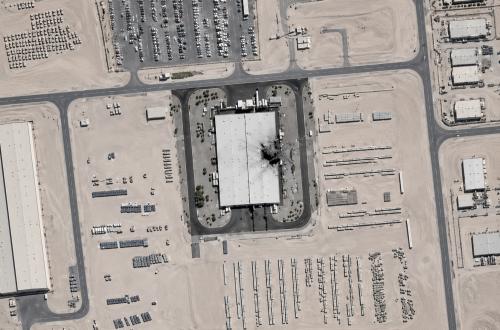
JAKARTA — The United States government is facing mounting political pressure over the cost of its war against Iran, after several Republican senators raised the possibility of restricting funding for President Donald Trump’s military operations. The latest developments come as the Pentagon continues to seek an additional US$67.1 billion, while the damage to US military bases in the Middle East has yet to be fully disclosed to Congress.
Susan Collins, chair of the US Senate Appropriations Committee, has raised the possibility of separating funds to replenish military ammunition stocks from money that could be used to continue the Iran war. According to The Washington Post on Monday (23 November 2026), Collins is considering a budget proposal that would allow the Pentagon to fund the restoration of its weapons stocks without providing new funding for offensive operations against Iran.
Senate Majority Leader John Thune has also expressed openness to negotiations that could maintain government funding while meeting national security needs. However, no final agreement has been reached between Republicans and Democrats.
The debate has major implications because Congress must agree on government funding by 11 December 2026 to prevent a partial shutdown of federal services.
The budget dispute has become more complicated following revelations that a US senator was previously denied permission to visit Al Udeid Air Base in Qatar, one of America’s most important military facilities in the Middle East and a target of Iranian attacks.
Democratic Senator Chris Murphy said on 6 October 2026 that the Pentagon had rejected his request to inspect the base during an official visit to Qatar and Saudi Arabia.
Murphy accused the Trump administration of deliberately restricting congressional access to information about damage to military facilities, war casualties and the costs borne by American taxpayers.
The Pentagon, however, denied that the decision had specifically targeted Murphy. The Department of Defence said restrictions on support for visits by members of Congress had been in place since the start of the war, on the instructions of Defence Secretary Pete Hegseth.
Why Has the Pentagon Restricted Senators’ Access?
The dispute began when Murphy formally requested a visit to Al Udeid, the air base that serves as the forward command centre for US military operations in the Middle East.
Murphy is a member of both the Senate Foreign Relations Committee and the Senate Appropriations Committee. These roles involve oversight of foreign policy and government funding, including the defence budget.
According to a statement from Murphy’s office on 7 October, the access request was submitted in a letter to the Department of Defence. He also contacted the leadership of US Central Command, or CENTCOM, to request an opportunity to inspect the military facility and receive a briefing directly from commanders.
The request was rejected. Murphy also said he was not given the opportunity to attend a military briefing while in Qatar, despite his visit having the support of the US State Department.
At a press conference after the visit, Murphy said direct access to the base was necessary because Congress was responsible for deciding whether a war would receive continued funding or have its funding cut off.
He contrasted the restrictions with his experience visiting US troops in Iraq and Afghanistan when both countries were active military theatres.
Murphy accused Hegseth of pursuing a systematic effort to conceal the consequences of the Iran war. This was the senator’s political allegation, not a finding from an investigation that had established deliberate suppression of information.
The Pentagon gave a different account. A senior Defence Department official told Reuters that Murphy’s office had been informed before the trip that support for a visit to Al Udeid would not be provided.
According to the Pentagon, the decision was based on a 3 March 2026 instruction from Hegseth restricting Defence Department support for congressional delegations travelling to areas within CENTCOM’s operational remit.
In an investigative report published by The Atlantic on 22 November 2026, journalist Missy Ryan disclosed the contents of the memorandum. It stipulates that Defence Department support for congressional delegations travelling to areas under CENTCOM’s responsibility requires Hegseth’s direct approval.
This means the restriction is not a legal ban on senators entering Qatar, but rather a limit on the support and access the Defence Department controls at its facilities and for its military personnel.
The Atlantic also reported that Republican Senator Joni Ernst, an Army veteran and member of the Senate Armed Services Committee, faced restrictions on visits to military bases while travelling in the Gulf region. The information came from someone familiar with the matter, while Ernst’s office did not respond to the publication.
The report indicates that access restrictions have not affected only Democratic lawmakers. The government nevertheless maintains that the policy relates to managing travel in an active military operations area.
Source: jawawa.id (https://jawawa.id/newsitem/us-seeks-additional-rp1-218-trillion-for-iran-war-why-cant-senators-inspect-al-udeid-1795477919)
Originally published by Republika (https://news.republika.co.id/berita/toz69j451/as-minta-tambahanrp1218-t-untuk-perang-iran-mengapa-senator-tak-bisa-periksa-al-udeid), translated from Indonesian