
US reaffirms commitment to eradicate illegal trade in cultural property
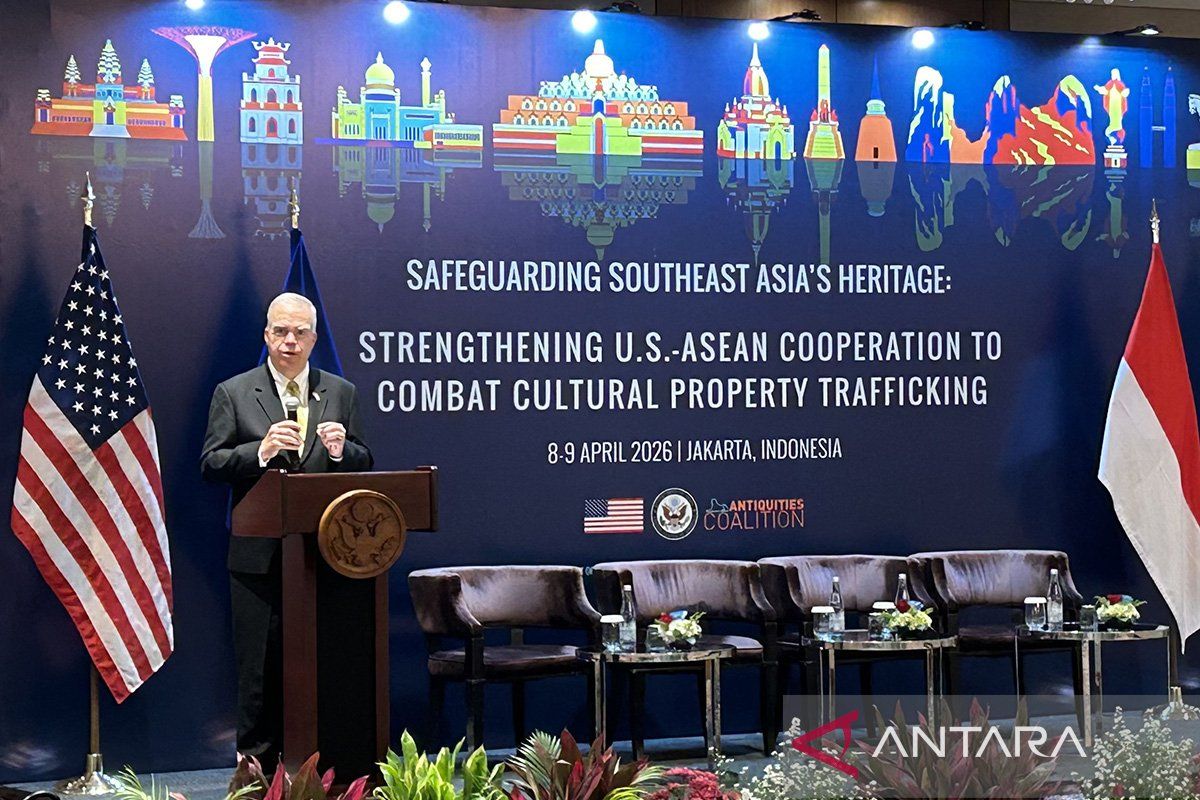
Jakarta (ANTARA) - The United States Embassy has reaffirmed its commitment to eradicating the illegal trade in cultural property amid the increasing instances of criminals looting and trafficking items from Indonesia.
The statement was delivered by US Chargé d’Affaires ad interim for Indonesia, Peter Haymond, at the US-ASEAN Conference on Eradicating the Illegal Trade in Cultural Property in Jakarta on Wednesday.
“The United States is proud to work with Indonesia and other ASEAN countries to share information, strengthen legal frameworks, build law enforcement capacity, and explore how technology can support economies while protecting cultural heritage,” Haymond said.
Haymond assessed that when criminals loot and traffic items from Indonesia, they are not merely selling artworks but committing crimes that damage communities, fuel corruption, undermine the rule of law, and diminish cultural heritage.
Such illegal practices also occur in New York and other parts of the United States, with local authorities uncovering trafficking networks that launder numerous items into galleries, auction houses, and private collections.
Highlighting the issue, Haymond stated that the United States takes its responsibility seriously to ensure that its country does not become a safe haven for cultural heritage stolen from partner nations.
“We recognise that there is a legitimate, dynamic, and active market for art and antiques, including Indonesian art. Our goal is not to stop cultural exchange, but to ensure that such exchanges occur transparently and in accordance with the law,” he said.
One of the United States’ efforts to combat the illegal trade in cultural property is to strengthen border security, which serves as the first line of defence against all forms of illegal trafficking.
“This helps protect collectors and institutions in the United States from unwittingly purchasing stolen goods, keeps the proceeds of crime out of our financial system, and supports partners like Indonesia and other ASEAN countries in enforcing their laws,” he added.
Additionally, through the 1970 UNESCO Convention, Washington requires stricter documentation for suspicious shipments to prevent the trafficking of high-risk categories of cultural objects into the United States.
“This agreement also helps law enforcement distinguish between legitimate trade and illegal trafficking of cultural items, and it has resulted in numerous seizures and returns of stolen goods,” Haymond stated.