
US Quietly 'Interrogates' NATO Members, Testing Loyalty of Trump's Allies
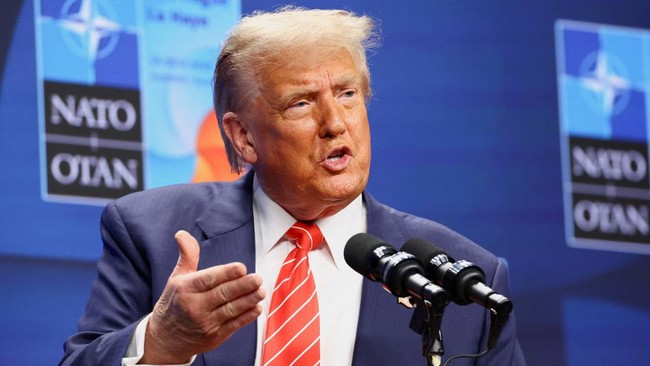
The Pentagon is reportedly testing the extent of political loyalty among NATO allies to the agenda of United States President Donald Trump. This was revealed in a questionnaire distributed to several member states of the alliance.
The three-page document, titled Questions for NATO Allies & Other Key Stakeholders, contains a number of questions regarding allies’ alignment with Washington’s policies. One asks whether member states have ‘publicly supported US foreign policy priorities’.
The questionnaire also asks whether each country demonstrates alignment with the US approach described as ‘strong, clear, and calm’. This refers to the phrase used by US Secretary of Defense Pete Hegseth in his speech at the Shangri-La Dialogue, a global defence forum, in May.
The document is believed to be used to guide communication between US officials and NATO partners during the Pentagon’s six-month review of American troop presence in Europe. Bloomberg previously reported parts of the questionnaire, while the full document was obtained by Al Jazeera from an official who received it.
One of the most sensitive questions relates to US military access. The Pentagon asks whether allied countries restrict US access to bases and military flights, and whether they are willing to ‘reduce or eliminate’ such restrictions.
Several European countries imposed restrictions after the US-Israel war against Iran broke out on 28 February. A senior defence official from one NATO member state said the Pentagon’s move indicates a conflation of alliance affairs with US military operations outside the region.
‘This administration has confused the topic of NATO with unilateral US military operations. This questionnaire also reflects that confusion. NATO has nothing to do with the Middle East,’ the official told Al Jazeera on condition of anonymity.
The questionnaire also touches on the Trump administration’s ‘NATO 3.0’ concept, which pushes European countries to take a larger share in their own defence with more limited US support. Former US Deputy Assistant Secretary of Defense Jim Townsend said the issue of loyalty has indeed often arisen in Washington’s relations with its allies.
‘We know that this administration cares deeply about loyalty, whether from their own people or from allies in particular,’ he said.
Since Trump became US President, there have been several tensions between NATO and him. On Iran specifically, many European countries do not view the conflict as automatically becoming a NATO war and prefer ‘diplomacy, ceasefire, and de-escalation’ over military force.