
US Prepares Economic Sanctions Against All of Iran's Trading Partners
The United States has announced an unprecedented expansion of its economic embargo to pressure Iran’s economy. Washington is targeting Iran’s trading partners amid the ongoing war in West Asia (the Middle East), which continues without resolution or tangible progress.
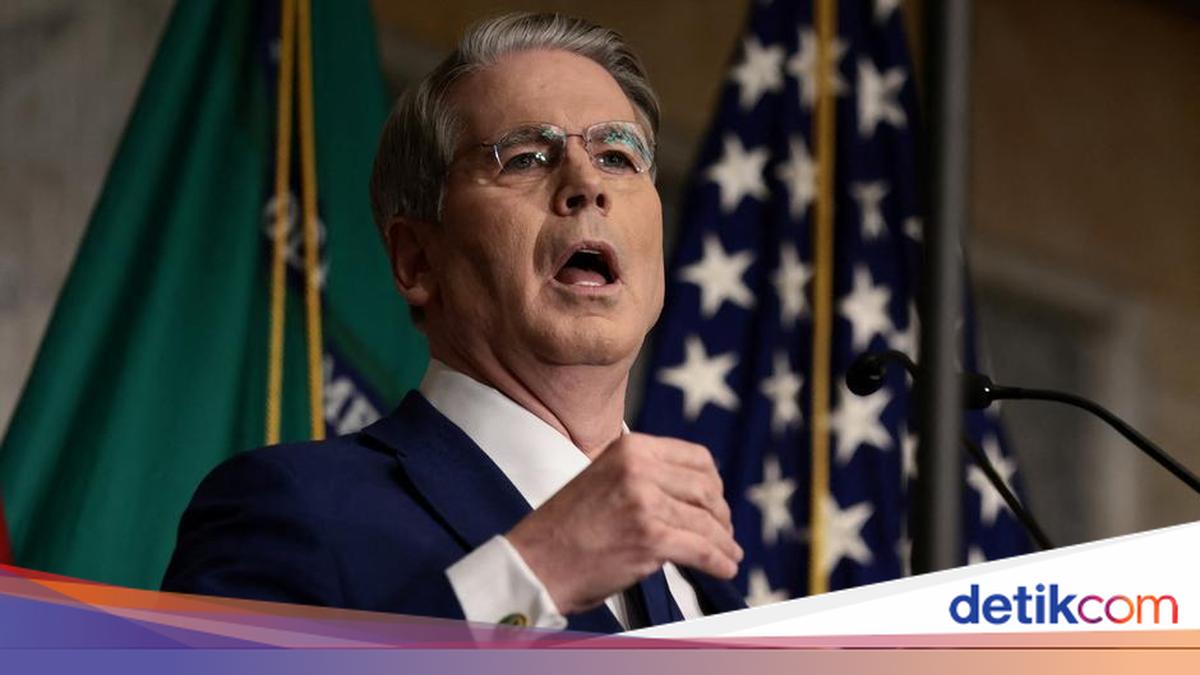
The announcement was made by US authorities on Monday (24/08). At a press conference, US Treasury Secretary Scott Bessent did not outline concrete steps or announcements, but he asked the public to anticipate such measures in the near future this week.
He described a plan he called ‘asphyxiation’ or economic strangulation of the regime in Tehran. This implies that achieving that target will be carried out largely through secondary sanctions against Iran’s trading partners.
‘Around the world, our goal is to sever every economic pathway that sustains this tyrannical regime until Tehran stands alone,’ Bessent said at the press conference. He added that ‘we will hold all parties accountable.’
Bessent called the programme ‘Operation Economic Outcast’ and again sought to liken it to the ‘Economic D-Day’ mentioned by US President Donald Trump the previous week. The analogy drew ridicule as being highly inappropriate to the circumstances.
‘During the Second World War, D-Day marked the historic beginning of a joint campaign with our allies to target and drive the enemy from its positions, including those in third countries,’ Bessent said in an effort to salvage the historical metaphor.
The policy, he said, would target Iran ‘and its supporters.’
‘Iran now faces a very clear choice with two paths before them: complete global isolation and a subsistence economy, or a path back to normalcy with the opportunity to rejoin the global economy,’ Bessent said.
He said the Treasury Department has mapped ‘every node, network, and facilitator Iran uses to smuggle oil and evade sanctions.’ He then asserted that the US will now begin to ‘tighten the rules’ to restrict ‘every potential source of revenue that funds the Islamic Revolutionary Guard Corps (IRGC) and the Tehran regime.’
These rules, he continued, will implement a system of ‘a no-leakage approach,’ while adding that third parties can no longer be accepted if they operate in the grey zone in this conflict.
‘The President is reaching out to world leaders with specific requests that they cease engagement with the regime. We are already seeing results,’ Bessent explained without providing further details.
‘Those who side with the United States will reap the benefits of our partnership,’ Bessent stressed. ‘Those who side with the Iranian regime must be prepared to endure the same isolation as that weakening regime.’
He said the US will provide clear deadlines to various countries to cooperate along with the steps that must be taken, or they will face the consequences.
Responding to the latest US sanctions on Monday (24/05), Iranian Economy Minister Ali Madanizadeh predicted ‘another defeat’ for Washington. He said Tehran has a two-year plan to counter the sanctions.
‘They have done everything they can to test the resolve of the Iranian people and officials, but they have failed every time. It seems they want to suffer another defeat,’ Madanizadeh told state television.
‘We have long anticipated these plans, and the government is ready and has a two-year plan to handle this situation.’
Over the weekend, the head of Iran’s top security body warned that Tehran would consider any country’s support for US actions as an ‘act of war’.
The head of the Supreme National Security Council, Mohsen Rezaei, stated that Iran would carry out ‘very heavy retaliation’ over the sanctions, targeting other oil shipping routes from the Persian Gulf.
‘If the economic war continues, not a single drop of oil will be exported, whether through the Strait of Hormuz or from anywhere in the Persian Gulf,’ Rezaei said.
Iran has lived under international sanctions for decades. The US conducts almost no bilateral trade with Iran and has very little direct economic leverage over it.
Before the war, Iran’s two largest trading partners were China and the United Arab Emirates (UAE). China has been the most effective country at resisting economic intimidation efforts from the previous Trump administration. The UAE last week announced the suspension of all trade, commercial exchanges, and financial transactions with Iran until further notice.
Turkey, as a NATO member, and neighbouring Iraq both do substantial business with Iran. Russia is also a valuable trading partner, although it does not need fuel exports from Iran.
Germany is Iran’s largest trading partner in Europe, but the volume barely exceeded one billion euros in 2025. Provisional government figures show that this trade volume will be halved to its lowest level this year amid the war.
Bessent said he would not ‘name names’ regarding which parties’ cooperation would be sought or demanded by the US.
Ahead of the press conference on Monday, China’s Ministry of Foreign Affairs stated that Beijing is monitoring these developments closely and will do what is necessary to protect its rights. The ministry also added that sanctions and pressure tactics will not help resolve the issue.
In a post on platform X before Monday’s (24/05) announcement, Bessent described the sanctions as ‘the largest financial assault ever deployed against a single country’.