
US Not Supporting Reza Pahlavi as Iran's New Leader
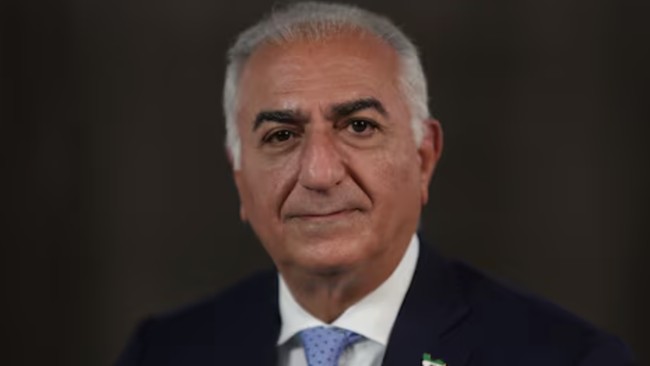
Reza Pahlavi’s effort to lead a transitional period should the Islamic Republic of Iran collapse is losing momentum. The son of Iran’s last Shah, who was overthrown in the 1979 Revolution, once attracted attention during the war between the United States and Israel against Iran, but Washington has yet to show any official support for his ambition to lead the country.
In an interview with Reuters, Pahlavi remained optimistic that the Iranian government was on the brink of collapse, insisting his role was solely to lead a transitional period.
“This campaign has been my life’s mission for 46 years to free Iran. It has never been about me, but about the Iranian people and their right to determine their own future,” he said, quoted on Wednesday (29/7/2026).
“I am not the end goal; I am only a bridge towards that goal.”
At the start of the war, Pahlavi even claimed that the Iranian people had asked him to lead the transition process. He also received an enthusiastic welcome at the Conservative Political Action Conference (CPAC) in Texas.
However, the situation changed when US President Donald Trump issued statements threatening to “bomb Iran back to the Stone Age”. Pahlavi’s failure to immediately condemn the remark sparked disappointment among some of his supporters and financial backers.
The rift grew more apparent after the Trump administration repeatedly stressed it had no plans to back Pahlavi as Iran’s new leader. US Vice President JD Vance even asserted that “the President of the United States has never said that his goal was to make Reza Pahlavi the new leader of Iran.”
In line with this, the ceasefire agreement between the US and Iran contained no regime-change agenda, instead affirming respect for Iran’s sovereignty.
Meanwhile, several donors have begun questioning the effectiveness of Pahlavi’s leadership. According to Reuters sources, they had previously poured in more than US$3 million (around Rp54 billion at an exchange rate of Rp18,000 per US dollar) to support his movement.
However, they judged that Pahlavi had failed to unify opposition groups. He was even considered insufficiently firm in condemning acts of intimidation and violence carried out by some of his hardline supporters against fellow opposition activists.
Responding to the criticism, Pahlavi denied allegations that he tolerated his supporters’ actions, stressing that he condemned all forms of violence.
“I condemn it. I distance myself from such acts. I do not condone it, and I ask that anyone who commits such crimes be prosecuted under the law,” he said.
No Strong Political Base
Pahlavi is also seen as having failed to build a strong political base at home. Unlike several other revolutionary figures, he has lived in exile for almost five decades and therefore has no large mass organisation ready to take over the government should the current regime fall.
Nevertheless, Pahlavi claims to have established communication with more than a thousand groups comprising workers, academics, religious figures and ethnic organisations in Iran, although the claim cannot be independently verified. Pahlavi also stressed that he has never asked for the support of foreign governments to determine Iran’s future.
“It is not foreign governments that have the right to decide who is the alternative for Iran. That is entirely the right of the Iranian people,” he said. He also emphasised that in the event of military action, the target should be the ruling regime, not civilian infrastructure.
Although several surveys still place Pahlavi as the most recognised figure of the Iranian opposition, the path towards national leadership is regarded as full of challenges.
Beyond the fractured opposition, the Trump administration has so far chosen to keep open a channel of negotiation with the Iranian government rather than push a regime-change agenda. This makes Pahlavi’s chances of leading a post-Islamic Republic Iran far from certain.