
US Missile Stocks Depleting in Iran War, Weapon Factories Working 24 Hours
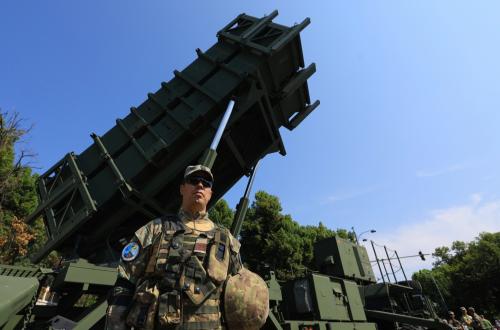
The United States defence industry is racing against time. RTX’s missile factory in Tucson, Arizona, is now working around the clock to increase the production of Tomahawk missiles and various other munitions after US military operations against Iran depleted supplies of high-precision weaponry.
The challenge lies in the fact that production capacity increases cannot keep pace with the rate of missile usage on the battlefield. While several contractors are building new lines, recruiting hundreds of workers, and pouring in billions of dollars in investment, most of the new additional production will only become available after a long delay.
As reported by The Wall Street Journal on Sunday, 28 September 2026, RTX is ramping up Tomahawk production in Tucson amid concerns that the missile reserves of the United States and its allies have been depleted. The factory has become a primary focal point in the Pentagon’s efforts to rebuild weapon stocks after the wars in Ukraine and Iran demonstrated how quickly modern munitions can be exhausted.
A similar situation is occurring with the Patriot system. Lockheed Martin is adding hundreds of workers in Arkansas and attempting to triple the production of PAC-3 MSE interceptor missiles. Reuters reported on Thursday, 17 September 2026, that Lockheed Martin has also begun receiving critical Patriot components from General Motors Defense as part of an effort to expand the US defence manufacturing base.
Boeing, L3Harris, Northrop Grumman, and other suppliers are also building new facilities to produce electronic components, rocket motors, and essential missile system parts. However, modern warfare has revealed a fundamental problem: building a single new production line can take years, whereas hundreds or even thousands of munitions can be used in just a few months.
“Defence ministers have deep pockets, but when they enter the shop, the shelves are empty,” said former NATO Military Committee Chairman, Admiral Rob Bauer, as quoted by The Wall Street Journal on Sunday, 28 September 2026. He described the frustration of Western nations that have increased defence budgets but cannot always immediately convert that money into ready-to-use missiles.
Tomahawks Being Used Faster Than Produced
The Tomahawk is not a new system. This long-range cruise missile has been used since the 1980s, but remains one of the United States’ primary strike weapons for hitting targets from warships or submarines at long distances.
For years, Tomahawk production ran in relatively limited quantities. Pentagon orders once dropped so low that reductions even threatened to make the production line uneconomical to maintain. Modernisation programmes for older missiles subsequently helped keep the Tucson factory operational.
The situation has changed drastically following the war in Ukraine and the prolonged conflict in the Middle East. The Pentagon has begun to realise that high-tech weaponry produced in small quantities during peacetime can be depleted far more quickly when used in high-intensity conflicts.
The Wall Street Journal reported that the US Navy issued a Tomahawk order plan worth approximately $23 billion over a seven-year period in August. RTX is targeting a long-term production capacity of over 1,000 Tomahawks per year, while this year’s production is expected to exceed 400 units.
That figure illustrates the massive gap between production and usage. According to the same report, the United States has fired more than 1,000 Tomahawks in just about two months of war against Iran. The Center for Strategic and International Studies estimates that the US has used about one-third of the Tomahawk reserves it held before the Iran conflict, as well as about half of its high-end Patriot interceptor missiles.
In other words, even a production capacity of 1,000 Tomahawks per year may not be sufficient to immediately replace weapons that can be consumed within months during high-intensity warfare.
Source: jawawa.id (https://jawawa.id/newsitem/us-missile-stocks-depleting-in-iran-war-weapon-factories-working-24-hours-1790571369)
Originally published by Republika (https://news.republika.co.id/berita/tm1yzc451/stok-rudal-as-menipis-di-perang-iran-pabrik-senjata-dikebut-24-jam), translated from Indonesian