
US Military's 'Masculinity Hormone' Check Plan Sparks Controversy
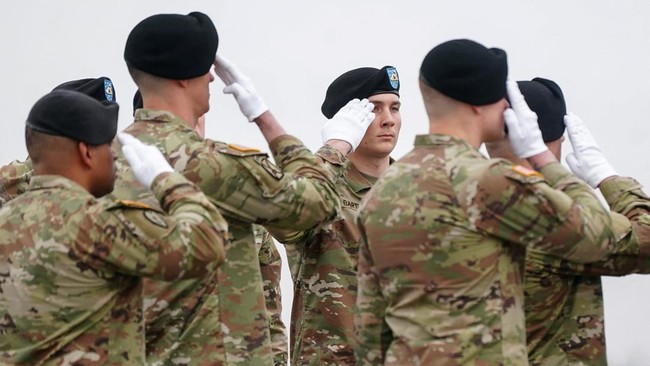
A plan by the United States Department of Defense to launch a new policy requiring annual testosterone level checks for military personnel aged 30 and above has sparked controversy. Many researchers are warning of risks, such as the danger of hypogonadism. No other major military power does this.
The US Endocrine Society advises against routine testing for low testosterone levels, known as hypogonadism, if there are no symptoms such as erectile dysfunction and low libido. They cite the risk of overdiagnosis. “Secretary Hegseth appears less influenced by medical data and more influenced by the so-called manosphere, where companies sell testosterone supplements directly to young men,” the US Endocrine Society stated.
However, the proposal is not entirely baseless. Hypogonadism is rare in the general population, occurring in only 2% to 13% of middle-aged to elderly men in the US and Europe who suffer from the condition, but there is reason to think it might be more common among soldiers. Secretary Hegseth’s memorandum cites “operator syndrome”, a cluster of symptoms among special forces personnel that is increasingly drawing the attention of medical researchers.
“These soldiers undergo extremely intensive training and operations. Common complaints include sleep disturbances, an inability to regulate hormones, headaches, and psychological problems emerge,” the US Endocrine Society said. Other researchers argue this is linked to low testosterone levels. “If you are not sleeping well and have [traumatic brain injuries], that affects the production, release, and regulation of hormones,” said Chris Frueh of the University of Hawaii-Hilo, author of a peer-reviewed paper on “operator syndrome” in 2020. “If you have low testosterone, in turn, that is bad for the brain. It worsens sleep quality, and so on,” Dr. Frueh added. He noted that personnel in other branches, including artillery, armour, and infantry, as well as some police officers and firefighters, are also at risk of the condition.
Meanwhile, Harvard Medical School endocrinologist Shalender Bhasin said Secretary Hegseth’s policy is not necessarily well designed. “Screening individuals in specific sub-populations at high risk does make sense, and that is what professional societies recommend,” said Shalender Bhasin. According to him, only a small fraction of the armed forces serve in combat branches. Testing is also complicated. Testosterone is released in pulses every 90 to 120 minutes. Most tests are imprecise and inaccurate at low levels.
Secretary Hegseth’s memorandum states that all troops will be tested, including approximately 230,000 women on active duty, whom the secretary previously suggested should not serve in combat roles. Testosterone deficiency is less well defined in women, as they have lower and more fluctuating levels, and because low levels have a weaker link to symptoms. “Another problem is treatment, which is optional. There is no doubt that testosterone levels drop very drastically during intensive periods like training for US Army Rangers and in Scandinavian boot camps,” Dr. Bhasin said. He pointed out that this is an adaptive mechanism, the body’s way of protecting itself when deprived of food and rest. But there is a “knowledge gap” in assessing whether testosterone replacement therapy would help, he said. The biggest question, however, is what testosterone level the military will set as “low testosterone”, as the threshold has not yet been announced. That will determine how the department balances the fine line between performance enhancement and outright performance boosting.