
US Military Deploys 1,700 Troops to Venezuela and Caribbean for Earthquake Relief
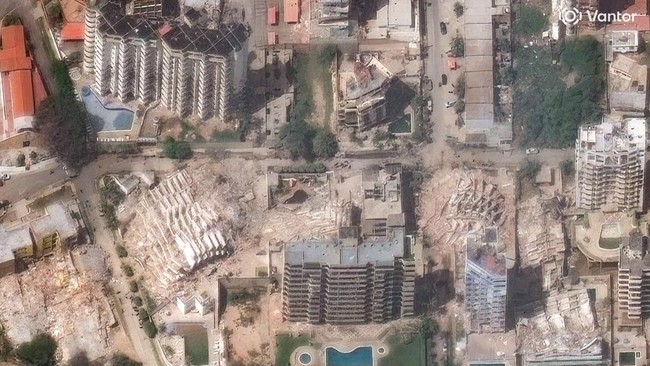
The United States has deployed more than 1,700 military personnel to Venezuela and the Caribbean region to support humanitarian operations after a massive earthquake struck the country last week. The move marks a drastic shift in relations between Washington and Caracas, only months after the US military launched an operation to capture Venezuelan President Nicolas Maduro.
Commander of the U.S. Southern Command (SOUTHCOM), General Francis Donovan, said the US military now has more than 900 personnel in Venezuela, while around 800 others are stationed at logistics hubs in Puerto Rico and Curacao to support aid distribution.
Donovan said US troops are involved in search and rescue operations for victims, helping to restore airport operations, and deploying air and sea assets to ensure international humanitarian aid can quickly enter the earthquake-affected areas.
Additionally, the US military is operating at least four to five MQ-9 Reaper drones over Venezuelan territory. The drones, along with an intelligence fusion centre in Miami, are being used to help Venezuelan authorities gain a more comprehensive picture of conditions on the ground.
"We are using some of the same assets that are typically used to track threats in the region. Now those assets are being used to ensure roads remain open and to know the locations of damaged buildings," Donovan said. He added that some of this information is sometimes difficult for Venezuelan authorities to obtain if they rely solely on direct ground observation.
The US military’s involvement in the humanitarian operation is a stark contrast to the relationship between the two countries in recent months. Donovan recalled that on 3 January, the US military launched an operation to capture President Nicolas Maduro and bring him to New York to face trial on drug trafficking charges. Maduro has denied all the charges. In the past month, the US military also conducted an operation that killed the leader of the Venezuelan criminal gang Tren de Aragua, which Donovan said was carried out in coordination with Venezuelan authorities.
"3 January was not that long ago. Just look at how this relationship has changed," Donovan said.
Venezuela was previously struck by two earthquakes measuring 7.2 and 7.5 in magnitude, occurring less than a minute apart on Wednesday last week. The quakes toppled many buildings and left thousands trapped under the rubble.
Venezuelan National Assembly President Jorge Rodriguez said on Tuesday that by the sixth day of rescue operations, only one survivor, a three-year-old child, had been found in the rubble. However, search and rescue operations are still ongoing.
Donovan said Marine Corps personnel were the first US troops to arrive on the scene to help rescue teams dig through debris to find survivors. The US military also helped fly out civilians, including a rescue team from Fairfax, Virginia, which over the weekend released video of the rescue of a mother and her nine-month-old baby.
Donovan explained that the bulk of current US military operations is focused on logistics to ensure international aid does not pile up at entry points and can be quickly distributed to affected areas. "Because that is where operations like this can sometimes run into trouble. Too much aid comes in, but there is not enough logistical support to distribute it to the affected areas," he said.