
US Military Command Says Latest Strikes on Iran Have Concluded
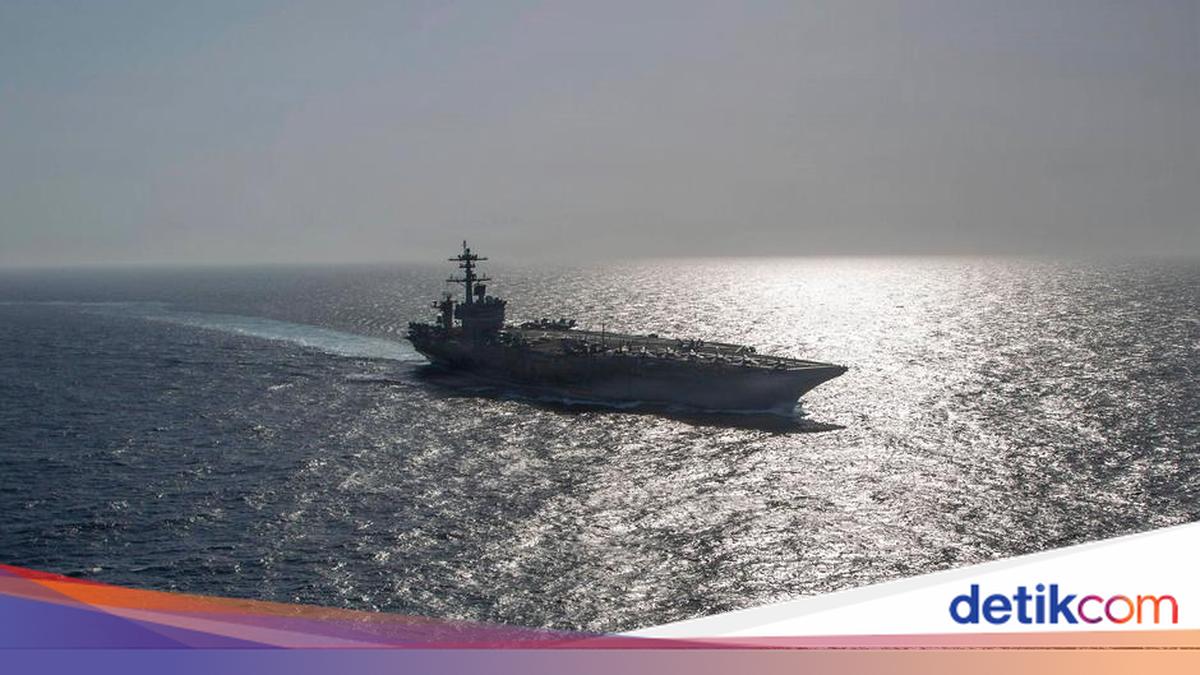
U.S. Central Command (CENTCOM) has announced strikes against several targets in Iran, initially disclosed by US Defence Secretary Pete Hegseth. “Central Command will be busy tonight, because President Trump said we will hit Iran hard and we are going to do it,” Hegseth told reporters on Wednesday (10/06). He added that the US military was targeting “critical facilities” in Iran following Tehran’s failure to reach an agreement with Washington to end the war.
In a post on X, formerly Twitter, CENTCOM stated that strikes began on Wednesday at 17:15 ET or Thursday at 5:15 AM WIB “against a number of targets in Iran at the direction of the Commander-in-Chief.” It described the operation as “a response to Iran’s unprovoked and continued aggression.” Shortly after the US announcement, Iranian state media reported a series of new explosions in southern Iran, near the Strait of Hormuz. The Islamic Republic of Iran Broadcasting reported blasts in Bandar Abbas, a port city in Hormozgan province, as well as in the towns of Mina and Sirik, and on Qeshm Island.
In response, Iran’s top military leader declared the Strait of Hormuz fully closed, warning that any vessel attempting to transit the economically vital waterway would be attacked. CENTCOM denied the closure claim in a post, stating that “commercial vessels continue to transit the Strait of Hormuz tonight.”
Iran’s Islamic Revolutionary Guard Corps (IRGC) announced strikes against US military facilities in Bahrain and Kuwait as retaliation for the latest American attacks on Iranian territory. “In two waves of operations, eighteen important targets belonging to the US Army” were struck at the Ali Al Salem and Ahmed Al Jaber air bases in Kuwait, the IRGC said, adding that “Sheikh Isa Air Base” in Bahrain was also hit. The extent of damage from Iran’s latest attacks remains unclear.
The Iranian strikes prompted security responses across Gulf nations. Bahrain’s Interior Ministry reported sirens sounded several times, urging residents to remain calm and move to the nearest safe location. Kuwait temporarily closed its airport, diverting at least five flights after its military initially stated that its air defence systems were engaging hostile aerial targets.
UN Secretary-General António Guterres renewed calls for de-escalation, warning that “West Asia is plunging deeper into crisis and the consequences could extend beyond the region.”
In a Fox News interview flanked by Vice President JD Vance, Trump claimed he had spoken with officials in Tehran who asked him to halt the air strikes. Iranian state media denied any such conversation took place. Trump indicated the US strikes would soon cease but threatened further attacks if Iran did not sign a peace deal, vowing “we will bomb them relentlessly.” He claimed the ceasefire that began on 8 April 2026 was “the most frequently violated ceasefire in world history.”
A subsequent CENTCOM post on X stated that the latest series of “self-defence” strikes against Iran had concluded. “CENTCOM forces conducted strikes against Iranian military surveillance facilities, communications systems, and air defence positions throughout Iran. US Marine Corps, Air Force, and Navy assets delivered precision munitions against Iranian targets that threatened US forces and international commercial vessels transiting regional waters,” the statement read. “This strike was in response to Iran’s continued, unprovoked aggression. US forces remain vigilant, lethal, and ready.”