
US Midterm Curse: The President’s Party Loses Seats Eight Times Out of Ten
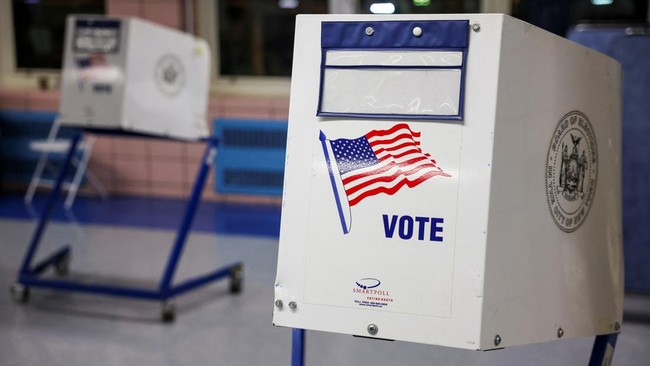
Washington, DC – Midterm elections in the United States are often a test for the sitting president. Donald Trump will face a similar test on 3 November.
Voters do not choose a new president in these elections. Instead, they elect all members of the House of Representatives and around one-third of the Senate.
The elections take place every two years, between presidential elections held every four years.
On 3 November 2026, Americans will once again vote to determine the composition of Congress. The result will determine the level of political support President Donald Trump has to pursue his administration’s agenda over the following two years.
Historical records show that the party occupying the White House tends to lose House seats in midterm elections.
In the past ten presidential terms, the president’s party has lost seats eight times. The only exceptions were the elections of 1998 and 2002.
From 1986 to 2022, the president’s party managed to gain House seats only twice. In 1998, the Democrats under President Bill Clinton gained four seats.
Four years later, the Republicans under George W. Bush gained eight seats.
The two exceptions had different political backdrops. In 1998, Clinton was facing an impeachment effort led by the Republicans. However, the move failed to win broad public support.
Amid the controversy, Clinton’s approval rating remained at around 66%. The Democrats consequently gained House seats, against the usual midterm pattern.
The Republicans’ victory in 2002, meanwhile, came after the 11 September 2001 terrorist attacks.
Public support for Bush surged after the attacks, with his approval rating reaching 63% on election day. The Republicans went on to gain eight House seats and two Senate seats.
These two events show that midterm results are not determined solely by which party is in power. A president’s popularity and the national situation can also influence voters’ choices.
Trump faces midterms amid low approval ratings
Ahead of the 3 November 2026 elections, Trump faces a challenge over his popularity.
A Reuters/Ipsos poll completed on 26 October put approval of his performance at 32%, up one percentage point from the previous poll but still close to the lowest level of his second term.
In the same survey, Democratic candidates led Republicans when respondents were asked which party they would support in the congressional elections.
Among registered voters, 47% backed the Democrats, compared with 36% for the Republicans. Among those most likely to vote, the Democrats’ lead was 53% to 44%.
The poll is not an election result and does not necessarily reflect the outcome in every constituency.
The contests for control of the House and Senate also have different dynamics, as the number and composition of seats being contested are not the same.
For Trump, the midterms are a test of whether the Republicans can retain control of Congress.
If the Democrats take control of either chamber, they could strengthen congressional oversight of the administration, including through investigations and budget debates.
The large sums flowing into the 2026 elections are therefore not just about competition between candidates. The result will also determine the balance of power between the White House and Congress for the remainder of Trump’s term.