
US Loses Grip in Iran War, Trump Faces No-Win Situation
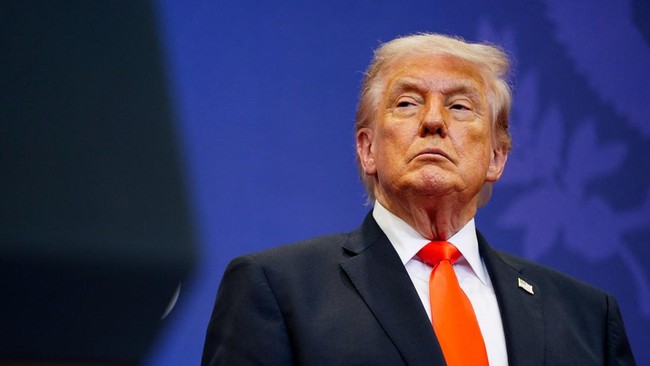
United States (US) President Donald Trump is said to be facing difficult choices after the war against Iran entered its sixth month. The wave of threats and diplomacy that unfolded throughout this week shows how narrow Trump’s room for manoeuvre has become in a conflict he previously claimed would last only a few weeks.
Trump is now trapped between two major options. The first is to accept a temporary deal being negotiated by Iran and Oman, which could give Tehran control over the Strait of Hormuz that it never had before the war broke out. The second is to carry out his threat to escalate strikes against Iran, which risks triggering a longer crisis.
According to analysts, the first option would represent the largest concession to Iran since the US and Israel launched attacks on the country on 28 February. The deal would also formalise, at least temporarily, the Islamic Republic of Iran’s role in overseeing the world’s most important oil shipping lane, something the Trump administration had repeatedly insisted would never be allowed to happen.
Meanwhile, the second path, likely in the form of a new wave of air strikes, is considered fraught with political risk for Trump ahead of the US midterm elections in November. That option is also seen as offering no greater chance of success than the previous bombing campaign, which failed to force Tehran to surrender.
Trump still has a third option: maintaining the current situation. That would mean keeping the blockade on Iranian ports and occasionally retaliating against attacks on ships transiting the region.
But that approach also offers no honourable exit for Trump from a conflict he had predicted would end by mid-April.
“This is a list of equally bad options, but Trump may be starting to realise that he cannot let this war go on indefinitely,” said Aaron David Miller, a former Middle East negotiator who has worked for both Democratic and Republican administrations, as reported by Reuters on Friday (7/8/2026).
“Something has to change, and that may be an acknowledgement of Iran’s new reality in the strait,” he added.
US Secretary of State Marco Rubio had previously stressed that the Strait of Hormuz must remain an open international waterway, not under Iranian control, and free from levies or fees of any kind.
The Strait of Hormuz is now the most sensitive point in the conflict. Since the war began, Iran has held a near-stranglehold over roughly one-fifth of the world’s oil and liquefied natural gas shipments that pass through the area.
But analysts say Trump could once again take a different position from Rubio, as has happened several times during the war.
With fuel prices in the US remaining high, low approval ratings, and a war that is increasingly unpopular with the American public, Trump’s political room for manoeuvre is seen as increasingly limited.
As the conflict drags on, the various hardline threats issued by Trump are also seen as having failed to force Iran to back down. As a result, a number of analysts see the possibility that it is Trump who will be forced to make the biggest compromise.
The reopening of the Strait of Hormuz is considered a key condition for reviving negotiations between Iran and the US. The Trump administration wants those talks to return to focusing on Iran’s nuclear programme, which has been the main target of its military campaign.
Even so, it remains an open question whether Washington is willing to accept any deal reached by Iran and Oman, two countries on opposite sides of the Strait of Hormuz.
According to a senior Iranian source and two regional officials who spoke to Reuters, the draft deal under discussion would give Tehran partial control over ships entering the Gulf through the Strait of Hormuz.
Trump has said that a deal to reopen the shipping lane is close. But Iranian officials say a number of important details still need to be resolved.
Even if the Iran-Oman deal is signed and US-Iran talks resume, experts remain doubtful about the prospects for a permanent peace.
That doubt stems from the fact that the memorandum of understanding signed by Washington and Tehran in June quickly collapsed. The initial agreement had also provided sanctions relief to Iran from the outset, drawing criticism from a number of Republican lawmakers who support Trump.
A White House official who spoke to Reuters anonymously said that a growing number of administration officials are accepting the reality that the conflict is likely to continue in various forms until the midterm elections are held.
That situation increases the political risk for Trump, who won his second term on a promise to avoid foreign interventions and focus more on the economic concerns of the American people.
At the same time, the Republican Party is also struggling to maintain control of Congress.
Even so, the US official stressed that Trump’s decisions on Iran are not based on “shifting opinion polls.”
Although Trump has repeatedly claimed victory for killing many Iranian leaders and weakening its military capabilities, most analysts say the US president has not achieved many of the war’s main objectives.
On Saturday, Trump said he called off plans for a major new strike after US partners in the Middle East asked for diplomacy to be given another chance.
But at the same time, he also warned that he would launch a harsh attack if the diplomatic efforts failed.
Some analysts suspect Trump’s step back was also influenced by concerns about dwindling US missile stockpiles. But Trump denied that his country is experiencing a shortage of weaponry.
Even so, Trump again sent contradictory messages to Iran on Wednesday.
“I would rather make a deal because I don’t want to kill people,” Trump said at a campaign event in Las Vegas.
“But at some point we will do it,” he added.
On the other side, Iran has warned US allies in the Gulf that any new Washington attack will be met with strikes on their energy infrastructure.
Five sources familiar with the discussions said the threat has been conveyed to US partner countries in the region.
Jonathan Panikoff, a former US intelligence official for the Middle East, said other countries are also watching the conflict closely.
“They are studying what America’s limitations are for the years ahead,” he said, referring to China, Russia, and North Korea.
Even a number of figures who have long supported a hard line against Iran are beginning to warn Trump to be careful.
“The Islamic Republic is trying to force President Trump into a lose-lose situation before November,” wrote Behnam Ben Taleblu of the Foundation for the Defense of Democracies, a Washington-based think tank known for its hardline stance on Iran, on platform X.
According to him, the Trump administration must avoid hasty steps and clearly understand “where the US has leverage and where it does not.”
Source: jawawa.id (https://jawawa.id/newsitem/us-loses-grip-in-iran-war-trump-faces-no-win-situation-1786060246)
Originally published by CNBC Indonesia (https://www.cnbcindonesia.com/news/20260807053601-4-757274/as-kehilangan-pegangan-di-perang-iran-trump-maju-kena-mundur-kena), translated from Indonesian