
US Lifts Naval Blockade After Sealing Peace Deal with Iran
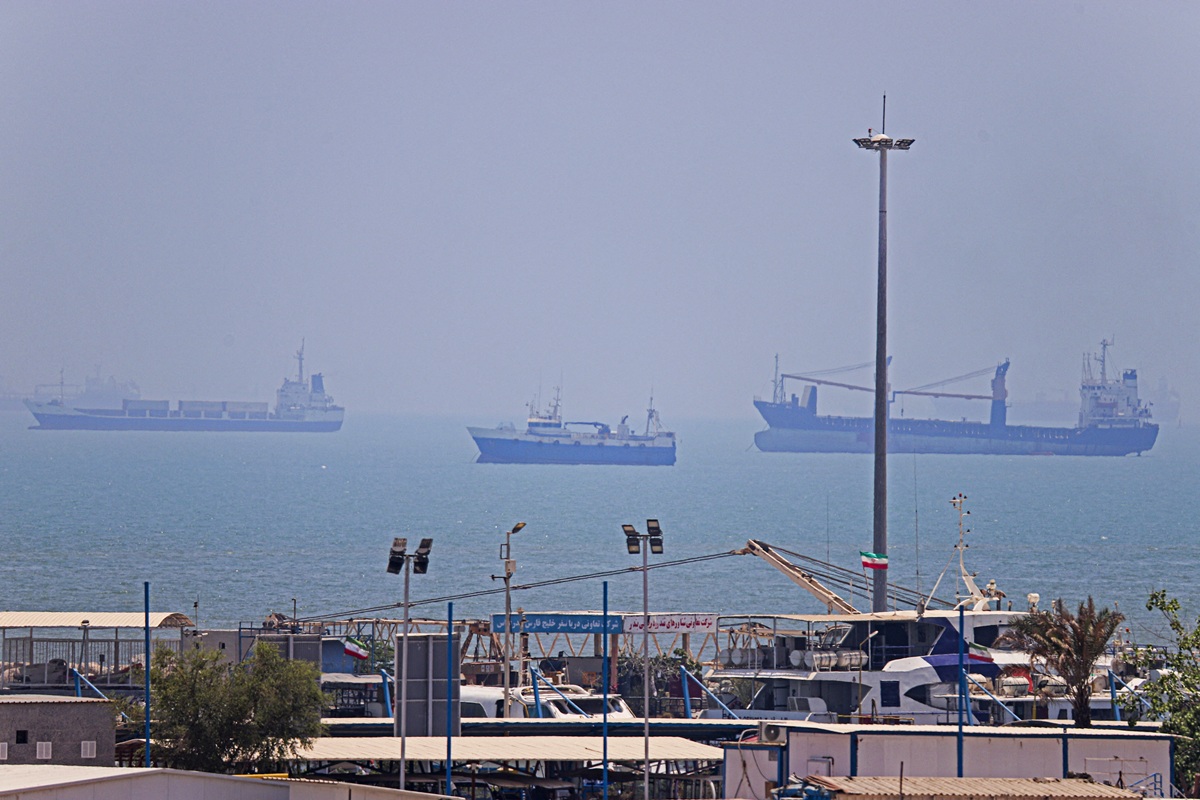
The United States has officially lifted its naval blockade against Iran following the signing of an agreement to end the war in the Middle East. US Central Command (CENTCOM) confirmed the end of the blockade via platform X under the President’s direction, although several US ships will remain on alert in the surrounding area.
Shortly afterwards, Iran’s Supreme Leader Mojtaba Khamenei gave his first response since taking office last March. He stated that he had approved the agreement with the US, despite admitting to holding differing views.
“President Trump has, out of desperation, used every kind of influence to bring about this deal,” said Mojtaba Khamenei. He added that while there will be “future face-to-face negotiations” between Tehran and Washington, this “will not mean accepting the enemy’s position.” He permitted the move after receiving assurances from Iranian President Masoud Pezeshkian that the rights of the Iranian nation would remain protected.
On the other side, Donald Trump stated via Truth Social that he hoped a ceasefire could be implemented on all fronts, including between Israel and Hezbollah in Lebanon.
The US-Iran agreement centres on 14 core points, including the reopening of the Strait of Hormuz, a ban on Iran possessing nuclear weapons, and a commitment of US$300 billion for Iran’s economic reconstruction with no contribution obligation from the US. The agreement, formatted as a Memorandum of Understanding (MoU), binds both parties to reach a final deal within a maximum of 60 days.
The pact was signed remotely, cancelling a ceremony in Switzerland scheduled for Friday, although representatives of both countries will still meet in Switzerland for further technical negotiations.
However, Trump’s policy has drawn sharp domestic criticism, particularly from Republican representatives who condemned the reconstruction fund provision. Republican Senator Bill Cassidy even called the agreement “the worst foreign policy mistake in recent decades.”
“Iran’s nuclear ambitions are not curbed, and they have learned that threatening the Strait of Hormuz works,” Cassidy criticised.
US Vice President JD Vance immediately stepped up to defend the deal. He stressed that Iran would not receive money or sanctions relief unless it destroyed its stockpile of enriched uranium and demonstrably stopped funding proxy groups in the region.
Vance also sharply criticised Israeli cabinet ministers Itamar Ben Gvir and Bezalel Smotrich, who oppose the agreement. “If I were in the Israeli government cabinet, I probably would not attack the only strong ally I still have in the entire world,” Vance asserted. “You are a country of nine million people. You cannot simply kill your way out of solving every national security problem you have.”
Meanwhile, Israeli Prime Minister Benjamin Netanyahu continued to stress the importance of maintaining close ties with Washington. Despite this, escalation on the ground continues amid exchanges of fire between Israel and Hezbollah that killed three people in Lebanon.
Source: jawawa.id (https://jawawa.id/newsitem/us-lifts-naval-blockade-after-sealing-peace-deal-with-iran-1781823018)
Originally published by Media Indonesia (https://mediaindonesia.com/internasional/902060/as-cabut-blokade-laut-usai-sepakati-perdamaian-dengan-iran), translated from Indonesian