
US Launches Fresh Air Strikes on Iran, Port City Blackout
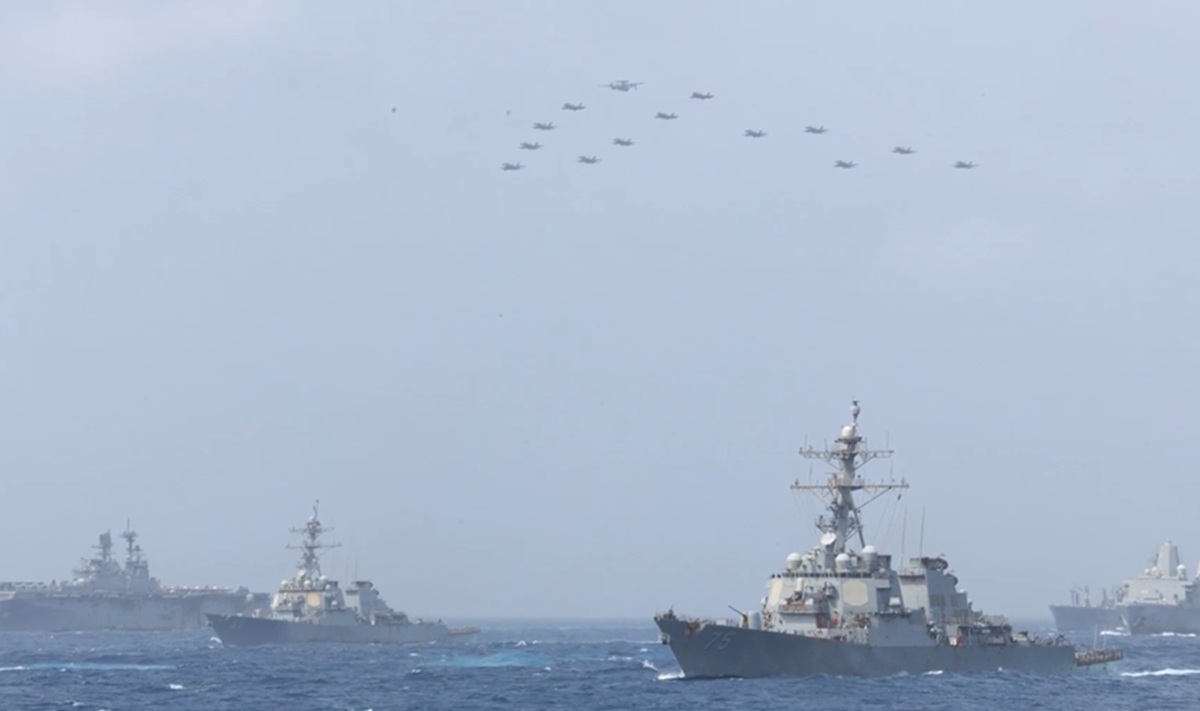
The United States has launched a new wave of air strikes against Iran, the military announced on Wednesday local time, in a bid to degrade Tehran’s ability to target commercial vessels transiting the Strait of Hormuz.
US Central Command (CENTCOM) announced the operation on its official social media account on X, hours after President Donald Trump stated that a ceasefire between the two countries had likely ‘ended’. Prior to the strikes, Trump also mentioned the US would ‘probably be attacking’ Iran that night.
‘At the direction of the Commander-in-Chief, US Central Command forces have begun conducting additional strikes against Iran to further degrade their ability to threaten freedom of navigation in the Strait of Hormuz,’ CENTCOM wrote on X. ‘The United States is holding Iran accountable for its recent unprovoked aggression against commercial shipping and civilian mariners navigating freely in vital international waterways.’
The impact of the strikes was immediately felt along Iran’s coast. According to state-run media IRNA, around 10 explosions were heard in the southern port city of Chabahar and the coastal town of Konarak, causing a mass power outage. ‘Electricity was also cut off in parts of Chabahar city,’ IRNA reported, adding that the incident was under investigation.
Semi-official Fars News Agency also reported heavy explosions near the cities of Bandar Abbas and Sirik around 11:15 pm local time. Several blasts were heard originating from the sea off the western coast of Sirik. Fars reported that Iran’s air defence systems were activated and ‘engaged enemy targets’ in the area.
The renewed conflict has severely impacted maritime activity in the Strait of Hormuz. According to MarineTraffic data, only 20 commercial vessels transited the strait in the last 24 hours, a sharp decline from the pre-war average of 110 ships per day. Mass GPS spoofing incidents have also surged, with dozens of vessels disappearing from monitoring dashboards or being detected in incorrect locations.
For the United States, keeping the Strait of Hormuz open and secure is a prerequisite for negotiations with Iran. The waterway is a critical artery for global energy markets, handling roughly one-fifth of the world’s oil and liquefied natural gas supplies before the conflict.