
US Launches Airstrikes on Iran After Trump Vows Retaliation
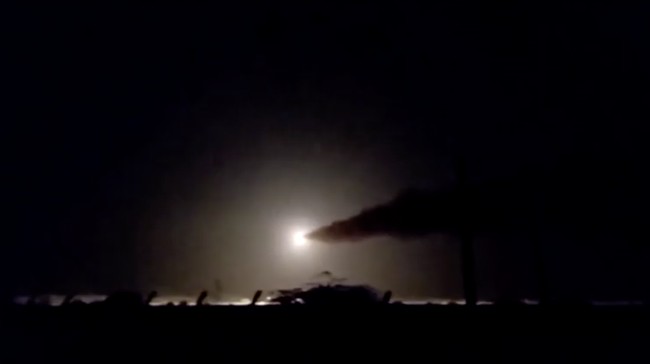
The United States government launched massive airstrikes on Iranian territory on Tuesday (09/06/2026). This aggressive move was taken after US President Donald Trump stated that Tehran had shot down an American military Apache helicopter in the Strait of Hormuz region. ‘I believe the response has to be very strong, very powerful, and that is what this strike looks like,’ President Trump asserted during an official statement to ABC News. The US military announced via their X social media account that the latest strikes commenced at 17:00 local time. They stated the military mission was a proportional response to unjustifiable Iranian aggression. Axios reported that several air defence systems and radar installations belonging to Iran around the Strait of Hormuz were the primary targets destroyed by US forces.
Meanwhile, Iranian state media reported that Qeshm Island, located in the Strait of Hormuz, was targeted by the American military assault. A high-explosive projectile strike was also confirmed hitting the port city of Sirik on the edge of the strait. The Mehr news agency reported the sound of loud explosions thundering in areas near Bandar Abbas. Trump had previously stated that the two US military pilots involved in the helicopter crash were uninjured. A US official, speaking on condition of anonymity, disclosed information regarding the cause of the aircraft’s downing. The official leaked that the American Apache helicopter was brought down by a kamikaze drone belonging to the Iranian military.
Iranian Foreign Minister Abbas Araqchi did not provide a direct response regarding the downed combat helicopter incident. However, he issued a stern warning that the presence of foreign forces in the area posed a high risk of being involved in maritime accidents or caught in crossfire. ‘To reduce the risk, the best solution is for them to leave,’ Abbas Araqchi wrote in a post on his social media account. Iranian state media later quoted a military source stating that no offensive air military operations had been conducted in the Strait of Hormuz in the preceding 24 hours. The military source also added a threat that Tehran would have a ‘very firm response’ if the enemy displayed new hostility again as a reaction to the helicopter incident.
Trump offered a slightly different remark when speaking to The Wall Street Journal via telephone on Tuesday. He attempted to calm market tensions by stating the helicopter shooting incident was not a major issue. ‘It’s not a big deal,’ Trump said, placing special emphasis on the pilots’ current good condition. Nevertheless, this new episode of tension is expected to add a heavy burden to efforts mediating a Middle East peace deal. The incident also complicates plans to reopen the Strait of Hormuz, which is a vital route for crude oil and other global commodity trade. Trump has repeatedly claimed that Iran and the United States are very close to a peace deal, though there have been few signs of concrete progress since a fragile ceasefire took effect in early April.
The US military stated that a US Navy surface drone successfully located and rescued the two helicopter crew members. The US Army attack helicopter went down in waters near the coast of Oman while conducting a routine patrol on Tuesday around 03:00 local time. The US Central Command, or Centcom, provided no medical reason underlying the helicopter’s crash. Centcom merely stated that the soldiers were successfully evacuated after languishing for two hours at sea. The military assesses that the soldiers are currently in stable condition, a far more cautious assessment compared to Trump’s unilateral claims.
In a parallel conflict unfolding elsewhere, the Israeli military bombarded the historic port city of Tyre in southern Lebanon, killing at least eight civilians. This deadly strike marked the bloodiest assault on the city since fighting erupted in Lebanon in early March when Hezbollah began launching rockets into Israel. Verified video footage showed building debris scattered along a thoroughfare at the blast site. Israel’s staunch refusal to halt its military campaign against Iran-backed Hezbollah has obstructed Trump’s strenuous efforts. This scenario complicates the US’s steps to extend the fragile ceasefire in the US-Israel allied war against Iran into a lasting peace settlement. Iran and Israel themselves exchanged airstrikes earlier this week, which killed two civilians in the capital Tehran. Trump admitted issuing a very harsh warning to Israeli Prime Minister Benjamin Netanyahu not to reignite a full-scale war with Iran. He conveyed this statement to Axios on Monday. ‘I said, Bibi, you better be careful, or you’ll be on your own soon,’ Trump warned Netanyahu. Tehran has long asserted that any peace deal with Washington would heavily depend on a complete cessation of fighting in Lebanon.