
US-Israel vs Iran Role Sends Gold Prices Crashing, Here's Why
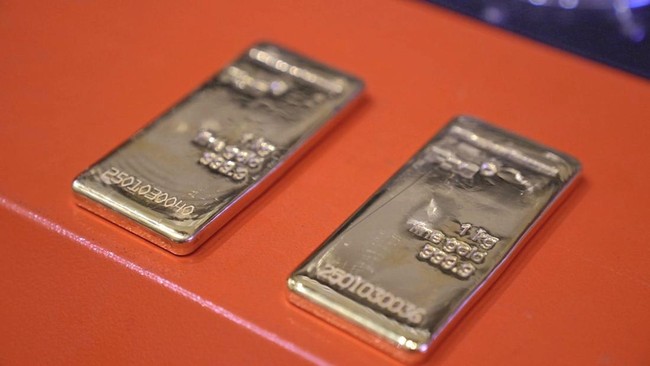
Global gold prices are under pressure amid rising geopolitical tensions due to the conflict involving Iran, the United States, and Israel, even though gold is typically the asset of choice for investors during global uncertainty.
Citing Al Jazeera on Sunday (14/3/2026), the gold price was recorded falling from its peak of US$5,303 per troy ounce on 28 January to around US$4,235 per troy ounce last Friday. This decline was triggered by growing market concerns about inflation, which could prompt central banks to hold or even raise interest rates.
One of the roots of the inflation spike is the disruption to global energy supplies caused by the obstruction of ship traffic in the Strait of Hormuz. As is known, Iran has blocked traffic through this waterway since the start of the war in retaliation against the US and Israel.
In the United States, inflation reached 4.2%, the highest level in three years. Meanwhile, the labour market is still showing resilience, so expectations of interest rate cuts by the US central bank, the Federal Reserve, are beginning to fade.
Although often used as a hedge against inflation, the gold price tends to be depressed when interest rates are at high levels. This is because gold is an asset that does not provide a yield, meaning it generates no income like interest. Thus, the profit from gold investment depends entirely on the price increase of the precious metal in the market.
“Gold is the asset that most closely resembles real money,” Justin Cardwell, Chief Options Analyst at OptionSpreaders.com, told Al Jazeera. “Gold pays no dividend, but it also generates no value until its price goes up. People buy gold for its value appreciation,” he added.
This situation makes interest rates a direct competitor to gold in attracting investor interest. According to Cardwell, gold’s appeal as an investment instrument tends to diminish when interest rates are at high levels. “Gold loses its appeal as an investment if interest rates are high and people will continue to use the dollar,” Cardwell added.
The Iran conflict has had a positive impact on the dollar, and because the gold price is denominated in dollars, the two move in opposite directions. “When the dollar strengthens, gold feels the pressure; when the dollar weakens, gold tends to rise. Right now, the US dollar is strong, and gold is feeling it,” said Collin Plume, CEO of Noble Gold Investments, to Al Jazeera via email.
However, Plume added that the future value of both is uncertain. “The biggest question we face for the rest of this year and perhaps the next few years is what will happen next,” he said.