
US-Israel Relations Fray After Elections in Both Countries
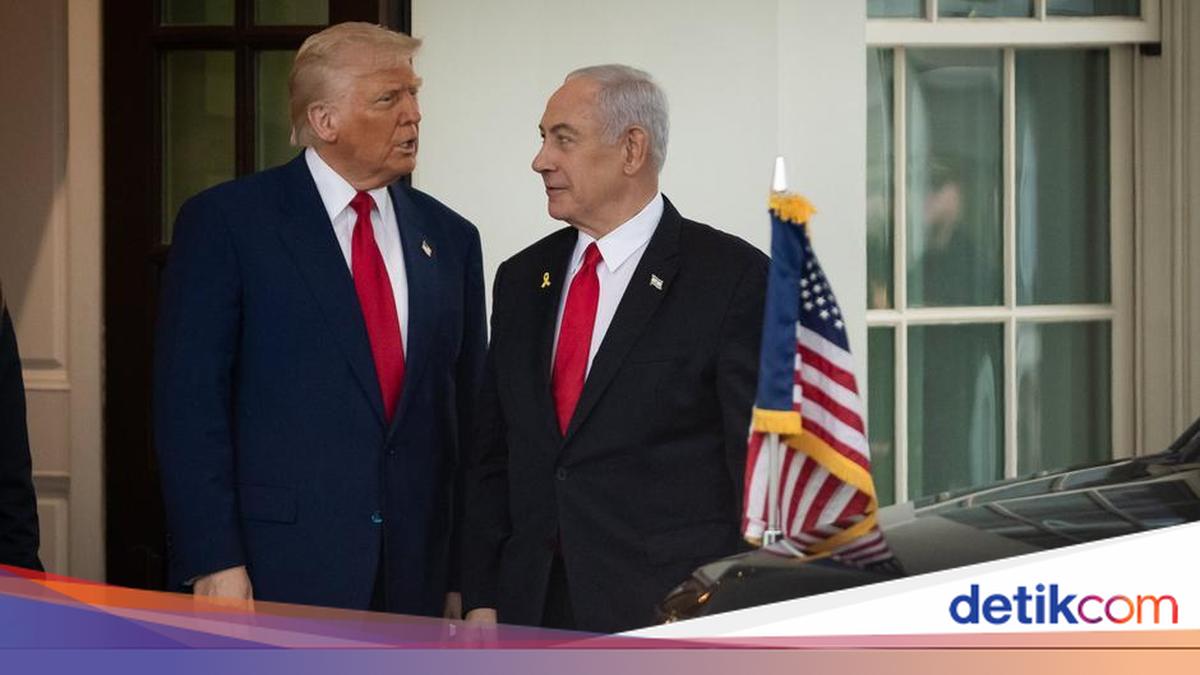
Relations between the United States and Israel, long described as an unshakeable partnership or the closest of alliances, have faced a significant test through important elections held in both countries. On 27 October, Israel held a general election, and the ruling bloc led by Prime Minister Benjamin Netanyahu lost its majority in the Knesset. More recently, President Isaac Herzog tasked opposition leader Gadi Eisenkot with forming a new government. Meanwhile, in the US midterm elections on 3 November, the Republican Party lost its dominance in both chambers of Congress, the House of Representatives and the Senate.
In light of these developments, questions remain over whether the defeats suffered by the leaders of both countries will alter the dynamics of US-Israel relations, long touted as an ideal partnership. This matters because the direction of the relationship affects not only the two countries but also US policy towards the Middle East. It is therefore important to examine how the relationship has shifted since the elections and outline the policies the two countries are likely to pursue towards one another.
Relations before the elections
Israel is an exceptional country in that it enjoys bipartisan support in US politics, thanks to intensive lobbying efforts in the US legislative and executive branches. In other words, regardless of which party holds the presidency or a majority in Congress, Israel has consistently been protected and supported. Ensuring Israel’s security has long been one of the fundamental aims of US foreign policy.
Although the US has shaped its Middle East policy around Israel’s security, it has also sought to normalise relations between Israel and countries in the region. In this context, the US has not only proposed plans to resolve the Israeli-Palestinian conflict but has also played an important role in facilitating peace agreements between Israel and regional countries. US administrations have provided military and economic support to Israel while shielding it from international isolation and sanctions. As a result, Israel has been able for years to commit human rights violations against Palestinians while continuing to expand its occupation of Palestinian territory.
US support for Israel has at times gone so far that measures have been taken solely on the basis of Israel’s security and interests, even when no American interests were at stake. For example, the US has supported Israel’s attacks on Gaza and turned a blind eye to the genocide that followed 7 October. It has also imposed sanctions on prosecutors and judges in an effort to discredit the ongoing genocide case at the International Court of Justice and the International Criminal Court’s arrest warrant for Netanyahu. For this reason, the US has faced fierce criticism around the world.
As if all this were not enough, the fact that President Trump first attacked Iran’s nuclear facilities during the 12-day war in June 2025 and then sided with Israel in its subsequent war with Iran is evidence that US policy towards Israel is a central priority for the country.
Despite their close relationship, Trump reportedly began distancing himself from Netanyahu after the war against Iran did not go as expected. The situation deteriorated further when Iran closed the Strait of Hormuz, triggering higher energy prices and a wave of public criticism in the US. The shift was also seen as an effort to avoid influencing Israel’s forthcoming general election. Trump reportedly did not meet Netanyahu, who travelled to the US for the 81st session of the UN General Assembly, for this reason.
The impact of war and genocide
Had Netanyahu and Trump both won their elections, there would have been no significant change in US-Israel relations, as the two leaders would have consolidated their political power. But with both suffering electoral defeats, several contentious issues can no longer simply be ignored.
One of the most important is the US administration’s support for the genocide in Gaza. Both former President Joe Biden and Trump strongly backed Israel’s policies in Palestine and were consequently criticised at home and internationally. Gaza, which contributed to the Biden administration’s defeat in the 2024 election, was also one of the main reasons for Trump’s defeat in the midterms.
Trump won the 2024 election on promises to revive the economy, restore America’s greatness and, most importantly, end armed conflicts around the world. His policies, however, were seen as running counter to those promises. It is therefore unsurprising that American voters punished the Republican Party in the midterms.
Trump’s declining support was also influenced by the lack of meaningful progress in implementing the Gaza ceasefire signed on 10 October 2025 through his initiative. High hopes for the Board of Peace, established to advance a resolution to the conflict, have also gone unrealised, as the body is seen as having had little impact on the ground.
The most significant development affecting relations between the two countries, and between Trump and Netanyahu, has nevertheless been the war with Iran. While Trump was still ‘drunk’ on the success of the intervention in Venezuela, Netanyahu persuaded him that Iran’s regime could easily be overthrown, drawing Trump into the war. Unfortunately, the plan did not go smoothly. Despite the losses Iran suffered, the country’s persistence and its use of the Strait of Hormuz as leverage caused Israel’s fanciful plan to collapse and dashed Trump’s hopes.
Because the war in Iran has dragged on far beyond the initial estimate of three to four days, the costs borne by Israel and the US have risen. Israel has faced some of the most intense attacks in its history, undermining public confidence in Netanyahu, while rising living and energy costs have fuelled opposition to Trump in the US. Calls to end the war are consequently growing.
Had the US and Israel succeeded in overthrowing Iran’s government, it might have been portrayed as a major victory, as in Venezuela. Instead, the failure has fuelled disappointment, prompted a reassessment of bilateral relations and affected elections in both countries, tarnishing their supposedly unshakeable partnership.
The gap between public and government
The sharpest criticism of the reasons for the Republican Party’s midterm defeat came from Vice-President JD Vance. In a post on his social media account, Vance wrote that ‘everyone knows why we lost the election’ and said that ‘for Republicans to win back their voters, first and foremost they must end the war, improve people’s living conditions by reducing inflation, put US interests above everything else and, perhaps most importantly, change their relationship with Israel’. The statement suggests that US policy towards Israel will change in the future.
The influence of the Jewish lobby on US politics has also been shaken. As American voters have expressed dissatisfaction with Israel’s policy in Gaza and called on politicians to prioritise domestic issues, many US politicians have even felt compelled to state that they do not accept financial support from AIPAC. This development is expected to prompt the US to reassess its relationship with Israel in the period ahead.
A similar shift also seems difficult to avoid on Israel’s side. Netanyahu has tended to base Israel’s relationship with the US on Trump personally, while communication with the Democratic Party has been largely neglected. This has fuelled criticism that bilateral relations are increasingly entangled in partisan political interests and are losing the cross-party character they once had. That situation could, of course, harm Israel’s own strategic interests.
Ultimately, the setbacks suffered by the Netanyahu and Trump camps in the elections have exposed distortions in US-Israel relations, making the existing dynamics unsustainable for both sides. A reset and reshaping of a relationship that has become a burden on both parties has become unavoidable.
How relations between the two countries develop in this new era may depend on how Trump governs without congressional support and on who leads Israel after Netanyahu. Whatever happens, however, US-Israel relations are unlikely to return to the way they were.
Source: jawawa.id (https://jawawa.id/newsitem/us-israel-relations-fray-after-elections-in-both-countries-1794372827)
Originally published by detikcom (https://news.detik.com/kolom/d-8747851/retak-hubungan-as-israel-usai-pemilihan-kedua-negara), translated from Indonesian