
US-Iran War Update: Peace Negotiations, Hormuz to Israel-Lebanon
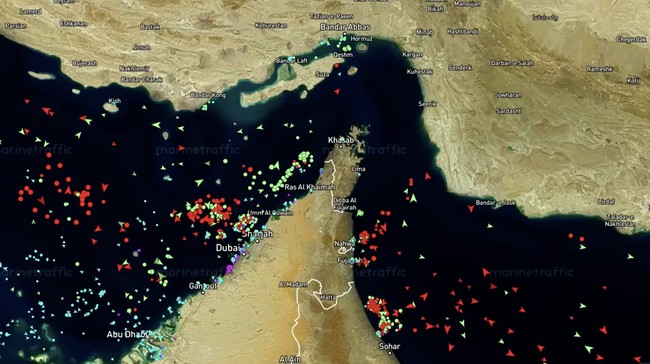
The conflict between the United States (US) and Iran continues to exhibit rapid dynamics. From military escalations to renewed opportunities for peace negotiations.
The situation in the Strait of Hormuz, naval blockades, and the involvement of regional actors such as Israel and Lebanon further complicate the conflict landscape, while triggering global impacts, particularly on energy and the economy. Here is the latest update on the war situation between the US and Iran, as compiled by CNBC Indonesia on Wednesday (15/4/2026).
- Trump Signals New US-Iran Negotiations
US President Donald Trump has opened new opportunities for diplomacy with Iran. He mentioned that a second round of talks could take place in the near future, with Pakistan as a candidate location for the meeting.
“Something could happen in the next two days,” Trump said in an interview with the New York Post.
According to diplomatic sources, Pakistan is currently actively working to bring the two parties together. In addition, the negotiations are also focused on extending the two-week ceasefire that is currently in effect.
If realised, these talks could become a crucial turning point in easing the conflict that has shaken regional stability. Previously, talks failed last week when the two countries clashed over Iran’s uranium enrichment points.
- Market Response: Stocks Rise, Oil Falls
Hopes for the easing of the conflict are immediately reflected in global financial markets. US stock exchanges recorded significant gains, with the S&P 500 and Nasdaq indices returning to pre-escalation levels from the US, Israel, and Iran conflict at the end of February.
This rise is driven by investor optimism that diplomatic channels are beginning to open. Thus, the risk of major disruptions to the global economy can be contained.
On the other hand, world oil prices have experienced a sharp decline. Brent crude fell to US$94.79 per barrel, or about Rp1.56 million, while West Texas Intermediate (WTI) stood at US$91.28 per barrel, or about Rp1.50 million.
This drop in oil prices is triggered by expectations that the Strait of Hormuz, a vital route carrying around 20% of the world’s oil supply, could reopen normally if tensions ease. The strait had previously become a critical point due to blockades and risks of military attacks.
- Zelensky Suddenly Complains About US Focus on Iran War
Ukrainian President Volodymyr Zelensky has openly criticised the US shift in focus, now more directed towards the Iran conflict. He assessed that this situation directly impacts military and diplomatic support for Ukraine.
In an interview with German broadcaster ZDF, Zelensky said that US negotiators now “have no time for Ukraine” because they are intensively involved in talks with Iran. He also highlighted figures like Steve Witkoff and Jared Kushner, who were previously active in diplomacy related to Russia, now focusing more on Middle East issues.
“If the United States does not pressure Putin… and only engages in soft dialogue with Russia, then they will no longer be afraid,” Zelensky emphasised.
This statement reflects Kyiv’s concerns that an expanding global conflict could reduce Western attention and support for the war in Ukraine. The Russia-Ukraine war itself has been ongoing since 2022.
- US Tightens Sanctions on Iran
Amid negotiation opportunities, the US is instead reinforcing its hardline stance towards Iran. The US Treasury Department announced that it will not extend the limited oil sanctions relief previously granted.
The policy previously allowed the sale of Iranian oil already at sea to reduce global supply shocks. “Short-term authorisation… will end in a few days and will not be renewed,” the official statement read.
This move shows that Washington remains committed to its “maximum pressure” strategy against Tehran, even as diplomatic channels begin to open. This policy also has the potential to tighten global energy supplies if the conflict continues.
- Hezbollah Attacks Northern Israel
Tensions on the ground have not subsided. Hezbollah launched rocket attacks on 13 cities in northern Israel. This occurred just moments after Israel-Lebanon talks began in Washington.
This attack demonstrates a discrepancy between diplomatic channels and on-the-ground military conditions. Hezbollah, supported by Iran, remains a key actor in the conflict along the Lebanon-Israel border.
This action has the potential to trigger further military responses from Israel. It also tests the commitment of both countries to the newly started negotiation process.
- US Update on Strait of Hormuz Blockade
The US military reported that it has stopped six ships attempting to leave Iranian ports in the first 24 hours since the naval blockade was imposed. This is part of Trump’s move to blockade the Strait of Hormuz.
However, maritime tracking data shows that some ships have still managed to cross the Strait of Hormuz despite the blockade being in place. This indicates that the blockade’s implementation still faces challenges on the ground.
The Strait of Hormuz itself is a crucial point as it is the main export route for oil from Gulf countries to global markets. As much as 20% of global oil passes through the narrow waters between Iran and Oman.
- Trump Criticises NATO Countries
In another development, Trump also launched criticisms at Italian Prime Minister Giorgia Meloni, who has long been known as his political ally. In an interview with Corriere della Sera, Trump expressed regret over Meloni’s stance, which he deemed insufficient in supporting military efforts against Iran.
“I’m surprised by her. I thought she had courage, but I was wrong,” he said.
This statement indicates differences in stance among Western allies regarding the approach to the Iran conflict. Previously, Spain even supported China as a mediator for the Iran-US war.
- Humanitarian Aid Enters Iran
Amid the conflict, humanitarian aid is beginning to flow into Iran. The International Red Cross and Red Crescent