
US-Iran War Triggers New "Apocalypse", This Continent Dies First?
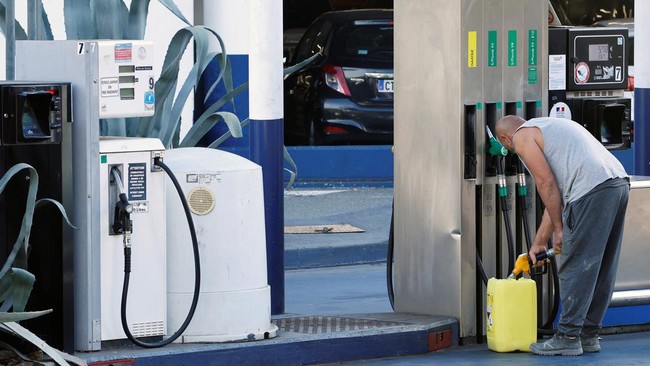
The European Union faces a serious problem amid the threat of an energy crisis stemming from the Iran war. The scarcity of data means the region does not truly know how much fuel remains.
A Politico report states this situation is occurring as airlines begin reducing flights and governments encourage travel restrictions. At the same time, the Iran conflict is driving a surge in energy prices and threatening global supplies, particularly those passing through the Strait of Hormuz, a vital route for worldwide oil and gas distribution.
European Commission President Ursula von der Leyen revealed that the conflict is burdening the EU with up to 500 million euros per day, equivalent to approximately Rp10.13 trillion. This spike in costs underscores the immense pressure now facing Europe’s energy sector.
“In Europe, we have visibility until May and June… after that, it is difficult to predict,” said DHL Group CEO Tobias Meyer, quoted on Thursday (30/5/2026).
He added that strategic reserves are indeed available, but transparency regarding their use remains highly limited.
The main issue lies in the lack of comprehensive data, particularly for refined fuels such as diesel and aviation fuel. Most stocks are held by private companies that are not required to disclose information, thus creating “blind spots” for policymakers.
“We have very limited market knowledge and data for gas and oil,” said a senior official from a European energy ministry. “There is a lack of market monitoring, especially regarding distribution flows and consumption.”
This situation puts authorities at risk of making critical decisions with incomplete information, particularly if sudden supply disruptions occur.
Several member states, such as Belgium, the Netherlands, and Spain, have highlighted this issue, urging the EU to strengthen real-time monitoring of energy stocks, especially for refined products that are the hardest to track.
The European Commission is now taking action by designing a “Fuel Observatory” to monitor energy production, imports, exports, and reserves. “We want to have a clearer picture, but it is still too early to confirm its implementation,” said Commission spokesperson Anna-Kaisa Itkonen.
Although data on gas is relatively more transparent thanks to rules requiring minimum 90% capacity filling, visibility into cross-border inflows and outflows remains limited. For crude oil, satellite technology can monitor most global capacity, but this method does not fully apply to all types of fuel.
“We know what they should have in stock, but what is actually available right now is hard to confirm,” said another energy official.
Amid this uncertainty, Europe’s energy stock conditions are not entirely secure. Gas reserves are reported to be below 30% capacity after winter, while global distribution disruptions due to the conflict could worsen the situation.