
US-Iran War Leaves World in Turmoil, China Remains the "Winner"
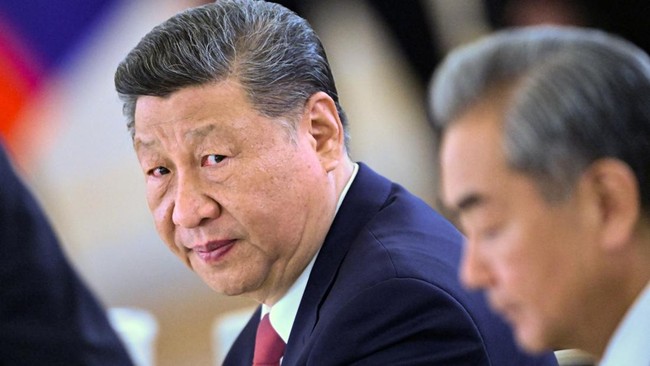
In the midst of heightened tensions due to the Iran war involving the United States and Israel, China has chosen to play a calmer yet strategic role. President Xi Jinping this week publicly called for the reopening of the world’s vital shipping route, the Strait of Hormuz, while emphasising the importance of resolving the conflict through diplomatic channels.
In a telephone conversation with Saudi Crown Prince Mohammed bin Salman on Monday (20 April 2026), Xi reaffirmed Beijing’s support for peace efforts. He stated that China supports “all endeavours conducive to restoring peace and favours settling disputes through political and diplomatic means”.
“The Strait of Hormuz must maintain normal shipping lanes, as this serves the common interests of regional countries and the international community,” Xi said, according to an official Chinese statement quoted by Al Jazeera on Thursday (23 April 2026).
Xi’s statement did not directly name the main parties in the conflict, although it is known that the US and Iran are the primary actors causing the strategic route to be practically halted for the past seven weeks. Iran previously closed the strait to most maritime traffic after the war began on 28 February, while the US imposed a blockade on all Iranian ports since 13 April.
Xi’s measured stance contrasts with the approach of US President Donald Trump, who on the same day posted on social media, “I won the war, BY A HUGE MARGIN, everything is going very well”, and affirmed that the naval blockade would continue until an agreement is reached with Tehran.
Analysts assess that China’s approach reflects its efforts to position itself as a more “responsible” global power, while still operating behind the scenes.
Gedaliah Afterman from the Abba Eban Institute described China as “gaining advantages not through dramatic moves, but by waiting and seizing opportunities while letting America handle the mess”.
This approach aligns with China’s long-standing policy of non-interference in other countries’ internal affairs. This position is also bolstered by Beijing’s relatively good relations with all parties in the conflict.
China is recorded as Iran’s largest trading partner and purchases up to 90% of the country’s oil, according to the US-China Economic and Security Review Commission. In 2021, the two countries also signed a 25-year comprehensive strategic partnership agreement.
At the same time, Beijing has strengthened ties with Gulf states such as Saudi Arabia, Qatar, and the United Arab Emirates, and remains the main trading partner for the US and Israel.
“China maintains good relations with the US, Israel, Iran, and the Gulf Arab states. All those countries are our friends, even though they are hostile to each other,” said Ma Xiaolin from Zhejiang International Studies University.
China’s commitment to non-intervention was also evident when it vetoed a UN Security Council resolution calling for international coordination to reopen the Strait of Hormuz. This move is seen as consistent with China’s stance in other conflicts such as those in Syria and Myanmar.
Beijing’s primary focus in the Middle East region is assessed to remain on economic aspects. Chang Ching from the Society for Strategic Studies in Taipei said that for China, stability is far more important than who wins the conflict.
“They hope for peace and stability. They don’t care too much about who wins. Their desire is to restore a peaceful environment in the Middle East, especially around the Strait of Hormuz,” he stated.
However, concerns remain. Feng Chucheng from Hutong Research warned that further escalation could threaten China’s energy security, given that more than 40% of its crude oil imports come from the Middle East.
“From Beijing’s perspective, direct involvement would risk damaging the balance it has long maintained between Iran and the Gulf states,” he wrote in a research note.
Despite caution, China remains active diplomatically. Foreign Minister Wang Yi reportedly made 26 telephone calls since the war began until just before the US-Iran ceasefire on 8 April. Meanwhile, the special envoy for the Middle East, Zhai Jun, held nearly two dozen meetings with various parties.
Xi himself also met with the Crown Prince of Abu Dhabi before speaking with Mohammed bin Salman.
However, Beijing downplayed its role in helping achieve the two-week ceasefire between the US and Iran, unlike its active role in normalising Saudi-Iran relations in 2023.
Observers assess that this was done to avoid getting too deeply involved in the complex peace process. Drew Thompson from the S. Rajaratnam School of International Studies said China wants to be a peacemaker without bearing the full burden of the process.
“They are trying to be a peace broker without having to guarantee the peace process,” he said. “The point is, the Middle East is not a core interest for China, so the political capital they can expend is limited.”
On the other hand, several media reports suggest China may be playing a larger role behind the scenes. CNN reported the possibility of delivering portable air defence systems (MANPADS) to Iran, while the Financial Times mentioned that Iran obtained Chinese spy satellites in 2024 to target US military bases.
However, Jodie Wen from Tsinghua University doubts such moves, especially ahead of the planned meeting between Xi and Trump in May.
“For the Chinese government, China-Iran relations are important, but China-US relations are equally important,” she said.
Xi is said to hope to discuss trade agreements and tariffs with Trump, who previously threatened to impose 50% tariffs on countries supplying weapons to Iran. In addition, China is preparing for the second China-Arab Summit and is strengthening