
US-Iran War Grows Costlier: Which Side Needs a Ceasefire More?
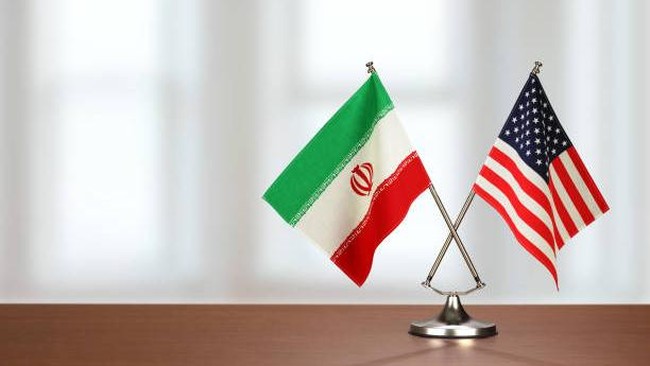
The war between the United States (US) and Iran has escalated further after both sides exchanged attacks for five consecutive days. A memorandum of understanding (MoU) signed in June to extend a ceasefire and open negotiations has now been declared void.
Although both Washington and Tehran still leave the door open for diplomacy, leaders on both sides continue to adopt a hard line. US President Donald Trump claimed Iran is very eager to reach a peace deal with Washington, but he doubted Tehran would comply with such an agreement.
Conversely, Iranian Parliament Speaker and chief negotiator Mohammed Bagher Ghalibaf asserted that his country is facing an ‘existential war with America’ and therefore has no reason to remain bound by the previous peace agreement.
Behind the rhetoric, Iran is facing immense pressure from an economy long crippled by international sanctions and a military capability that is steadily being eroded. Over more than a decade, US sanctions have restricted Iran’s oil exports, hindered access to global finance, and frozen state assets. Gross domestic product (GDP) per capita has fallen from around US$8,000 to US$5,000, while oil exports have shrunk from 2.2 million barrels per day in 2012 to approximately 1.5 million barrels per day in 2025.
A brief respite came when the MoU was signed in June, with Washington lifting a naval blockade, granting a 60-day sanctions waiver, and promising to unfreeze assets, which led to a 15% strengthening of the rial. However, sanctions were reimposed this week, increasing economic pressure on Iran once more.
An analysis by the Center for Strategic and International Studies (CSIS) indicates that Iran’s defence capabilities have weakened significantly following waves of US and Israeli attacks. By early April, Iran was estimated to have depleted around 30% of its pre-war missile stockpile and 60% of its drone inventory. Ports, warships, weapons production facilities, and nuclear sites have also been targeted, while recent US military operations continue to strike strategic Iranian installations.
Iran also faces diplomatic pressure in the region. Attacks on US military assets in Gulf states have violated the sovereignty of several countries and caused civilian casualties, prompting Gulf nations to strengthen defence cooperation through intelligence sharing and early warning system coordination.
The war is also bringing significant consequences for the United States. Fears of supply disruptions through the Strait of Hormuz have caused oil prices to surge by around 12%. The impact is being felt by American consumers, with petrol prices rising from US$2.98 per gallon to US$4.63 per gallon.
Rising energy costs are influencing public perception of the war. A YouGov survey showed that around 57% of Americans believe the Trump administration’s decision to continue the war was a mistake. This sentiment could become a political liability for the Republican Party ahead of the midterm elections in November.
Furthermore, US munitions stockpiles are being depleted. According to CSIS, at least four of the seven most advanced munition types used by Washington have had roughly half their stocks consumed since the early phase of the war. Replenishing these supplies is expected to take months to years, despite government efforts to boost defence production. The war has also resulted in the deaths of 14 US military personnel and left 414 others wounded as of 14 July.
Professor of International Relations at the Australian National University, Alam Saleh, believes economic pressure alone will not force Iran to capitulate. ‘Iran’s economy relies on domestic production and has survived nearly 47 years under sanctions. Iran is not ready to make any deal unless it guarantees its security. No matter the economic pressure, Iran will not compromise,’ he said.
Meanwhile, International Crisis Group security expert Brian Finucane noted that Washington’s biggest concern is not just the war against Iran, but its readiness for potential future conflicts. ‘The consumption rate of critical weapons like Patriot interceptor missiles and Tomahawk cruise missiles is very high. These arsenals might be needed for possible military contingencies with China,’ he said.
Saleh concluded that while a prolonged war is detrimental to both countries, the US faces a greater reputational risk. ‘China and Russia see that the US cannot easily overcome Iran. This shows that the US military has limitations in dealing with a middle power like Iran,’ he stated.