
US-Iran War Costs IDR 672 Trillion, Escalation Spreads to the Red Sea
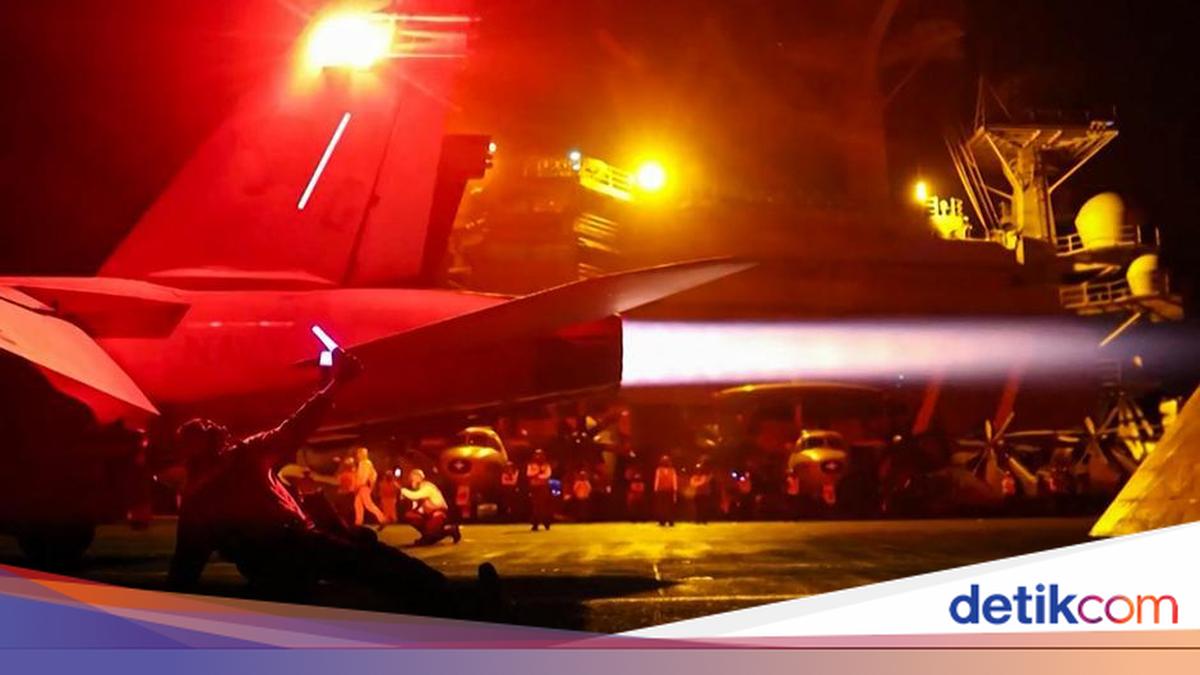
The escalation of the war between the United States (US) and Iran is spreading from the battlefield to international trade routes. Beyond continuing to trade air strikes, the two countries are also at odds over shipping security in the Strait of Hormuz, one of the world’s most important oil transit corridors.
Washington accused Iran of attempting to control vessel traffic in the Strait of Hormuz by directing commercial ships towards shipping lanes near its coast and charging fees on passing vessels. Attacks on several tankers in recent days have also raised concerns over the security of global energy supplies.
“If we create a precedent whereby one country can decide to control international shipping lanes, collect fees, and destroy ships that refuse to pay, that would be an extremely dangerous precedent,” said US Secretary of State Marco Rubio.
Pressure on global trade mounted when Yemen’s Houthi group announced a maritime blockade on Tuesday (21/7) against vessels linked to Saudi Arabia in the Bab el-Mandeb Strait. The Iran-backed group said it would attack ships carrying or unloading Saudi oil, meaning threats to two of the world’s strategic shipping lanes had emerged simultaneously.
US President Donald Trump said his administration was prepared to act should the Houthis genuinely disrupt shipping traffic in the Red Sea.
“So far that has not happened. If something like that happens, we will deal with it,” Trump said.
Disruption to the Strait of Hormuz and Bab el-Mandeb has triggered concerns over global supply chains and helped push Brent crude back above the US$90 mark, or roughly Rp1.61 million per barrel.
ASEAN wary of conflict’s impact on the region
The impact of the Middle East conflict also drew attention at the meeting of ASEAN foreign ministers in Manila on Wednesday (22/7). US Secretary of State Marco Rubio said Iran’s efforts to control the Strait of Hormuz could create a dangerous precedent for freedom of international navigation.
“If we create a precedent whereby one country can decide to control international shipping lanes, collect fees, and destroy ships that refuse to pay, that would be an extremely dangerous precedent that could be repeated in other regions, including this one,” said Rubio.
According to Rubio, if the practice were left unchecked, other countries could take similar action against international shipping lanes in the Indo-Pacific. He therefore stressed that the US remained committed to safeguarding maritime security alongside ASEAN nations, even though Washington’s attention is currently absorbed by the conflict with Iran.
On the sidelines of the forum, Rubio also attended a meeting of the Quad foreign ministers, comprising the US, Australia, India and Japan. The four nations reaffirmed the importance of preserving freedom of navigation in the Indo-Pacific.
Pakistan resumes role as mediator
Amid rising tensions, Pakistan has once again taken on the role of mediator between Washington and Tehran. Iranian Interior Minister Eskandar Momeni visited Islamabad on Tuesday (21/7), meeting Prime Minister Shehbaz Sharif, Interior Minister Mohsin Naqvi and Army Chief General Asim Munir.
According to a diplomat cited by dpa, Pakistan was again working to prevent the conflict from developing into a wider war.
“Pakistan has once again begun playing the role of mediator to stop the war from spreading.”
Intelligence sources said Islamabad was also pressing Iran to reopen the Strait of Hormuz as part of efforts to defuse tensions.
At the same time, Pakistan submitted a request for a US$10 billion (Rp179.3 trillion) foreign exchange stabilisation facility to the US Department of the Treasury. The funds are expected to strengthen Pakistan’s foreign reserves, support the rupee exchange rate, and reduce reliance on multilateral financing amid an economic reform programme backed by the International Monetary Fund (IMF).
Meanwhile, a number of countries in the region, including Jordan, Bahrain and Kuwait, have heightened their alert levels over the possibility of the conflict widening after the US launched fresh strikes on Iran.
Washington prepares for a prolonged war
Although diplomatic channels remain open, the US has shown signs it is preparing for a longer conflict. US Defence Secretary Pete Hegseth told the Senate on Tuesday (21/7) that the war against Iran has so far cost around US$37.5 billion (approximately Rp672 trillion). The Pentagon has also requested additional funding from the US House of Representatives, known as Congress, to continue military operations and replenish weapons stockpiles.
The Trump administration insisted that pressure on Iran would continue for as long as Tehran refused to change course. At the same time, Trump said the US would help Lebanon maintain its stability amid rising regional tensions.
In a meeting with Lebanese President Joseph Aoun, Trump also announced plans to reopen direct flights between the US and Lebanon for the first time since 1985. The US government hopes the move will support Lebanon’s economic recovery following the protracted conflict.
Trump again warned the Houthis not to disrupt international shipping in the Red Sea, saying the US would take action if the group genuinely closed international shipping lanes.
Despite ongoing diplomatic efforts, there are no signs the war between the US and Iran will abate any time soon. The threat to the Strait of Hormuz and Bab el-Mandeb is therefore expected to remain one of the biggest risks to global trade, energy supplies and world economic stability.
Source: jawawa.id (https://jawawa.id/newsitem/us-iran-war-costs-idr-672-trillion-escalation-spreads-to-the-red-sea-1784721414)
Originally published by detikcom (https://news.detik.com/dw/d-8585760/perang-as-iran-telan-biaya-rp-672-t-eskalasi-meluas-ke-laut-merah), translated from Indonesian