
US-Iran War Claims More Victims, Fuel Prices Explode to Rp 72,000
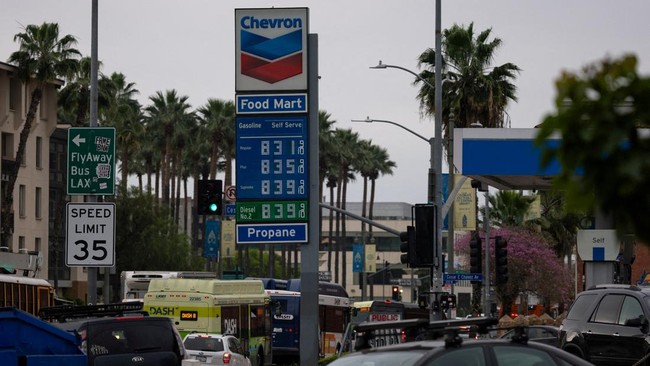
The price of petrol in the United States has reportedly surged sharply again amid the intensifying military conflict between the US and Iran. The widening war escalation has also triggered shocks in global financial markets and driven up world crude oil prices.
Citing an Al Jazeera report on Monday (20/7/2026), the average consumer petrol price in the US breached the US$4 (approximately Rp72,000) per gallon (3.78 litres) mark, a significant increase from US$3.87 per gallon the previous week. This spike marks a rise in US petrol prices for two consecutive weeks, amid concerns over energy supply disruptions due to the war.
Geopolitical tensions, which have flared again following the collapse of a ceasefire agreement, have pushed up global benchmark crude prices. Brent crude oil briefly soared to touch US$91.42 per barrel before easing slightly, whilst West Texas Intermediate (WTI) rocketed to its highest level since 12 June at US$85.39 per barrel.
The slump in tanker traffic through the Strait of Hormuz—which under normal conditions channels around 20% of the world’s oil supply—is the main trigger for the price surge. Kpler data shows only 30 ships dared to traverse the Strait of Hormuz between 17 and 19 July, while LSEG data recorded even more restricted movement over the weekend, with just eight ships crossing on Saturday and four on Sunday.
Conditions in the vital waterway are further threatened by Iran’s pressure on the Houthi group in Yemen to blockade Red Sea shipping routes if US attacks on Iranian energy infrastructure continue. This security threat has already materialised, with Greek tanker company Dynacom Tankers reporting that two of its vessels were struck by projectiles whilst sailing near the coast of Oman.
“Higher energy prices remain a key focus as the re-escalation of tensions in the Middle East adds to concerns that last week’s cooler-than-expected inflation data may not be enough to prevent the Fed from raising interest rates later this year,” said David Meger, Director of Metals Trading at High Ridge Futures, regarding the geopolitical impact on monetary policy.
The ongoing war escalation has also stirred dynamics in US financial markets. The tech-heavy Nasdaq index strengthened 0.6%, the S&P 500 rose 0.2%, whilst the Dow Jones Industrial Average weakened 0.25%. On the other hand, spot gold prices, typically a safe-haven asset, edged down 0.1% to US$4,011.96 per ounce, as US bond yields rose 0.5% and the US dollar index strengthened 0.1%.