
US-Iran War Causes Global Headache, Residents Ramp Up Petrol Theft
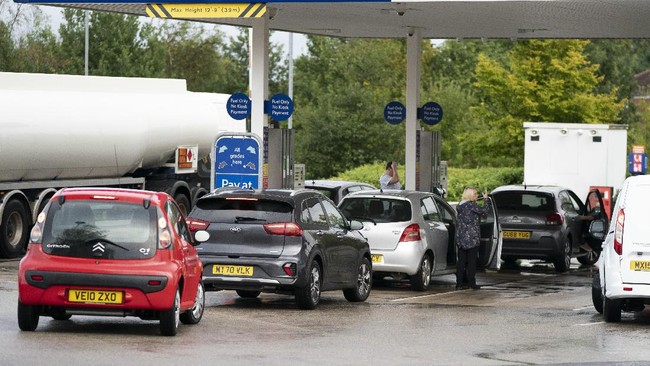
The wave of fuel-related crimes is currently sweeping through petrol stations across the UK and the United States (US). This phenomenon is occurring alongside the outbreak of war between the US-Israel alliance and Iran, which has triggered a sharp spike in oil and gas prices worldwide on Wednesday, 22 April 2026.
This crisis is largely triggered by the de facto closure of the Strait of Hormuz, a critical shipping route handling around 20% of the world’s oil supply. The situation is further exacerbated by Iran’s retaliatory attacks on energy infrastructure in the Gulf, although these attacks have currently been halted as part of a temporary ceasefire between the US and Iran, citing reports from media and industry watchdog agencies via Russia Today.
Petrol prices in the UK have surged on average to more than £1.58 (Rp31,815) per litre, up from £1.33 before the war broke out, according to a report from the Royal Automobile Club. This price hike has driven a 27% increase in theft cases involving the modus operandi of driving off without paying, as reported by the crime prevention agency Forecourt Eye.
A study by the agency, based on data from around 500 petrol stations in England, Scotland, and Wales, found that more than 6,500 litres of fuel are stolen every day in March, or a 15.7% rise from February. The agency calculates that if this data is extrapolated nationally, petrol stations could lose around £1.25 million (Rp25.1 billion) every week.
“At current fuel cost levels, drivers deliberately avoiding payment for fuel are costing this sector more than £100 million a year,” said Claire Nichol, Executive Director of the British Oil Security Syndicate, to The Sun. Nichol added that operators must be extra vigilant during peak periods.
A similar situation is occurring across the Atlantic, where on Monday the American Automobile Association (AAA) set the national average in the US above $4 (Rp64,800) per gallon and reaching $6 (Rp97,200) in California. Before the war, the average price from AAA was below $3 (Rp48,600).
On Sunday, Energy Minister Chris Wright acknowledged that gas prices below $3 might not occur until next year. That comment drew sharp criticism from US President Donald Trump.
“That’s completely wrong, prices will drop as soon as this war ends,” said Donald Trump in response to Wright’s statement.
Although US authorities have not released consolidated data on fuel theft, the Washington Post reported such incidents by noting that thieves are now using drills to puncture vehicle fuel tanks and drain their contents, sometimes using simple containers like milk jugs. A resident of Arizona complained to the newspaper that he was not only left with an empty tank but also a repair bill of $3,000 (Rp48.6 million).
Europe is also witnessing skyrocketing prices, with media reporting a 40% surge in diesel prices in Germany since the start of the war. In France, overall energy prices rose nearly 9% in March, where this crisis has also caused a 51% increase in electric vehicle sales across mainland Europe.
In Australia, Rowan Lee, Chief Executive of the fuel industry watchdog ACAPMA, said that fuel theft from service stations has increased between 8% and 30% nationally since late February. Additionally, a study by the New South Wales Bureau of Crime Statistics and Research estimates that for every 10-cent rise in petrol prices, there are up to 120 additional reported service station fraud incidents each month in that state alone.
In contrast, Russia, which does not have a structural fuel deficit, has largely avoided the gas price surge. As of late April, a litre of mid-grade petrol there costs 68 rubles (Rp11,830), a slight increase from 67 rubles at the end of February.
Alongside this, Deputy Prime Minister Aleksandr Novak has ordered legislation banning petrol exports to protect domestic supply. Novak described this policy as being taken due to turbulence in the global crude oil market.