
US-Iran Update: Ships Reportedly Passing Strait of Hormuz, But...
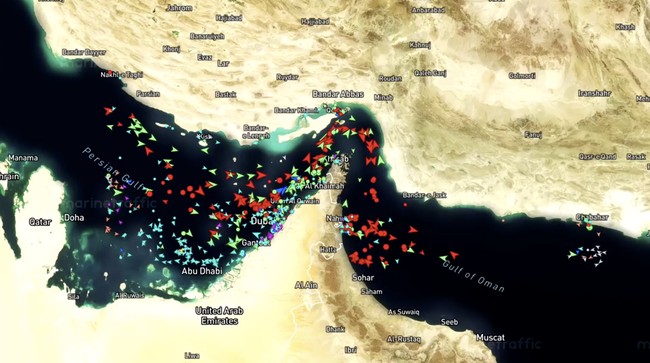
Ships have reportedly begun sailing through the Strait of Hormuz under a new scheme by the United Nations maritime agency. The UN body, the International Maritime Organization (IMO), said it is evacuating ships stranded there due to the conflict, which will allow hundreds of vessels with around 11,000 sailors stuck in the Gulf to transit Hormuz. “Ships have started passing through the plan,” an IMO spokesperson said on Thursday (25/6/2026). However, the spokesperson declined to provide details of the vessels that have crossed. Nevertheless, according to ship tracking data from LSEG and Marine Traffic cited by Reuters analysis, 35 smaller vessels, mainly dry bulk and container carriers, as well as five oil tankers and tugboats, were preparing to sail. “Ships must wait for instructions before proceeding,” an IMO note issued on Wednesday stated. “Overcrowding the waiting area will only result in the need to delay further notice for the sake of navigational safety.”
There are actually two possible temporary shipping routes for sailing out. The northern route passes through Iranian waters and the southern route through waters coordinated by Oman or the US. The Strait of Hormuz Traffic Separation Scheme, adopted by the IMO in 1968, establishes route lanes through Iranian and Omani waters. The central part of the Strait of Hormuz is currently unusable due to the risk of mines, according to shipping and maritime security sources. A leading naval information group had previously proposed an alternative shipping corridor last Saturday, asking ship owners to consider transiting the strait via the southern route with their transponder signals active. “The southern transit route, along Omani territorial waters, has been confirmed mine-free and is the recommended route,” the notice stated. However, it is not known for certain whether this route is being used for sailing under IMO provisions. According to Kpler analysis, other Hormuz traffic has increased in recent days, with sailings averaging more than 25 ships per day recently, compared to around 10-11 ships per day previously. This is still a fraction of the pre-war daily average of 125 ships before the conflict began on 28 February. Currently, many ships have activated their public AIS tracking transponders, though some are believed to remain partially undetected due to significant interference with AIS signals, as well as deliberately not showing movement while transiting the strait. According to IMO and market estimates, between 500 and 600 ships are stranded inside the Gulf, including as many as 100 tankers. The IMO initiative does not support ships wishing to enter the Gulf to collect oil cargoes from Gulf producers.
Meanwhile, Iran’s Islamic Revolutionary Guard Corps (IRGC) has warned ship owners that any “new transit route” through the Strait of Hormuz created without coordination with Tehran is “unacceptable and dangerous.” Iran has threatened action against ships that ignore its instructions. The IRGC Navy stated that only shipping routes designated by Iran are permitted for passage, and coordination with Iranian forces through specified communication channels is mandatory. “Navigation outside these routes is extremely dangerous and prohibited, and we warn all ships to strictly avoid any movement outside the designated corridors,” the IRGC said. Iran is seeking to introduce fees for ships transiting the Strait of Hormuz, but the US considers this an attempt to “extort global maritime trade.”