
US - Iran Tensions Escalate, Oil Prices Surge to US$111
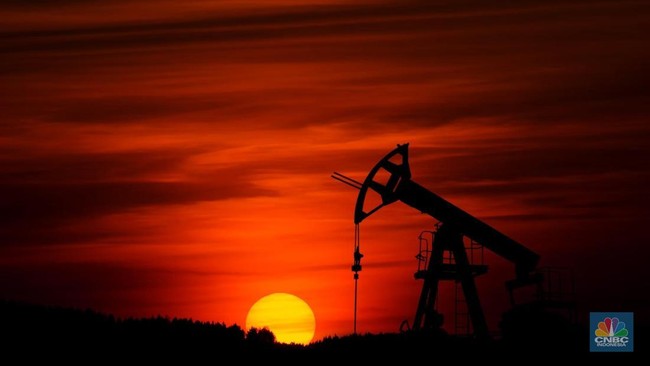
Global oil prices surged during trading on Monday (18/5/2026), reaching their highest levels in the last two weeks. The market reacted sharply following drone attacks on the Barakah nuclear facility in the United Arab Emirates (UAE), as tensions involving Iran intensified.
According to Refinitiv data on Monday at 10:15 WIB, Brent crude for July delivery stood at US$111.24 per barrel, while West Texas Intermediate (WTI) rose to US$107.70 per barrel. This increase extends the oil rally throughout May. Over the last eight trading days, Brent has surged approximately 11.2%, rising from US$100.06 per barrel on 7 May to over US$111 per barrel. WTI saw an even sharper rise, climbing from US$94.81 to US$107.70 per barrel.
This price movement comes amid growing concerns regarding global oil supplies. Reuters reported that efforts to resolve the US-Israel conflict with Iran have yet to show progress. The market has become increasingly sensitive as energy routes in the Gulf region face renewed threats. The UAE reported drone attacks on the Barakah nuclear power plant, while Saudi Arabia claimed to have intercepted three drones entering from Iraqi airspace. These developments have prompted markets to recalculate risks to energy infrastructure in the world’s largest oil-producing region.
Geopolitical tensions significantly impact the oil market, as the Gulf region and the Strait of Hormuz serve as vital global energy distribution routes. As long as the conflict persists, the risk of supply disruptions continues to shadow market participants. Reuters noted that Brent contracts briefly touched US$112 per barrel during Asian trading, the highest since 5 May, while WTI breached US_108.70 per barrel, its highest level since late April.
Markets had previously hoped for a diplomatic breakthrough following the meeting between US President Donald Trump and Chinese President Xi Jinping last week. However, those discussions have not yet produced strong signals regarding conflict resolution or efforts to ease Middle Eastern tensions. Jason Schenker, an analyst at Prestige Economics, stated that a prolonged Iran conflict could leave long-term ‘scars’ on oil prices, potentially keeping interest rates high for longer and exerting pressure on global economic growth.
In addition to the Middle East conflict, the oil market is receiving further sentiment from Washington’s policies towards Russia. The Trump administration has allowed the expiration of Russian seaborne oil sanctions waivers, a policy that previously enabled several countries, including India, to continue purchasing Russian oil. Consequently, the market is facing dual pressures: supply risks from the Middle East and the potential reduction in Russian oil trade flexibility. This combination has driven market participants back into energy assets, pushing oil prices upward rapidly over recent sessions.